Get Full Government Meeting Transcripts, Videos, & Alerts Forever!
Get email alerts on the Elections topic
No spam. Unsubscribe anytime.
Board canvasses Nov. 4 returns after staff find two sealed transport bins; recorder and elections staff outline fixes
Summary
The board certified the Nov. 4 jurisdictional election returns after elections staff and the recorder described discovery of two sealed transport bins that were not immediately processed, explained root causes in transport/receiving procedures, and outlined near‑term tech and process changes including real‑time tracking and improved signature verification.
The Maricopa County Board of Supervisors canvassed and certified the Nov. 4 jurisdictional election returns on Nov. 19 after a detailed briefing from elections staff and the county recorder about post‑election procedures and a late discovery of sealed ballots in two blue transport bins.
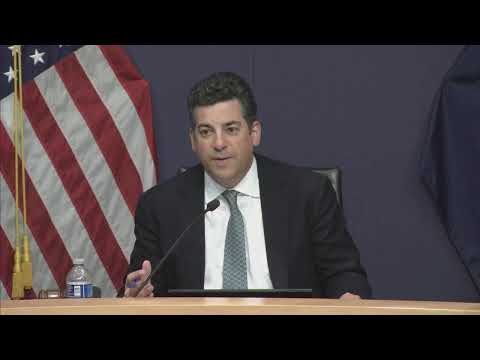
Scott Shearer, Maricopa County Elections Director, and Recorder Justin Heap explained the canvass role under state statute and the split responsibilities: the county administers ballots and voting locations under intergovernmental agreements while the recorder conducts signature verification and mail handling. The board heard public comment before the presentation raising concerns about undeliverable ballots, replacement ballot locations and the two blue transport bins that were found at the tabulation warehouse after election night.
Shearer gave turnout and logistics figures: 704,548 total ballots cast (about 26% turnout of 2.6 million registered voters), 43 replacement ballot sites, five drop‑box‑only locations and about 146,859 drop‑box returns. He said county staff are working with vendors to implement real‑time truck/manifest tracking so variances between scanned items on trucks and items scanned into the warehouse can be detected on election night.
The two sealed transport bins were returned from a West Valley receiving site inside a wheeled drop box; poll workers logged five bins, but two were placed—contrary to procedure—inside the larger wheeled drop box when couriers scanned and transported equipment. The bins remained sealed and stored inside the larger container when the truck arrived at the MacTech tabulation center; they were identified during the post‑election reconciliations on Friday and then processed. Shearer and his team said multiple opportunities existed to catch and correct the variance but the combination of temporary staff and an atypical decision to return receiving‑site equipment the same night created the gap.
The recorder's office and elections department said no ballots were compromised and that the tamper‑evident seals matched the seals recorded by poll workers at the site. Ray Valenzuela, the recorder’s elections director, reported that of the 2,288 ballots in the two bins most were processed and entered into signature verification and pre‑tabulation during the statutory cure period; 30 were moved to curing and 11 ultimately did not complete the cure process by the deadline.
Justin Heap described changes his office made to signature verification for the cycle: level‑1 reviews now include bipartisanship (paired reviewers of different parties), a level‑2 senior bipartisan review and a final official review that can consult additional historic signatures and the physical envelope; the office also clipped and presented only signature images (removing personally identifying data) so observers can watch without seeing private information. Heap said this redesign sped signature verification—in a recent comparable workload the office completed verification in roughly eight and a half hours—and added layered bipartisan scrutiny. Ray Valenzuela provided totals: roughly 30,000 signatures reached level‑1 questioning, about 15,000 reached level‑2 and approximately 5,903 final dispositions remained un‑cured by the statutory deadline (roughly 1,129 with no signature; 5,903 classified as not matching after outreach and review). Valenzuela said the office made “above and beyond” outreach (letters, texts and repeated calls) to reach affected voters.
Board members pressed staff on root causes and timelines for fixes. Staff committed to implement a real‑time tracking enhancement with their warehouse management vendor before the March jurisdictional elections and to provide a formal report to the board. Supervisors and staff also discussed list maintenance and the high number of undeliverable ballots in a county‑wide all‑mail distribution; Valenzuela said about 185,614 mailed packets were returned as undeliverable and that the recorder will take registration maintenance steps using USPS change‑of‑address and related data ahead of 2026.
After the presentations and Q&A the board voted to accept the canvass and certify the returns.