
Public commenters press Escambia school board over book removals, seek ICE guidelines and ESE fixes
Get AI-powered insights, summaries, and transcripts
Subscribe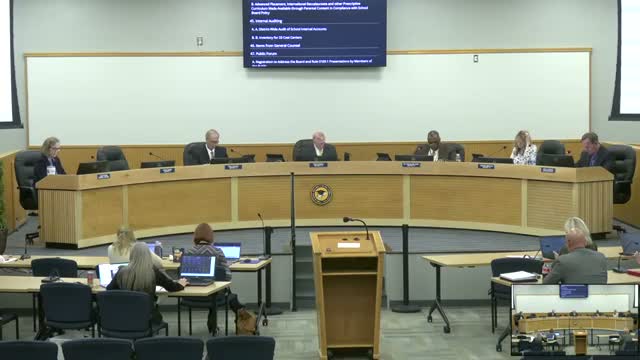
Summary
At the Nov. 18 organizational meeting, members of the public criticized recent media‑center material removals and book bans, urged the board to issue written guidance for interactions with ICE, and described severe behavioral and paperwork problems in ESE pre‑K classrooms. Several items including media center material removals were approved by the board 5‑0.
Public comments at the Nov. 18 Escambia County School Board meeting centered on three recurring concerns: recent media‑center material removals the public calls “book bans,” the district’s lack of written guidance for staff when immigration officials visit campuses, and staffing and paperwork burdens in special‑education pre‑K programs.
Speakers said the board’s recent removal of materials lacked local review. Linda Fussell told the board, “Over 200 books will be presented tonight by the superintendent as proof that he is following the June decision made by this board to take other county's words for it and ban those books from Escambia County Schools without review” and argued many removals had “absolutely no challenge” before being removed. Rick Barnes, a candidate for the Florida House, warned the board he would use legislative tools — “investigation, audit, hearing, funding, and spending rules” — to scrutinize the district’s procedures if elected.
Speakers tied the removals to broader concerns about state policy and local funding. Teacher Carol Cleaver said state policies funnel funding to charters and vouchers at public schools’ expense and urged the board to defend public education. Several commenters asked the district to work with unions and teachers to educate the community about accountability and the fiscal impacts they say are reducing local classroom resources.
Special‑education staff described operational problems that they said are harming students and driving staff turnover. Kim Garman, an ESE pre‑K teacher, described frequent severe behavior in some classrooms and limited behavioral support: she reported that entry staffing paperwork and legally binding IEP documents can take “4 to 5 hours” to complete and that teachers are sometimes asked to complete paperwork for students they have never met. Garman urged creation of an ESE task force to study staffing and paperwork processes.
Multiple speakers asked the board to adopt written rules for interacting with Immigration and Customs Enforcement. Emile Soule asked the board to “issue clear written guidelines to employees for interacting with immigration customs enforcement officials,” noting that several Florida counties have implemented such policies. Substitute teacher Hyraso Alfonso and community organizer Deshawn said the absence of guidelines can create fear among families, lead to absences and dropouts, and put teachers in uncertain legal positions.
On the agenda the board approved an item described as “media center material removals” by the superintendent; the motion was moved, seconded and recorded as approved 5‑0. Other superintendent and consent items also passed unanimously during the meeting. The board did not engage in extended back‑and‑forth responses during the public forum but the superintendent and board recorded the comments and the chair noted staff would follow up where appropriate.
What’s next: the board concluded the public comments portion and adjourned the meeting; speakers asked the board to report back with policy responses, including issuance of written ICE interaction guidance and internal reviews of media‑center removal procedures.