
Wright County commissioners say they transitioned to local community corrections and accuse state DOC of blocking move
Get AI-powered insights, summaries, and transcripts
Sign Up Free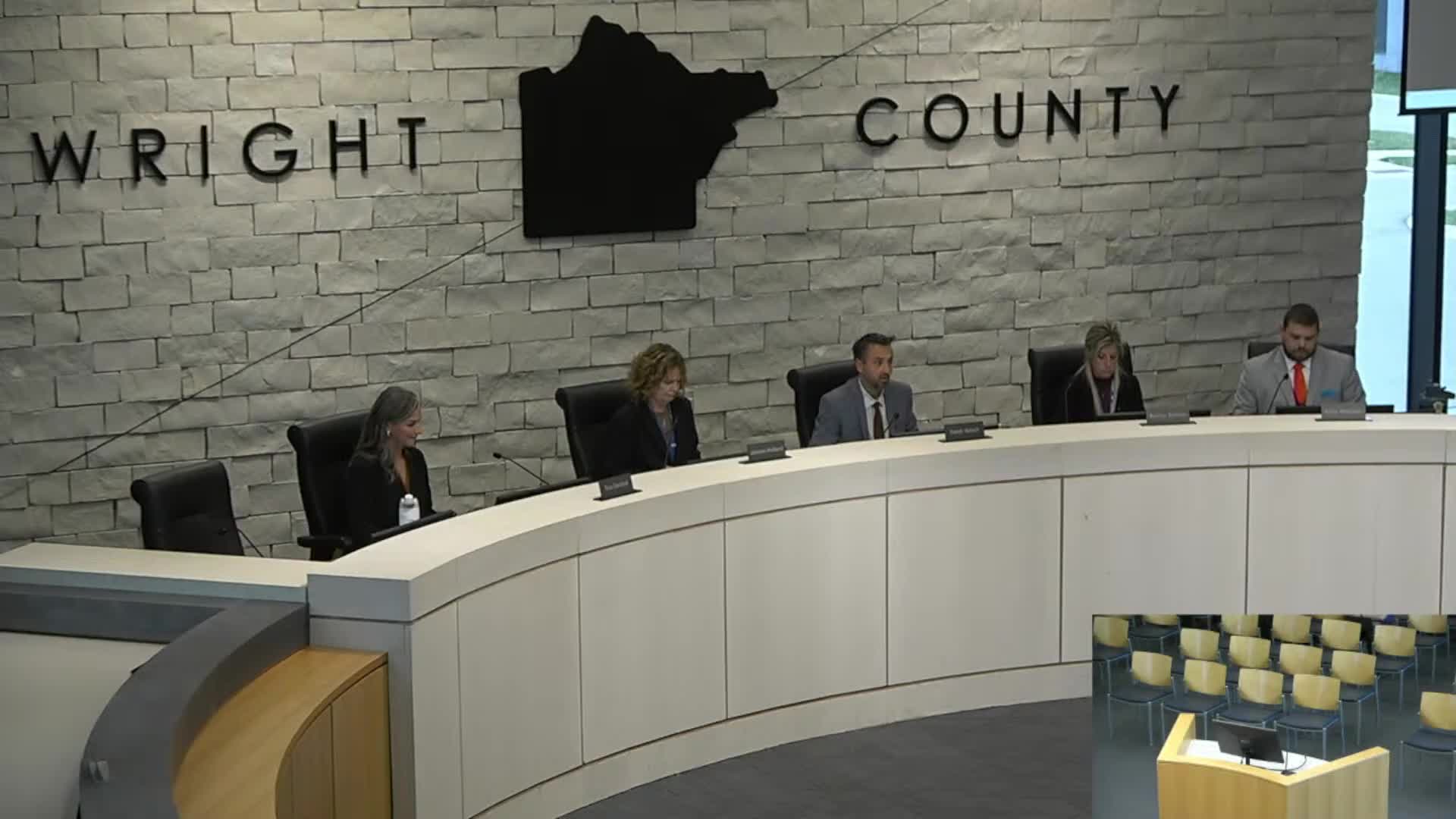
Summary
Wright County commissioners said the county officially shifted felony probation to local community corrections on Nov. 10 and accused Minnesota Department of Corrections Commissioner Paul Schnell and DOC staff of withholding feedback and pressuring the county to pay union obligations tied to state employees.
Wright County commissioners told colleagues and staff on Nov. 18 that the county has completed its transition from state-run felony probation oversight to a locally controlled community corrections authority and urged prompt resolution of an apparent standoff with the Minnesota Department of Corrections (DOC).
Commissioner Moyna said the county "officially have transitioned to become a community corrections model county and began operation as the community corrections authority," and added that Wright County "has not received any feedback" from DOC Commissioner Paul Schnell after submitting the county's plan. Moyna alleged the DOC and Commissioner Schnell are seeking to require Wright County to assume contractually required obligations for union employees, calling the request "extortion."
County staff and other commissioners said staff followed the statutory process for notifying the state and supplying required documents. The chair described the situation as "chaotic," said the county followed "everything we needed to follow," and warned that the impasse creates "a great level of ambiguity for the bench and where felony cases should be going." Commissioners urged state officials and the DOC to take swift action to clarify roles so the county can implement staffing, budgetary and case-processing plans.
Board members stopped short of directing specific legal action at the meeting; their remarks focused on demanding state response and protecting local control. Commissioners said they remain committed to the transition and to correcting any funding or staffing gaps that could result from the change.
The board did not record a formal motion or a vote on litigation or enforcement at the Nov. 18 meeting. The chair and county staff said they would continue outreach and follow-up with state officials and seek to resolve procedural and budgetary gaps so felony cases can be routed and overseen consistently.
Next steps discussed at the meeting included additional outreach to the DOC and continued internal preparations to assume full responsibility for felony probation oversight. No timeline for resolution was specified at the meeting.