
Bourbon County planning commission adopts bylaws, schedules consultant to guide zoning amid solar and land‑ownership concerns
Get AI-powered insights, summaries, and transcripts
Sign Up Free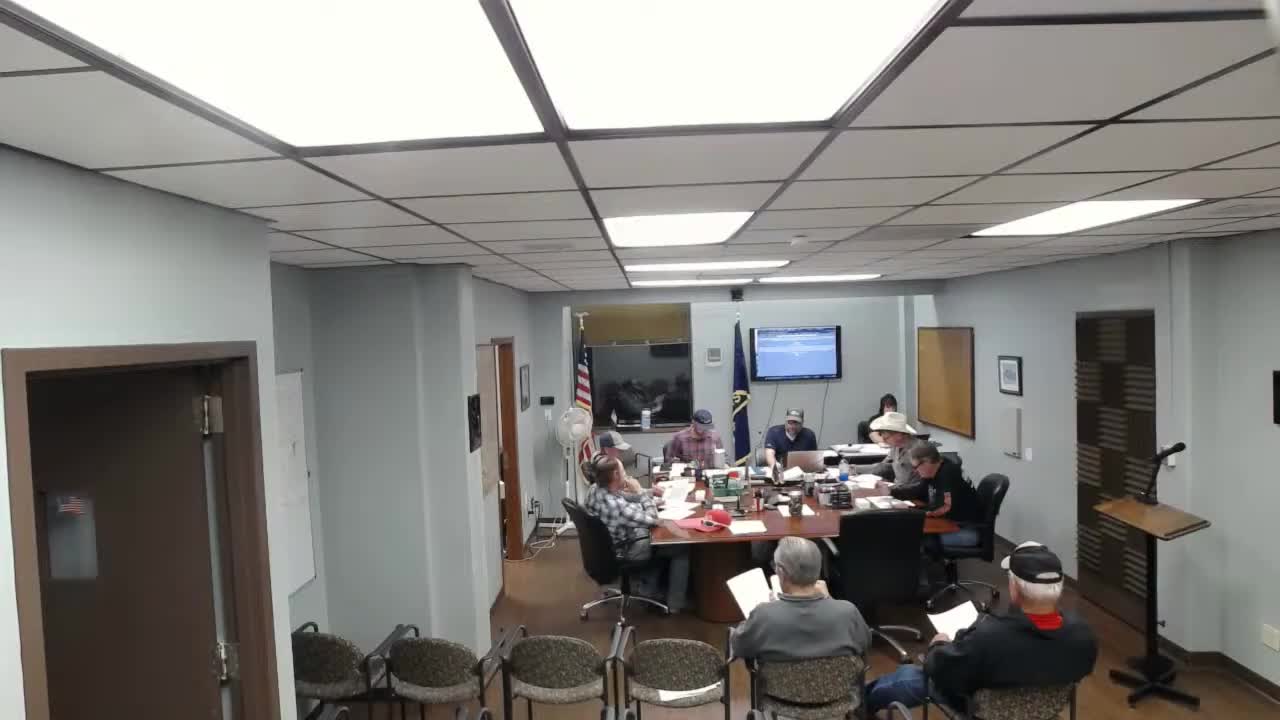
Summary
The Bourbon County Planning Commission voted to adopt amended bylaws, agreed to consult planner Mel Haas on a comprehensive plan and zoning timeline, and heard strong public concern about outside ownership of farmland and proposed large solar projects.
The Bourbon County Planning Commission voted to adopt amended bylaws and set a path to work with a consultant on a comprehensive plan intended to inform future zoning decisions, members said during a meeting that drew multiple public comments about solar projects and out‑of‑county land ownership.
Commission members approved the bylaws as amended after discussing terms of office and administrative details. A motion to adopt the bylaws passed with all members saying “Aye,” according to the meeting record. The commission also moved into and returned from a 10‑minute executive session under KSA 75‑4319(b)(2) to consult with legal counsel about statutory compliance.
The commission agreed to invite consultant Mel Haas to the next scheduled meeting to outline a timeline and scope for a comprehensive plan, and to advise on how zoning and maps could be developed consistent with Kansas statutes. “We’ll get the consultant involved to some extent to help guide us,” one member said when describing the plan to obtain expert advice.
Public commenters and commissioners spent substantial time discussing large renewable projects and the county’s changing landownership patterns. Commission member Jason Young cited a Kansas State study, saying, “15% of agricultural land in Bourbon County is owned out of state,” and later summarized that roughly “40% of the agricultural land in the county is owned outside of this county,” which he called a surprising figure and a driver for wanting clearer local controls.
Several speakers urged quicker action. One public commenter said the commission should adopt an agricultural map and require special‑use permits for nonagricultural developments, arguing that “the map is never gonna be perfect” but that an adopted map plus special‑use review would provide interim protections for neighbors and property values.
Other commission members cautioned that zoning ordinances and enforceable special‑use permit requirements depend on completing a comprehensive plan and following statutory notice and hearing procedures. Commissioners noted the legal steps required — public notice, hearings, and statutory compliance — and said that rushing an imperfect ordinance could expose the county to legal challenge.
On procedure, the commission tabled approval of previous meeting minutes until the next meeting and confirmed the December 3 meeting date for further discussion with the consultant. Members also agreed to distribute and review two competing map drafts and to mark up statutory guidance and model regulations in advance of the consultant’s appearance.
The meeting closed with an adjournment motion that carried unanimously. The commission’s immediate next steps are to meet with Mel Haas, distribute and review draft maps and model zoning language, and prepare materials for public notice and hearings as required by Kansas law.