
New Haven committee approves $9.6M in brownfield grant applications for two housing projects
Get AI-powered insights, summaries, and transcripts
Sign Up Free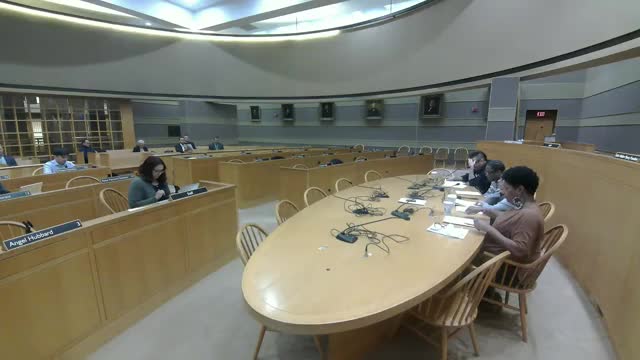
Summary
The Community Development Committee voted to approve two state brownfield grant applications — $3,602,765 for remediation at State and George Street (a 461‑unit, two‑phase mixed‑income project) and $6,000,000 for remediation at Shelton Avenue (a 240‑unit, 100% affordable project) — and will submit both to DECD.
The New Haven Community Development Committee on Nov. 19 voted to approve two city applications for Connecticut Department of Economic and Community Development brownfield cleanup grants that together total $9,602,765 and are intended to prepare two contaminated sites for housing redevelopment.
Michael Viscatelli, the city’s economic development administrator, told the committee the first application (LMDash2025Dash0563) seeks $3,602,765 to remediate a mixed‑use site at State and George Street that the development team expects to build in two phases, totaling 461 housing units, “25% of which would be affordable.” Viscatelli said environmental studies estimated the cleanup cost at about $3,600,000 “for cleaning the site up so it's suitable for residential use.”
The project team said much of the work would be excavation, transportation and disposal of historic industrial fill and that remaining impacted material would be capped under buildings or pavement to meet state standards. GZA consultant Joe Tralski described the site investigations and said the remedy could involve “about 31,000 cubic yards of material” that will be removed or isolated, and identified contaminants including arsenic, lead, polycyclic aromatic hydrocarbons and oil constituents.
The second application (LMDash2025Dash0564) would seek $6,000,000 to support environmental remediation for properties listed as 71 and 89 Shelton Avenue (the record also references 91 Shelton Avenue) so developer Vesta Corporation can renovate a historic mill and construct adjacent housing. Aaron Greenblatt of Vesta said financing would combine brownfield funds with Department of Housing funds, loans and tax credits and that the project would total about 240 units and “will be a 100% affordable.”
GeoQuest consultant Josh Kaplan said the mill building will require hazardous‑materials abatement (asbestos, lead paint and PCBs) and that the neighboring parcel still contains PCB‑impacted fill despite prior removal of radioactive material by the Nuclear Regulatory Commission; additional remediation is needed to meet residential standards.
Committee members asked for more detail on affordability tiers and how the 25% inclusion would be allocated across the State/George Street phases. Vesta said the unit mix for the Shelton Avenue project will include 50% and 60% AMI tiers and that exact AMI dollar targets would be provided later. Developers and consultants agreed to provide periodic updates to neighbors about trucking routes, abatement timing and mitigation measures during construction.
After a public‑comment period during which no members of the public spoke, Alder Kimberly Edwards moved to close public comment and later moved to approve both grant applications. The committee approved the motion by voice vote. The committee also moved to adjourn at the end of the meeting.
The next steps are for the city to submit the two grant applications to DECD and for the developers to continue required community outreach and procurement processes; Vesta said its Department of Housing application was due the week after the meeting.