
Residents urge Wheeling board to probe drone flights over Hispanic neighborhoods
Get AI-powered insights, summaries, and transcripts
Subscribe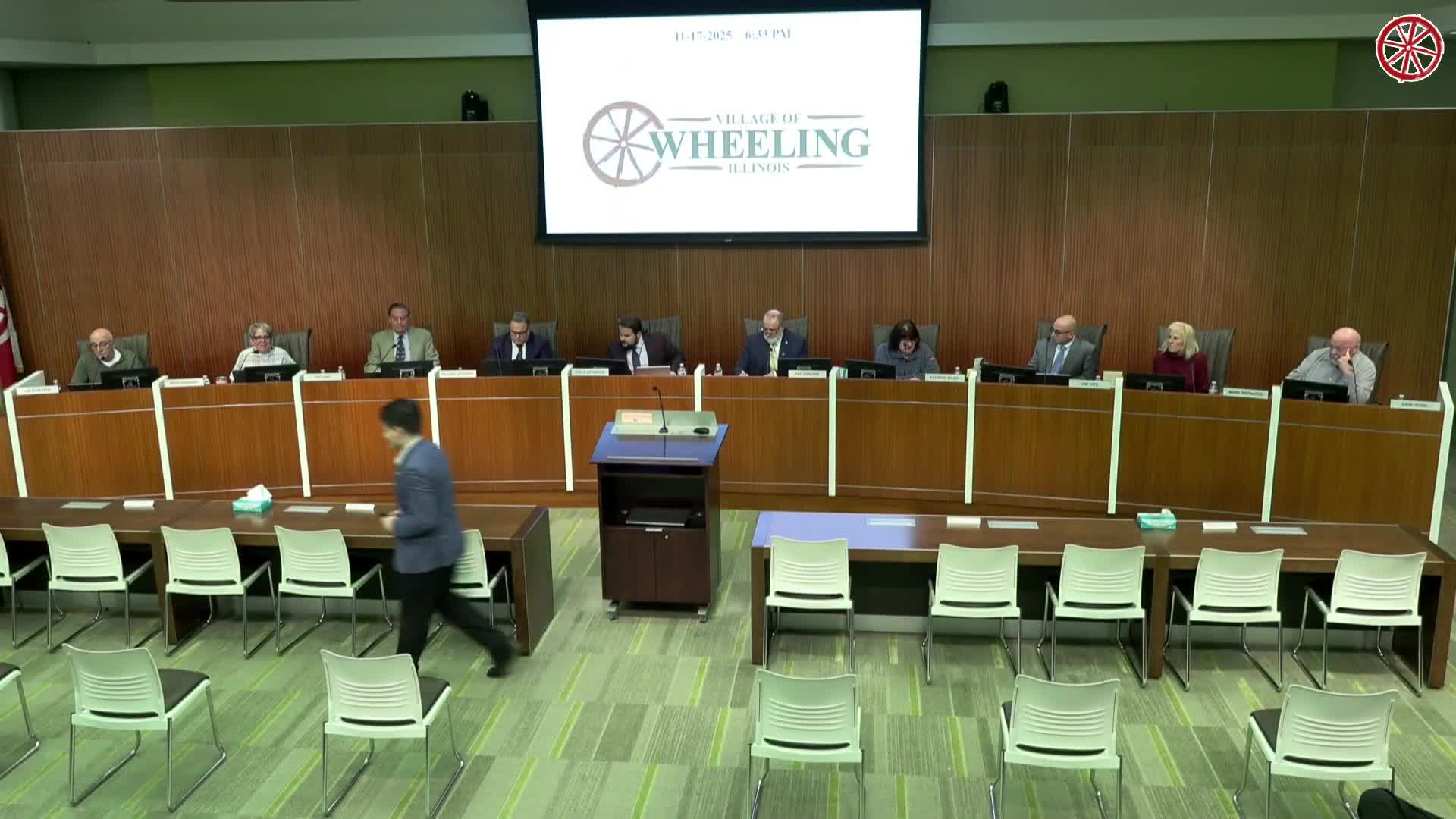
Summary
Speakers at the Nov. 17 Wheeling board meeting said large camera-equipped drones have circled predominantly Hispanic neighborhoods for weeks and demanded a moratorium on non-emergency flights, publication of six months of flight logs, and a village policy barring drone use for immigration enforcement. Village officials said legal limits constrain action if flights are federal.
Residents at the Village of Wheeling’s Nov. 17 board meeting demanded answers after repeated drone sightings concentrated in heavily Hispanic neighborhoods.
Agustin Salgado told trustees the aircraft are “large, loud, equipped with cameras” and have followed people to homes and schools. He asked who is operating the drones, what legal authority allows camera-equipped, unmarked aircraft to follow private citizens, and whether footage is being shared with federal immigration authorities. Salgado asked the board for an immediate moratorium on non‑emergency flights, publication of six months of flight logs with only legally required redactions, and a written village policy explicitly prohibiting the use of drones for immigration enforcement.
Jen Abonci, who said she has video of drones over her driveway while loading her 2‑year‑old child into a car seat, echoed Salgado’s calls for transparency and said the pattern of flights—concentrated in some parts of town and not others—has left families feeling unsafe.
Village staff replied that they had received no prior reports of drone activity until recently and said they investigated. The village attorney told the board the Freedom from Drone Surveillance Act cited by speakers applies to state and local law enforcement agencies and does not reach federal agencies; he said the village lacks authority to restrict federal operations and noted limits imposed by federal supremacy. Staff encouraged residents to pursue civil remedies or contact the attorney general where state enforcement applies.
Speakers pressed the board for concrete next steps, including contacting state and federal representatives and publishing flight logs. Several residents said they had already contacted state legislators, the attorney general’s civil‑rights hotline and congressional offices without success.
The board did not adopt immediate new regulations at the meeting. Officials said they would continue to investigate what local records exist and consult legal counsel about options the village can exercise. Residents asked the board to place the subject on a future agenda for a full public hearing and for a clear public statement about what the village can and cannot do.
What’s next: residents requested a public hearing and production of flight logs; village staff said the board will follow up with legal counsel and can advise the public about the limits of local authority.