
Van Zandt County budgets ARPA interest for radio upgrades and consultant as L3Harris testing falls short
Get AI-powered insights, summaries, and transcripts
Sign Up Free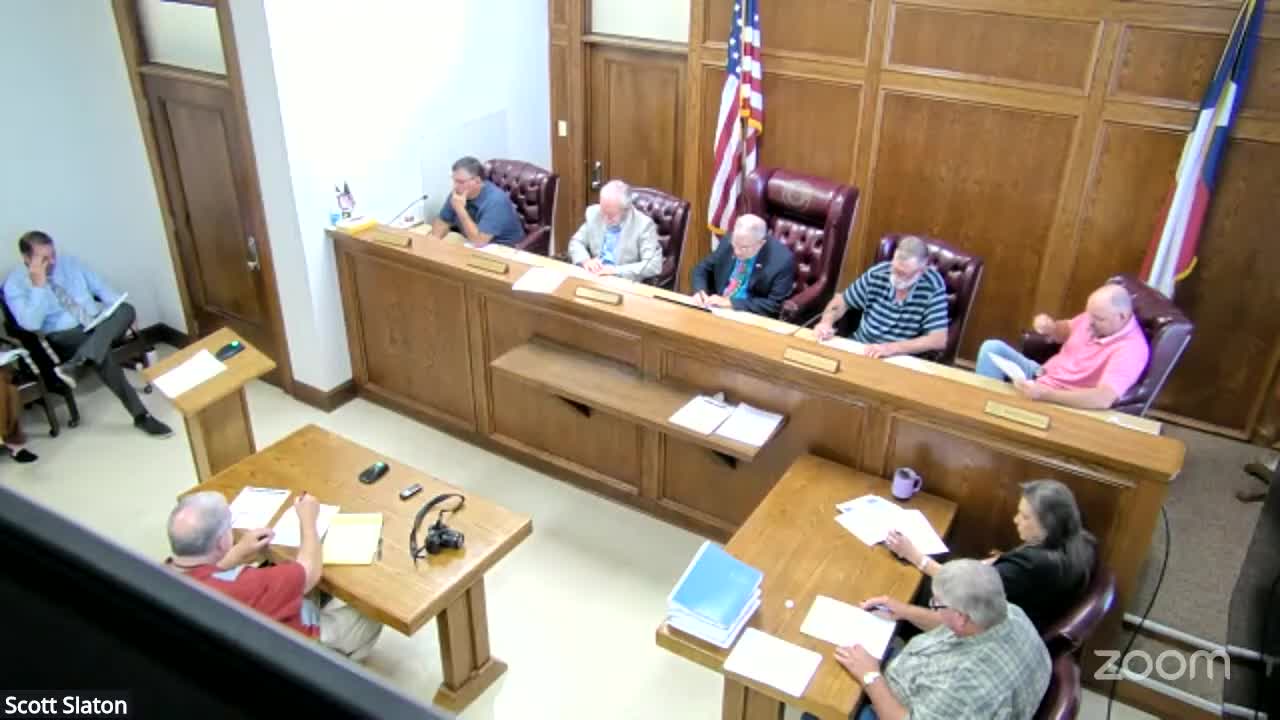
Summary
Commissioners approved using ARPA interest funds to pay KCOM for antenna work and to budget $50,000 for continued consulting by Tri Communications after L3Harris failed to meet required county coverage during acceptance testing.
Van Zandt County commissioners on the meeting agenda authorized two ARPA‑interest expenditures to advance a stalled countywide radio upgrade after testing by the system contractor, L3Harris, did not meet the county's coverage requirements.
The court approved $14,185.96 to KCOM to install antenna mounts, relocate wiring and consolidate radio equipment at the sheriff's office, and agreed to budget $50,000 from ARPA interest for ongoing consulting by Barry Black of Tri Communications through February 2026. Speaker 8, the meeting's presiding official, said the work will prepare the sheriff's communications room to host properly grounded antenna mounts and to centralize equipment currently scattered across multiple locations.
The county has set aside ARPA funds and accumulated interest from the original federal ARPA allocation; Speaker 8 told the court that roughly $900,000 in interest exists and that interest is the anticipated source for the radio project costs. The judge (Speaker 8) emphasized the county will not draw down the ARPA principal without need and described the request as using interest generated by the ARPA balance.
Commissioners cited multiple reasons for the consultant and infrastructure work. Speaker 8 said consultant Barry Black has led ATP (acceptance test procedure) testing alongside L3Harris, documenting a running punch list, coordinating tower and generator vendors, and identifying items that require correction. "He is the most knowledgeable of anybody on our system right now," Speaker 8 said of Black's role in tracking issues and pushing vendors to correct them.
Commissioners also voiced caution about spending. Speaker 4 said she did not want vendors or contractors to "milk" ARPA interest funds, while Speaker 7 said he wanted to see measurable progress over the next three months. Speaker 11 and other commissioners urged the county to withhold final acceptance and final payments to L3Harris until the system meets contractual coverage levels (the contract requires roughly 95% coverage of the county).
L3Harris performed initial and follow‑up tests and, according to county staff, identified inadequate coverage in portions of the county; engineers returned for additional testing and to determine additional equipment required to reach the contract standard. County staff said certain shelter‑site wiring and vendor integration issues were uncovered during ATP testing and that on‑site troubleshooting had fixed multiple vendor integration problems.
The court voted to authorize the KCOM work and to budget the consultant funds. Commissioners confirmed the $50,000 is a budgeting authorization; Speaker 8 clarified the county will pay the consultant based on invoices for work actually performed.
Next steps: County staff will continue weekly calls with L3Harris and vendors, track punch‑list items identified during ATP testing, and work with the consultant to verify fixes before any final acceptance payment to L3Harris is released.