
Minnesota Power outlines 345 kV Maple River–Cuyuna transmission line, seeks public input ahead of 2026 permit filings
Get AI-powered insights, summaries, and transcripts
Sign Up Free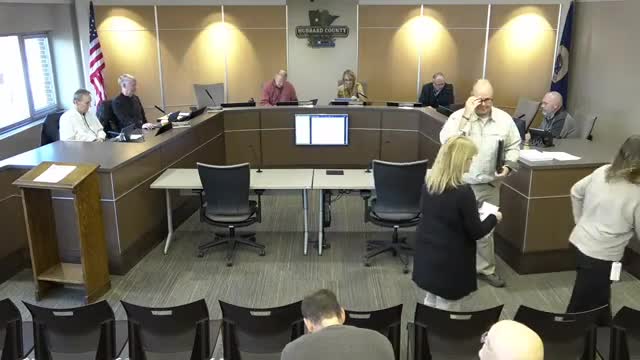
Summary
Minnesota Power presented details of a proposed ~160-mile, 345 kV transmission line between Maple River (near Fargo, ND) and Cuyuna (near Ironton, MN), saying permit filings to the Minnesota Public Utilities Commission are expected in 2026 and construction could begin as early as 2029 with in-service by 2033. The company emphasized routing options, environmental surveys and continued public engagement.
Minnesota Power on Tuesday briefed the Hubbard County Board on the Maple River to Cuyuna transmission project, a proposed roughly 160-mile, 345-kilovolt single-circuit line that would be built on structures capable of carrying two circuits.
Drew Janke, an environmental compliance specialist with Minnesota Power, said the project is designed to increase regional transmission capacity and reliability, enable cost-effective transfers across the grid and improve resiliency during extreme weather. He told commissioners the company plans to file a Certificate of Need and a route permit with the Minnesota Public Utilities Commission in 2026 and anticipates detailed engineering, environmental field surveys and right-of-way acquisition through 2028. If the schedule holds, construction could begin in 2029 with the line entering service by 2033.
Janke said routing work began with a broad study area centered on existing transmission lines and has been narrowed by public feedback and environmental constraints; he specifically cited avoidance of Glendalough State Park as a key driver for trimming the study area. He described the preferred structure as a tubular steel monopole 120 to 180 feet tall with a typical 150-foot right-of-way for new 345 kV double‑circuit capable construction, and noted the line would initially operate as a single circuit with a second set of conductors installed but jumpered until needed.
Commissioners asked whether the company had identified any fatal permitting issues; Janke said the company had not identified major fatal flaws but expected common open-house concerns about routing, right-of-way and generation sources. He described two permitting processes in Minnesota — the Certificate of Need and the route permit — and said North Dakota has analogous permits. He also said the company plans additional public open houses in early 2026 and will coordinate environmental and cultural resource surveys once a proposed route is identified.
Residents at the meeting questioned how much of the new route the project could co-locate with existing lines; Janke estimated roughly 80–85% co-location on a “back-of-the-napkin” basis, while noting the northwest portion near the state border will have more greenfield segments. On questions about construction impacts, he said pole foundations typically require about 50 to 60 feet of depth depending on geotechnical conditions and that decommissioning typically removes the top several feet and leaves the remainder in place. He also confirmed compensation for affected landowners is a one-time payment negotiated from a market study.
Minnesota Power stressed ongoing stakeholder engagement, with two rounds of open houses held to date and plans for a third round in spring 2026. Janke said the company will accept alternate route proposals during the route-permit process and encouraged local input as the project advances.
The county board did not take an action on the project; the presentation served to inform local officials and the public of the proposal and the timeline for permitting and public outreach.