
Longmont expands Ride Longmont after RTD awards $1.4 million, bringing total partnership funding to $2.5M
Get AI-powered insights, summaries, and transcripts
Sign Up Free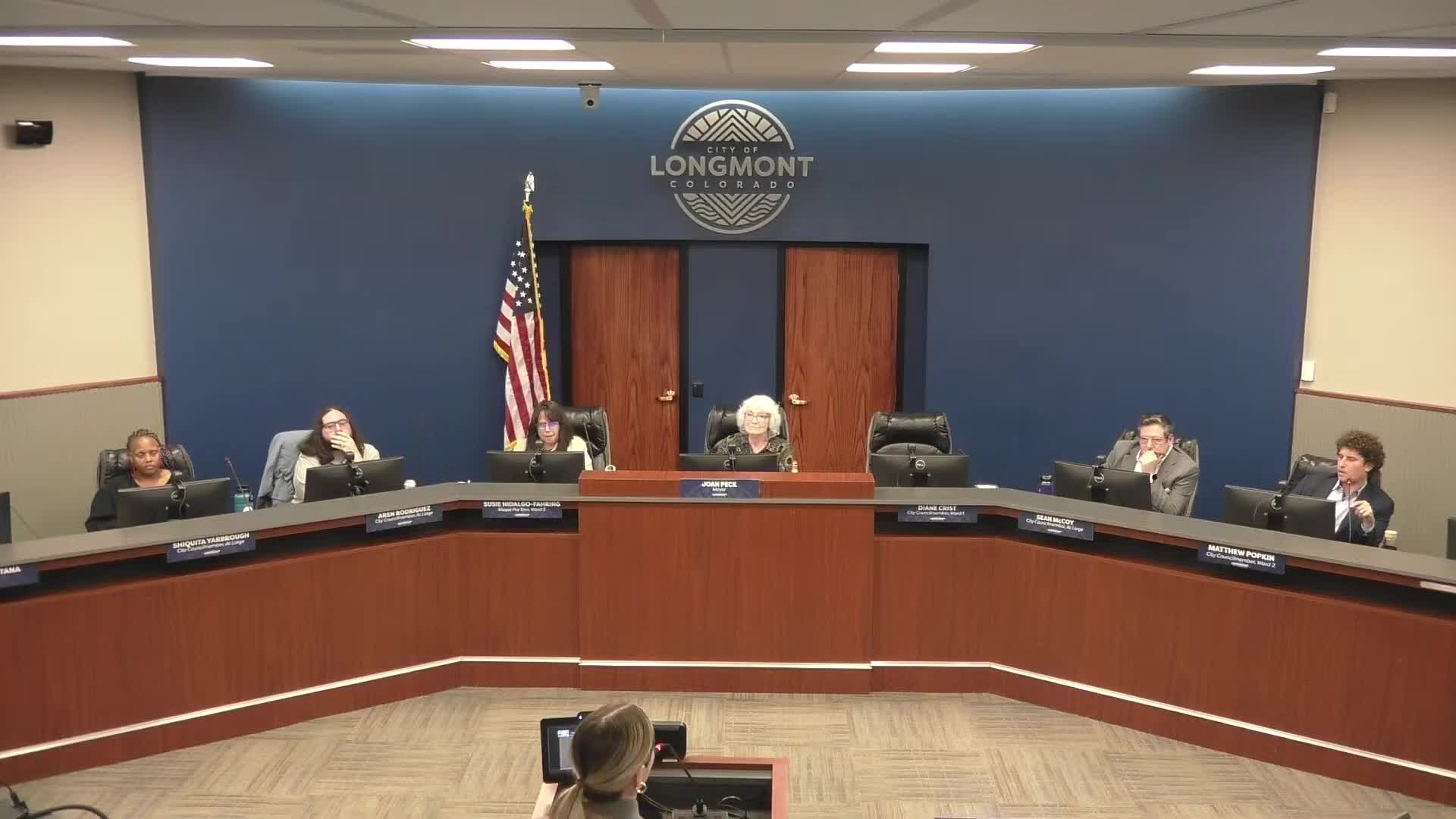
Summary
Council approved an amendment to the IGA with RTD that adds $1.4 million to the Ride Longmont partnership, increases vehicle service hours and raises the city's local match. Staff said the program has provided more than 60,000 rides since launch and will scale service through 2028.
Longmont City Council on Nov. 18 approved an amendment to the intergovernmental agreement (IGA) with the Regional Transportation District (RTD) to extend and expand the Ride Longmont microtransit program.
Kaylee Fallon, transportation planner and project manager for Ride Longmont, told council the city received a second round of RTD partnership funding totaling $1.4 million, bringing RTD’s contribution to $2.5 million. "Because we are extending the service and increasing vehicle service hours, the city's local match will also increase," Fallon said during the presentation.
Fallon reported that Ride Longmont has provided more than 60,000 rides since its launch on Dec. 9, 2024, averaging 5,000–6,000 rides per month and about 150–250 rides per day, and that staff increased vehicle hours to meet demand. The amendment updates exhibits for vehicle service hours and the budget to reflect the added RTD funding; the package also includes federal congressionally designated spending that will be available in later years.
Councilors asked for ridership and cost figures; staff provided an FY2024 flex‑route ridership figure of about 161,252 boardings systemwide and estimated Longmont accounts for roughly 10% (about 18,000 boardings). Council approved the amendment and the related resolution to accept the additional RTD funding and adjust the city's match.
What happens next: staff will implement increased service hours and report back on program performance as the additional funding phases in through 2026–2028.