
Longmont council declines ordinance to authorize airport landing fees after months of debate and extended public hearing
Get AI-powered insights, summaries, and transcripts
Sign Up Free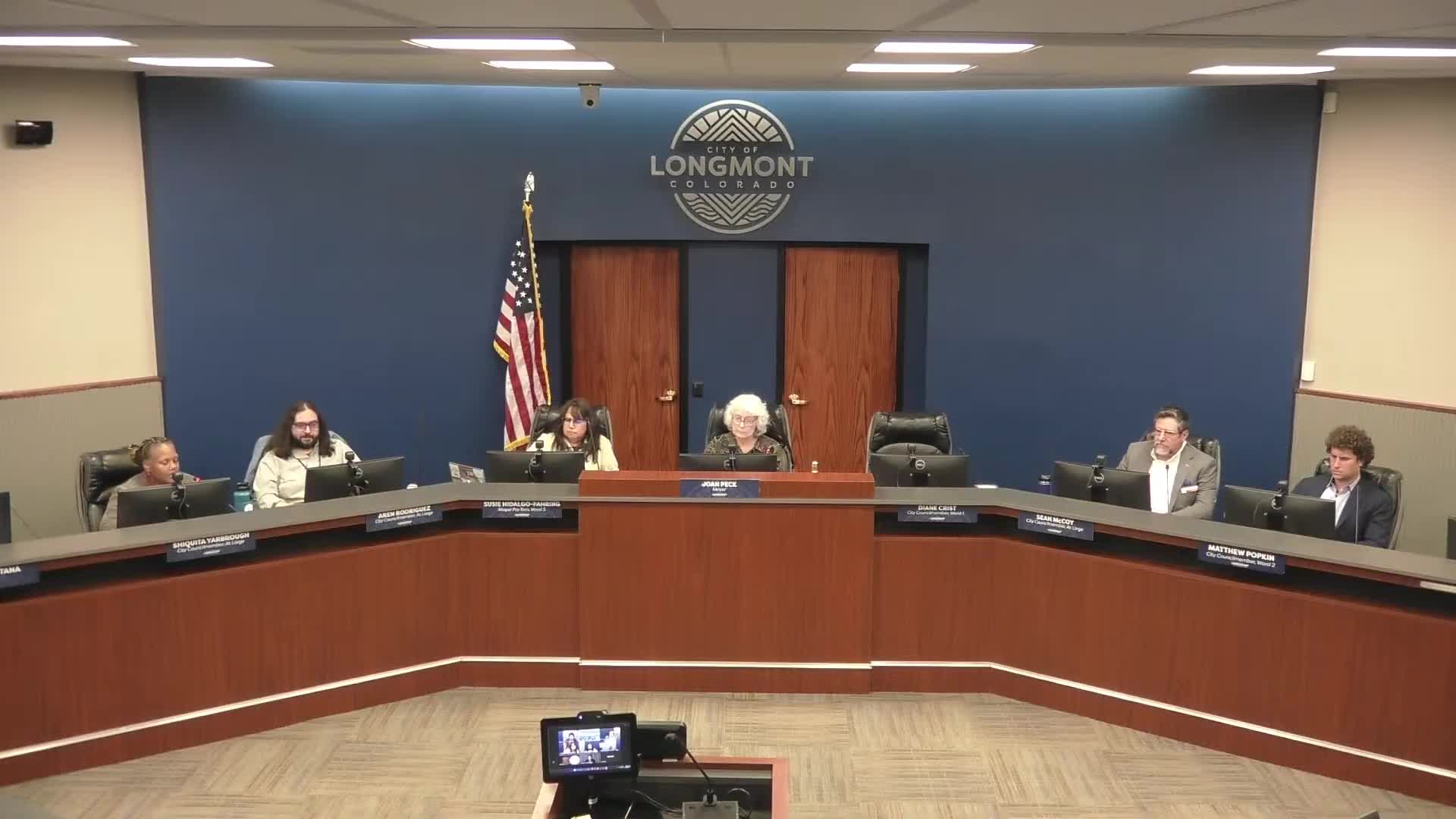
Summary
After a long public hearing with dozens of residents and a motion to require a rates‑and‑charges study, the Longmont City Council voted against moving forward with an ordinance that would have created the category of landing fees at Vance Brand Municipal Airport. Council earlier directed a study on fees and revenue options.
Longmont City Council on Tuesday declined to advance an ordinance that would have created a category of landing fees at Vance Brand Municipal Airport, after hours of public testimony and a procedural debate over whether fee amounts should be set before a study is complete. The ordinance’s failure leaves the earlier direction to commission a rates‑and‑charges study as the primary outcome of the evening’s airport debate.
Council member Yarbrough moved earlier in the meeting that the city commission a rates‑and‑charges study before the council sets any landing fee amounts. "Landing fees need to be justified before we set an amount," Council member Yarbrough said when she introduced the motion, arguing the study would quantify operational costs and potential revenue opportunities and inform future decisions. The council voted to direct the study and to delay deciding amounts until results are available.
That procedural decision did not end the discussion. The city opened a public hearing on Ordinance 2025‑74, which would have authorized landing fees as a fee category without setting a specific dollar amount. Dozens of residents, business owners and pilots testified for and against the change.
Supporters urged council to approve the authorization so the airport could pursue a stable revenue source. "A landing fee policy is the most fair, equitable and accountable method," said Joe Friedman, a Longmont resident and supporter of general aviation, adding that "a few dollars per landing operation" could produce "between $300,000 and $500,000 annually" depending on the structure presented in staff materials.
Opponents warned of concrete harms to students, flight schools and safety. "This will hurt a lot of student pilots," said Savannah Collier, a flight student and EMT, who told council that even modest added costs can deter trainees. Dan Barry, a long‑time hangar lessee, asked the council to evaluate safety implications tied to proposed tracking and collection methods, saying masking of ADS‑B data and camera use could reduce situational awareness.
Public testimony also raised process questions. Kate Connor and others urged postponing any ordinance action until an impartial feasibility study is complete and public process questions — including access to RFIs and consistency of staff workflows — are resolved.
City Attorney Eugene May explained the mechanics: the ordinance would create the category of landing fees, while the actual setting of dollar amounts would occur in a separate step after the council reviews rates and charges, FAA feedback and the study results. Several council members pressed for exemptions and clarifications for based aircraft, students and emergency operations; an amendment to broaden exemptions was discussed but not adopted.
After debate and amendment attempts, the motion to advance Ordinance 2025‑74 failed in the final vote, leaving no authorization enacted at this meeting. Council later reiterated that the directed rates‑and‑charges study will return to a future council — and that the next council will retain authority over any final setting of amounts.
What happens next: Council has directed staff to complete a rates‑and‑charges study; the timing, scope and external review process will be determined in follow‑up staff work. The council did not authorize any specific fee amounts or collection method at this meeting.