Get Full Government Meeting Transcripts, Videos, & Alerts Forever!
Get email alerts on the Public Health topic
No spam. Unsubscribe anytime.
PYLUSD outlines Narcan training and storage after rise in fentanyl deaths countywide
Summary
District health staff told trustees the schools maintain Narcan and AED kits across campuses, trained roughly 785 staff in naloxone administration (about 45% of full‑time staff), and reported three Narcan administrations in 2022–2025 that were later determined not to be opioid‑related.
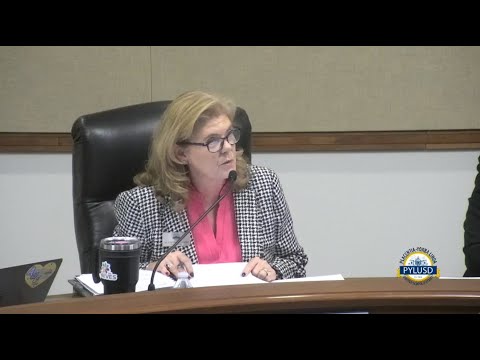
Placentia‑Yorba Linda Unified School District staff briefed the board on the district’s emergency response protocols and opioid preparedness on Nov. 18, highlighting staff training and county trends involving fentanyl.
Michelle DeHaven, the district health administrator, summarized state law allowing schools to stock naloxone (Narcan) and explained that participation is optional; districts may apply through the state naloxone distribution project. She said the district applied in 2022, received donated supplies, and began training volunteer staff immediately.
DeHaven presented Orange County data showing fentanyl has become the leading cause of opioid overdose deaths and displayed age‑group trends for youth ages 10–17. She said the district has placed Narcan alongside AEDs at fixed campus locations and that trained members of each school’s emergency response team carry doses as needed. DeHaven reported 785 staff had received Narcan training and 625 completed CPR/AED training; she estimated Narcan training represents about 45% of full‑time staff and that district nurses recorded roughly 700 hours of training time.
Between 2022 and 2025 the district recorded three Narcan administrations; those incidents were later determined not to be opioid overdoses. Countywide, DeHaven said other districts logged four administrations in that period. Trustees asked whether falling fatality numbers tracked with reduced use or broader prevention efforts; DeHaven said her presentation focused on deaths and she would follow up with more detailed usage statistics.
Trustees praised the training effort and asked staff to continue outreach to families and student groups. DeHaven said the district is offering additional community sessions (in partnership with Orange County Health Care Agency) and pilot programs with UC Irvine Health to expand prevention education.
Next steps: staff will provide any available data on nonfatal overdoses/usage and continue to report training completion rates and inventory monitoring for Narcan supplies.