Get Full Government Meeting Transcripts, Videos, & Alerts Forever!
Get email alerts on the Sanitation Agreement topic
No spam. Unsubscribe anytime.
San Rafael proposes CMSA operations deal; Corte Madera board seeks legal protections for SD2
Summary
San Rafael Sanitation District presented a draft operations agreement that would have the Central Marin Sanitation Agency (CMSA) manage San Rafael’s collection system; Corte Madera’s SD2 board pressed for third-party-beneficiary and indemnity language to keep SD2 ratepayers protected and gave direction to its CMSA representative.
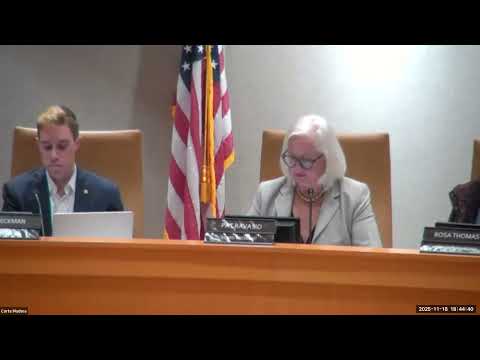
San Rafael Sanitation District Chair Kate Collin told Corte Madera’s Sanitary District No. 2 board that a draft operations agreement would transfer day-to-day collection operations for San Rafael to the Central Marin Sanitation Agency (CMSA) while leaving voting representation and the joint-powers structure intact. “The operations will be managed by CMSA,” Collin said, emphasizing the proposal is intended to improve efficiency and help San Rafael recruit and retain staff.
The proposal grew from two decades of countywide conversation about shared services and consolidation, Collin said, and is accompanied by outside analyses and legal drafts. The draft agreement—now in its eleventh iteration—would have CMSA hire or offer employment to San Rafael collection staff, and San Rafael would fully reimburse CMSA for personnel, benefits and a modest overhead rate.
Why it matters: the change would shift operational responsibility without changing elected representation at CMSA, but it could create new liability or cost flows if the agreement is not carefully written. Corte Madera’s board and members of neighboring Ross Valley Sanitary District pressed that the town’s ratepayers not be exposed to litigation or pension liabilities as San Rafael’s employees move to CMSA.
Board counsel Amy Ackerman said negotiators have added protections and are seeking stronger language. “We have made SD 2 and Ross Valley third-party beneficiaries to the agreement,” Ackerman said, describing indemnity language and a requirement that San Rafael bear transition costs and pay enforcement expenses if SD2 or Ross Valley must enforce their rights.
Paul Causey, the consultant advising the project, said the parties have engaged with pension administrators and expect to resolve unfunded liabilities before any transfer: “The agreement does speak to how the unfunded liability associated with MCERA has to be taken care of before the effective date of the agreement,” he said, and estimated a 6–9 month implementation period after final approval.
Public comment was sharply split. Several Ross Valley officials and board members urged caution, arguing CMSA lacks collection-system experience and warning that the proposed staff transfer would change the JPA’s operational balance. Tom Gaffney of Ross Valley said the proposal “opens up opportunities for so many areas of potential conflict,” while others urged more public outreach and a fuller presentation to their boards.
Corte Madera board member Eli Beckman—who has served on the ad hoc committee that developed the draft—said he supports helping a sister agency if protections are secure: “As long as we can make sure that any of these services provided for SRSD by CMSA… that SD 2 is totally indemnified… I am happy to support this,” Beckman said.
What the board did: members did not vote to approve the agreement tonight. The board discussed the draft, asked legal clarifications and signaled a majority willing to direct their CMSA representative subject to receiving final contract language that restores third-party-beneficiary and indemnity protections. The SD2 counsel recommended not approving the agreement without explicit third-party-beneficiary language.
Next steps: San Rafael, CMSA and legal counsel will continue revisions. CMSA and the member boards will have a two-month window to consider the final draft and provide direction to their voting representatives; staff estimated a final decision by the CMSA board no later than December or January. If approved, implementation steps—employee evaluations, offers of employment, and MCERA/CalPERS coordination—could take an additional 6–9 months before services transfer.