Get Full Government Meeting Transcripts, Videos, & Alerts Forever!
Get email alerts on the Alternative Education topic
No spam. Unsubscribe anytime.
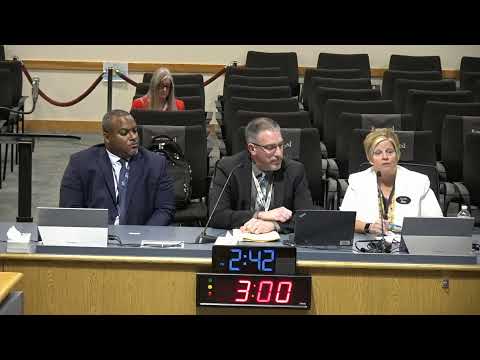
Volusia board hears how Wings for Success supports students in detention and residential programs
Summary
Volusia County Schools staff and Wings for Success leaders described education, mental-health and transition services for students in juvenile detention and residential treatment, outlined fundraising limits at secure facilities and asked the board to help coordinate recurring community support.
Colleen Carvin, coordinator for student services for Volusia County Schools'alternative residential education, told the school board the district's program provides year-round education and social-emotional supports to students placed in residential settings and detention.
Carvin described four distinct program sites, including the Volusia Regional Juvenile Detention Center (managed by the Florida Department of Juvenile Justice) serving students roughly ages 9'22, and SMA Health Care programs (RAP and Beach House) that offer longer-term substance-abuse treatment and short-term respite. She said students may begin earning credit on day one and that the district uses Edgenuity, Renaissance STAR and Xello to assess and place students.
"These sites do represent more than classrooms. They're lifelines," Carvin said, summarizing the program's goals to reduce truancy, improve attitudes and support academic progress. She told the board the program serves more than 1,100 students annually across multiple sites and noted recent enrollment growth; last year the program served approximately 1,200 students, with roughly two dozen elementary placements reported.
Jessica Lovett, board chair of the Wings for Success nonprofit and president/CEO of VMA, urged community support and fundraising to provide items and incentives not available through standard school fundraising mechanisms. "We need support. We need advocates. And we need you to help lift with us," Lovett said, describing Wheels-for-Success incentives such as a prize wheel for course completions and community donor partnerships that provide meals, guest speakers and graduation support.
Board members and presenters spent considerable time on practical limits to donations and fundraising at secure sites. Carvin and others explained Department of Juvenile Justice rules prevent many direct shipments and that donated items must meet strict packaging and safety standards (for example, glue-bound books with no staples). As a result, the presenters maintain a vetted Amazon wish list for acceptable items and offer an online $20-donation option to let professionals purchase compliant supplies on behalf of students.
The board asked the presenters to develop an annual calendar of recurring sponsorship opportunities and to coordinate that plan with Denise Ribeiro and the district's new education partners. Chair Colon and other members also asked staff to pursue state guidance and internal processes for tracking student records and graduation data for students placed from other counties; Carvin said the district is "working on that right this second"
The presentation closed with requests for help recruiting guest speakers, sponsors for holidays and modest donations to supply student incentives and staff appreciation items. Carvin invited board members to attend virtual graduations held for students in secure settings and to share contact information for community partners willing to help.