
Solano health officials say SNAP benefits restored after shutdown; community groups warn of growing hunger
Get AI-powered insights, summaries, and transcripts
Subscribe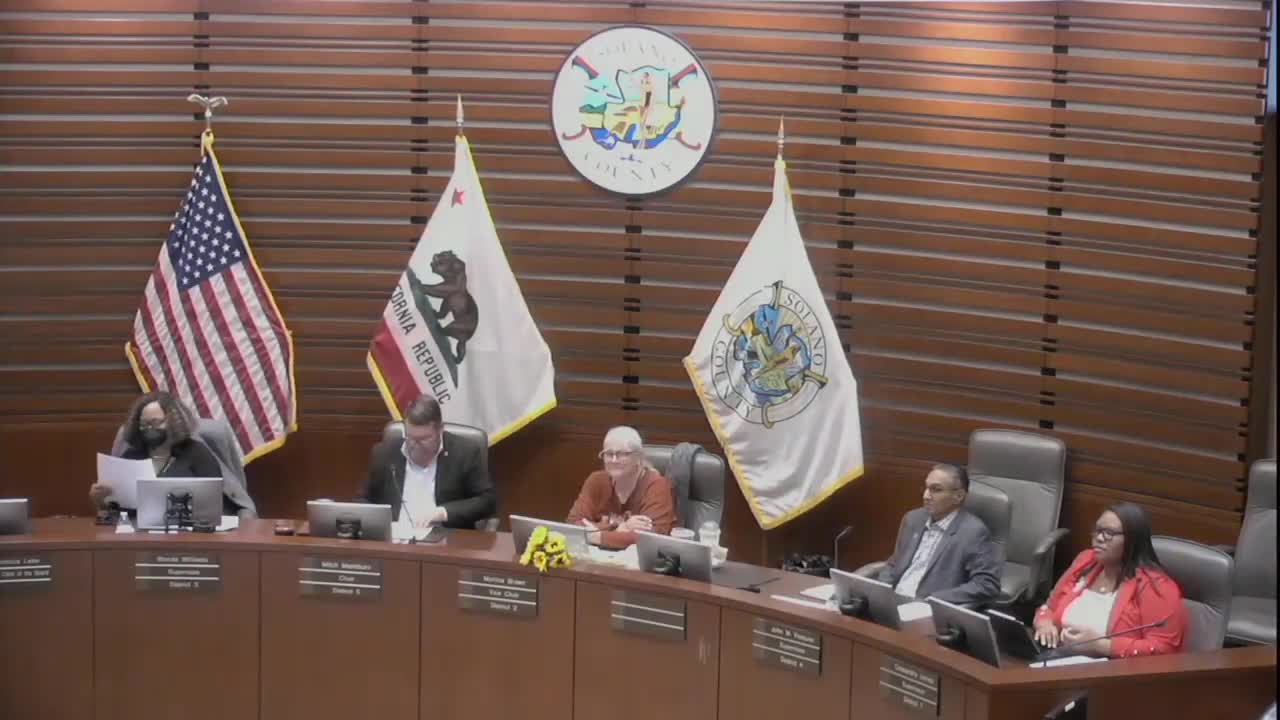
Summary
County Health & Social Services reported full CalFresh/SNAP benefits were distributed after the federal shutdown and a continuing resolution keeps benefits through Sept. 30, 2026, but food banks and nonprofits told the board demand has surged and urged immediate county action.
Health and Social Services staff told the Solano County Board of Supervisors that a court order and state actions resulted in full CalFresh (SNAP) benefit disbursement to active participants beginning Nov. 7 and completing Nov. 10 after a 43‑day federal shutdown. The department said a continuing resolution signed at the federal level will maintain SNAP benefits through the end of the federal fiscal year on Sept. 30, 2026, and contingent reserves provide additional coverage into October.
Alicia Jones, deputy director for employment and eligibility, said the county and state pursued options during the shutdown and executed distribution plans so county clients received full benefits. She noted that CalFresh administration is a state and federal program and county staff’s role is to administer benefits and to inform clients about local resources.
Multiple community speakers told the board they were already seeing a sharp and sustained increase in need. Brian Espinosa and Kim Castaneda of the Food Bank of Contra Costa and Solano said traffic to their website’s food‑finder rose by about 400%, and partner agencies reported large surges in people seeking emergency food. Community providers and Kaiser Permanente clinicians testified that they are encountering patients who report food insecurity and that groups expect demand to rise further if pending federal changes (referred to in testimony as HR 1) reduce benefit eligibility beginning Jan. 30.
Supervisors and staff discussed near‑term and longer‑term responses. The board directed staff to return with a consolidated agenda item describing vulnerabilities across hunger, clinics, and homelessness, and to explore options such as standing up volunteer opportunities that could be documented to help recipients meet reporting or volunteer requirements tied to benefit eligibility. Supervisors described hunger as an immediate crisis and asked staff to prioritize short‑term interventions alongside longer planning for healthcare and housing vulnerabilities.