
San Diego County supervisors approve housing-workshop recommendations, direct zoning and affordability work
Get AI-powered insights, summaries, and transcripts
Sign Up Free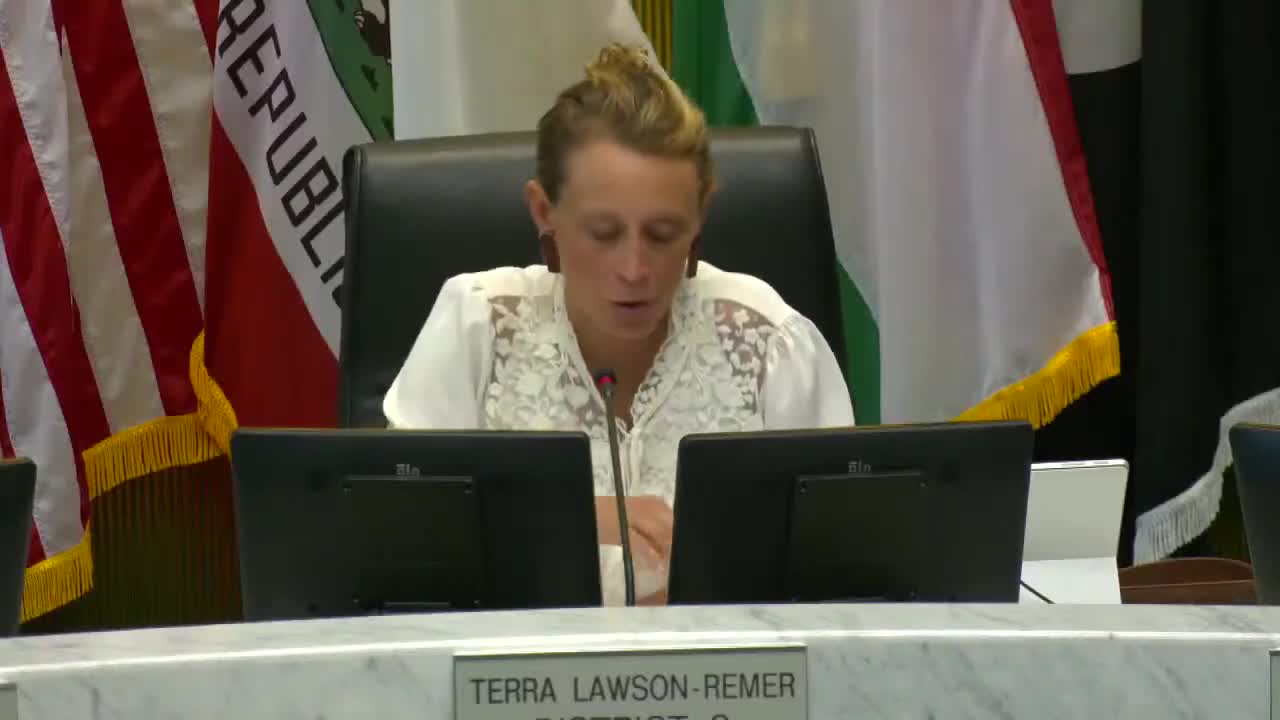
Summary
After a day-long workshop reviewing a development feasibility analysis and housing trends, the San Diego County Board of Supervisors unanimously approved staff recommendations and directed follow-up on zoning alignment, an inclusionary housing ordinance and VMT mitigation options.
The San Diego County Board of Supervisors voted unanimously on Nov. 19 to approve staff recommendations presented at a housing workshop that reviewed regional housing trends, a development feasibility analysis (DFA) of four pilot communities and near-term policy options to boost housing production in unincorporated areas.
Chair Lawson Reimer opened the workshop by placing public engagement and safety at the center of the discussion. “Public engagement is a cornerstone of transparent and accountable government,” Lawson Reimer said as the board began the session. Staff emphasized the county is not seeking approvals at the workshop but wanted direction to shape future policy items.
Staff presentations from Planning and Development Services and Housing and Community Development Services laid out the challenge: roughly 20% of county residents spend more than half their income on housing; the region’s RHNA (regional housing needs allocation) is 171,685 units for 2021–2029, and the unincorporated county’s share is 6,700 units. Staff also reported the county’s affordable-housing portfolio includes about $390 million in financing and more than 9,500 supported units, with $112 million invested in the Innovative Housing Trust Fund since 2017 and a current pipeline of 33 developments totaling 2,859 units.
The DFA examined four communities (Buena Creek, Lakeside, Valle De Oro/Casa De Oro and Spring Valley) and found recurring barriers: limited developable land, weak market feasibility for higher-density product types, missing local amenities (jobs, transit, parks), high discretionary costs and legal uncertainty around VMT (vehicle miles traveled) rules. Staff identified eight action steps including zoning alignment to make village development feasible, expanding by-right and streamlined permit pathways, exploring a local VMT mitigation program, prioritizing infrastructure investment in areas with housing demand, and returning with an inclusionary housing ordinance.
Board members pressed staff for clarifications about the county’s remaining theoretical general-plan capacity (staff cited up to 58,000 units of capacity on county land under the current general plan but cautioned that number does not account for site-specific constraints or market feasibility) and how much of that capacity sits in VMT-efficient or village areas (staff estimated 7,000–8,000 units in VMT-efficient/infill areas). The board also explored whether general-plan-compliant projects that qualify under CEQA Section 15183 are exempt from VMT analysis — staff said they currently are, and that further work on VMT mitigation options will come to the board in 2026.
Three group presentations represented environmental, industry and community-preservation perspectives. The Endangered Habitats League urged renewed emphasis on village-focused growth and habitat protection; the Building Industry Association offered a multi-horizon implementation package (near-, mid- and long-term actions it calls “CHIPS”) to accelerate village development and permit streamlining; and community advocates (including Alliance of Californians for Community Empowerment and Casa Familiar) pressed for preservation measures, tenant protections, and use of community land trusts to produce deeply affordable homeownership opportunities.
Supervisors identified shared near-term priorities: advance zoning consistency between the general plan and zoning ordinance, accelerate targeted zoning updates, advance permitting efficiencies for village areas, continue work on a locally structured VMT mitigation program that could fund active-transportation improvements, and return with options for an inclusionary housing ordinance. Several supervisors also urged a stronger preservation focus (mobile-home parks and naturally occurring affordable housing) and asked staff to report back on timelines and resource needs.
After public comment and additional board discussion, a motion to approve staff recommendations was made and seconded; the clerk recorded the motion as passing unanimously with all supervisors present voting aye. The board then recessed to closed session on unrelated items.
What happens next: staff will return with specific proposals and timing for zoning-alignment updates, the inclusionary ordinance, the VMT mitigation options, and the grading/by-right housing program (the latter is expected in spring 2027). Staff told the board it will prioritize actions that align with the housing blueprint and the DFA findings and will follow up on stakeholder ideas raised during today’s workshop.