
County leaders say late veto‑session transit deal preserves revenue but raises governance concerns
Get AI-powered insights, summaries, and transcripts
Sign Up Free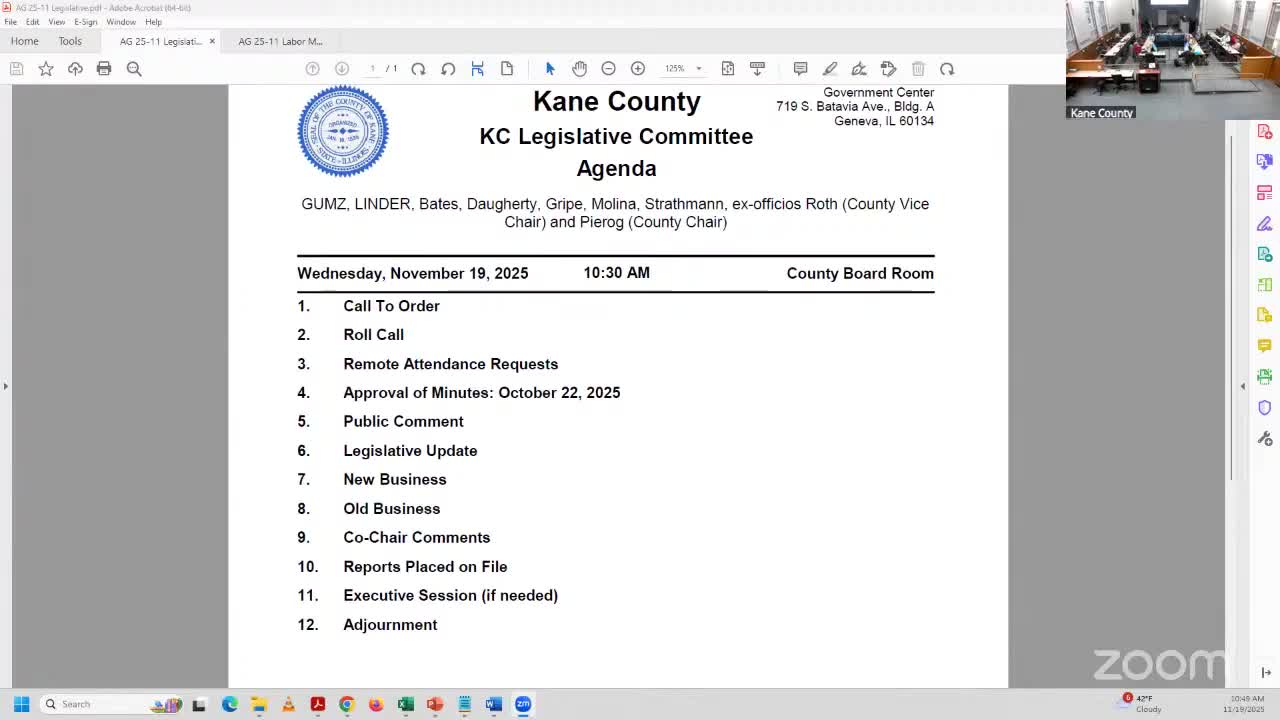
Summary
A late veto‑session transit package redirected millions to a new Northern Illinois transit entity and passed governance language the county fears could limit collar‑county influence; Kane County staff said they supported the final product while flagging confusion over the county’s position at the end of negotiations.
James Sherwood, reporting on the Illinois veto session, told Kane County’s legislative committee that transit negotiations concluded at the eleventh hour with a package the legislature passed during veto session.
“[It] contains 860,000,000 in redirecting the state sales tax on motor fuel purchases to public transit,” Sherwood said, and described other revenue components included in the final deal. He said 85% of one funding bucket would flow to the new Northern Illinois entity and 15% to downstate areas; additional funding came from a $200 million transfer of road‑fund interest and an estimated $478 million tied to a 0.25 percentage‑point increase in RTA sales tax for Cook and collar counties.
Sherwood said the principal bone of contention for collar counties was governance: the new board would have 20 members and require 15 votes to approve major capital or operating changes — a structure he warned “could allow Cook, Chicago, and the gubernatorial appointments, to go around the collar counties.” Kane County had lobbied for a different voting structure and secured some House language earlier in the process, he said, but that language was stripped in negotiations late in veto session. Sherwood said Kane County provided a formal letter outlining concerns and that county staff later reported the county had indicated support for the final product but acknowledged confusion among legislators at the end of the process.
Committee members discussed next steps: several urged identifying qualified candidates for potential gubernatorial appointments to the new board, improving coordination with the county’s lobbyists, and preparing to press for clarifying trailer bills that could address drafting errors or governance details.
Sherwood said a trailer bill is possible but that he did not expect substantive changes; the committee asked staff to stay engaged with the governor’s office and the county delegation and to report back on appointments and any drafting corrections.
The committee did not take a formal vote on the transit package itself; members instead focused on advocacy, appointments and messaging strategies to preserve local influence under the new governance structure.