Get Full Government Meeting Transcripts, Videos, & Alerts Forever!
Get email alerts on the Hotel Tax Policy topic
No spam. Unsubscribe anytime.
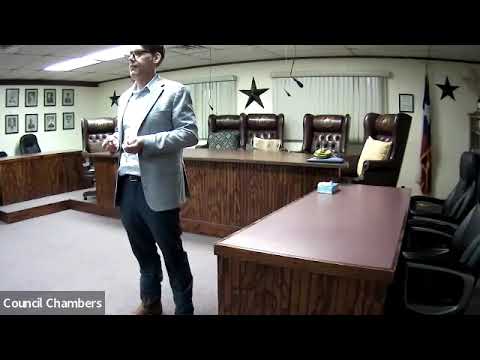
Alpine presenters detail what hotel-occupancy tax can legally fund; advertising requirement emphasized
Summary
At an Alpine forum, tourism director Chris Ruggia and Justin Bragle, general counsel for the Texas Hotel & Lodging Association, outlined legally allowable uses of the city's hotel-occupancy tax, stressing that every expenditure must "directly promote and enhance tourism and the hotel and convention industry" and noting local and statutory spending caps.
Chris Ruggia, Alpine's director of tourism, and Justin Bragle, general counsel for the Texas Hotel & Lodging Association, told a public forum that city hotel-occupancy tax revenue must have a direct connection to tourism and the hotel/convention industry.
"Every expenditure must directly promote and enhance tourism and the hotel and convention industry," Bragle said, summarizing state law and later noting the commonly used shorthand: "putting ends in beds."
Why it matters: Alpine levies a 7% municipal hotel-occupancy tax in addition to the state's 6% tax. Because the local tax is a dedicated revenue source, state law requires a two-part statutory test: (1) the spending must directly promote tourism and the hotel/convention industry and (2) the spending must fit into one of the enumerated categories authorized by statute.
What counts: Bragle listed the principal statutory categories cities commonly use: convention centers and visitor information centers (including construction, maintenance and staffing), registration of convention delegates, advertising and promotion, arts-related events and activities (subject to a 15% statutory cap), historical restoration and preservation (also capped at 15%), certain sporting events (if a majority of participants are tourists), wayfinding signage, and limited transportation systems that move tourists between hotels and attractions. Bragle emphasized that advertising and promotion is one of the most flexible categories and a high-return use of hotel-tax dollars.
Local policy: Alpine has a local policy requiring that at least 50% of hotel-tax revenue be spent on advertising and promotion of the area as a tourist destination. Bragle and Ruggia said that policy explains the city's emphasis on marketing and the committee's tendency to favor requests that include an advertising component.
Limits and exceptions: Bragle warned that hotel taxes generally cannot be used for unrelated general services such as water-treatment projects. New sports infrastructure is typically disallowed unless a city has specific bracketed statutory authority or obtains voter approval to impose an additional venue/ballot tax devoted to facility debt. When cities pursue a voter-authorized supplemental rate, the ballot must define the venue and the additional revenue is restricted to that purpose.
Background and procedure: Bragle said the statutes and local policies create caps and proration rules applicants should account for when budgeting requests. He and Ruggia urged applicants to demonstrate how proposed spending will increase overnight stays and to document distribution plans for advertising and promotion so staff can verify the tourism nexus.
Next steps: Staff offered to help potential applicants interpret the rules and prepare applications; Ruggia said the grant window typically opens in spring for the next fiscal year to align with the Oct. 1'Sept. 30 budget cycle.