Weingart Rose opens in Norwalk, converting Motel 6 into 54 supportive-housing studios
This article was created by AI summarizing key points discussed. AI makes mistakes, so for full details and context, please refer to the video of the full meeting. Please report any errors so we can fix them. Report an error »
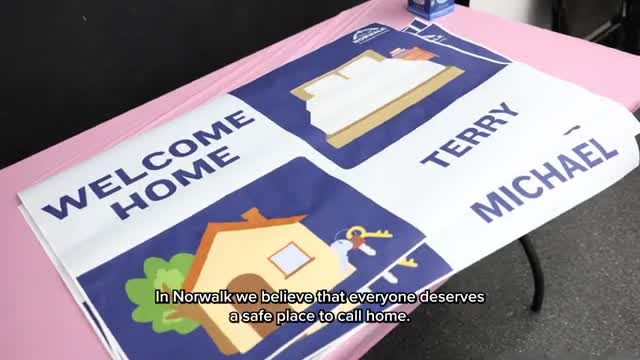
On Oct. 30 the City of Norwalk and partner organizations celebrated the official opening of the Weingart Rose, a permanent supportive-housing community converted from the former Motel 6 on Rosecrans that provides 54 fully furnished studio units for people who experienced homelessness.
An unidentified speaker opening the event said the conversion was supported by California's Project Homekey and marked the start of residents’ new chapters. "In Norwalk, we believe that everyone deserves a safe place to call home," the speaker said.
The project began move-ins in September. Officials said tenants were selected through the Norwalk Housing Authority in partnership with Weingart Property Management. The facility includes on-site mental-health care, recovery support, employment assistance and case management, plus shared gathering spaces and a dog park designed to promote connection and stability.
One resident (speaker 2) described the personal circumstances that led to homelessness: "I was in a domestic violent relationship. I had a protection order on me ... it was really hard on my mental health," she said, adding that autoimmune disease also contributed to her housing instability. Another resident (speaker 3) said entering the unit felt like safety: "Like, I got overwhelmed ... it does feel safe. I don't have to look over my shoulder." Those testimonials were offered at a sign-in day described by organizers as more than paperwork.
Supervisor Janice Hahn said the development reflects the Weingart Center’s mission to end homelessness through permanent supportive housing and noted collaboration among city, county and state partners. "The Weingart Rose represents the heart of Weingart Center's mission to end homelessness through permanent supportive housing," Hahn said.
City representatives and partners framed the project as a housing-first effort that pairs permanent units with supportive services. The event was a ceremonial opening rather than a legislative action; no formal vote or ordinance was recorded at the event. Organizers encouraged the community to view the site as a place for rebuilding and healing.
"Welcome home, neighbors," an event speaker said, closing the program.
Next steps were not specified at the event beyond ongoing resident move-ins and on-site support services.
An unidentified speaker opening the event said the conversion was supported by California's Project Homekey and marked the start of residents’ new chapters. "In Norwalk, we believe that everyone deserves a safe place to call home," the speaker said.
The project began move-ins in September. Officials said tenants were selected through the Norwalk Housing Authority in partnership with Weingart Property Management. The facility includes on-site mental-health care, recovery support, employment assistance and case management, plus shared gathering spaces and a dog park designed to promote connection and stability.
One resident (speaker 2) described the personal circumstances that led to homelessness: "I was in a domestic violent relationship. I had a protection order on me ... it was really hard on my mental health," she said, adding that autoimmune disease also contributed to her housing instability. Another resident (speaker 3) said entering the unit felt like safety: "Like, I got overwhelmed ... it does feel safe. I don't have to look over my shoulder." Those testimonials were offered at a sign-in day described by organizers as more than paperwork.
Supervisor Janice Hahn said the development reflects the Weingart Center’s mission to end homelessness through permanent supportive housing and noted collaboration among city, county and state partners. "The Weingart Rose represents the heart of Weingart Center's mission to end homelessness through permanent supportive housing," Hahn said.
City representatives and partners framed the project as a housing-first effort that pairs permanent units with supportive services. The event was a ceremonial opening rather than a legislative action; no formal vote or ordinance was recorded at the event. Organizers encouraged the community to view the site as a place for rebuilding and healing.
"Welcome home, neighbors," an event speaker said, closing the program.
Next steps were not specified at the event beyond ongoing resident move-ins and on-site support services.
Don't Miss a Word: See the Full Meeting!
Go beyond summaries. Unlock every video, transcript, and key insight with a Founder Membership.
✓
Get instant access to full meeting videos
✓
Search and clip any phrase from complete transcripts
✓
Receive AI-powered summaries & custom alerts
✓
Enjoy lifetime, unrestricted access to government data
30-day money-back guarantee
