
Kenmore planning commission reviews PROS plan and survey, debates financing options
Get AI-powered insights, summaries, and transcripts
Subscribe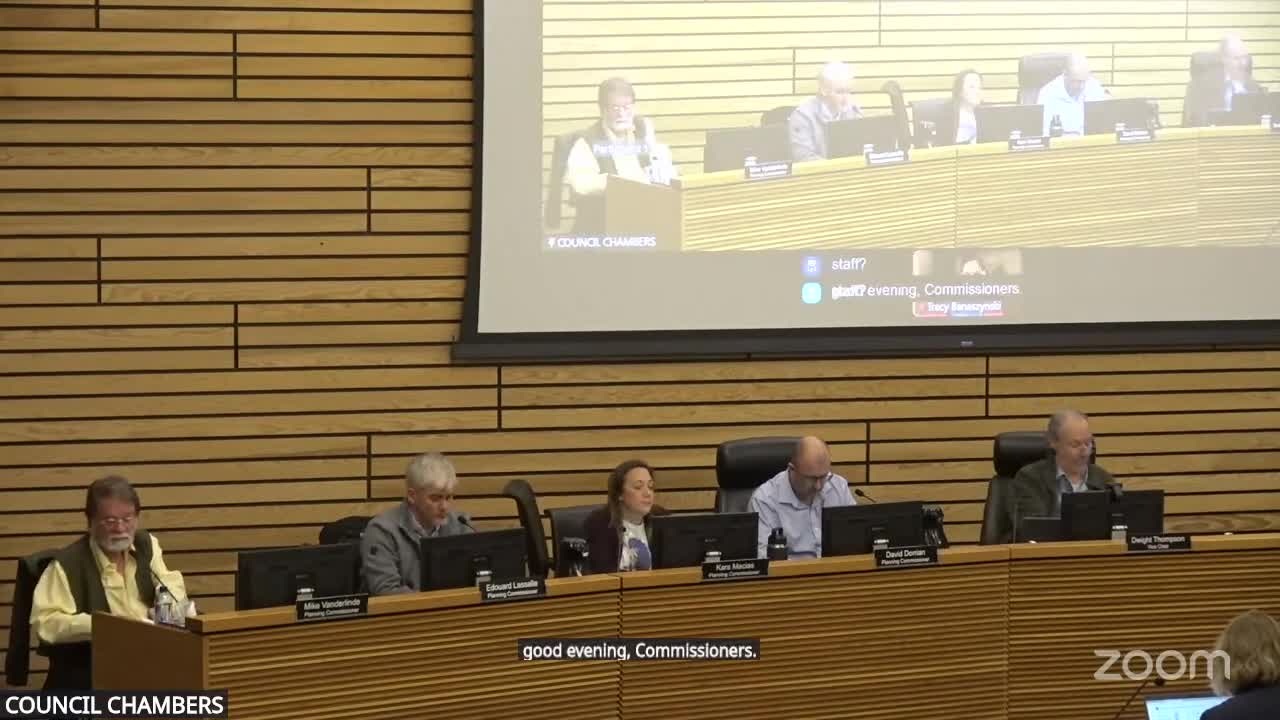
Summary
Commissioners reviewed the draft PROS parks plan and a resident survey, debated whether the draft presents a menu of options or a recommended package, and discussed funding approaches — impact fees, REIT allocations, levies/bonds — before cancelling a December meeting and scheduling further review.
Kenmore’s Planning Commission spent most of its Nov. 20 meeting reviewing a draft parks and recreation plan and the results of a mailed resident survey, with commissioners divided over whether the draft should read as a menu of funding and project options or as a more directive recommendation to the city council.
Consultant Tom Beckwith presented the plan’s existing level-of-service analysis and financial worksheets, saying the city is “land rich and facilities poor” and showing projected asset values and shortfalls if current ratios are maintained. Beckwith translated those values into per-capita figures, noting a 2025 population of 24,520 and a 2050 projection of 33,491, and giving example estimates such as a $4,970.13 land value per resident and a combined land-and-facility asset value of about $5,913 per person.
The presentation laid out four broad approaches for closing the funding gap: raising recreation cost recovery through fees, increasing park impact fees (example scenarios of 55%/65%/75% recapture were modeled), allocating a share of REIT revenue for parks, or pursuing voter-approved levies or bonds. Beckwith said a homeowner on an $869,000 house could expect an example levy of roughly $66–$82 per year under the modeled alternatives.
Several commissioners pressed for clearer linkage between the plan’s high-level goals and the specific $35.8 million project figure cited in the packet. Commissioner LaSalle asked staff to produce a consolidated gap analysis showing “what Kenmore should have” compared with what it currently has and how that calculation produced the plan’s cost totals; LaSalle said the commission needs that reconciliation before endorsing financing steps. Consultant Beckwith and staff responded that the packet includes NRPA benchmarks, park-level master-plan sheets, and appendix tables that document the assumptions, and they agreed to prepare an executive-summary statement for the document clarifying what the plan is — and is not.
Commissioners also debated the political and practical feasibility of different funding tools. One commissioner warned that allocating REIT to parks could be politically contentious; others noted levies are commonly more successful when they are itemized with specific projects and that bonds can fund capital but not routine maintenance. Commissioners recommended that the transmittal to council clarify the plan’s role as a feasibility and options document rather than an adopted blueprint.
Staff summarized survey results included in the appendix: the mailed survey received about 384 responses; respondents prioritized wildlife habitat acquisition and a walking/biking network; about 19% said they live 9–15 minutes or more from a park, indicating gaps in access; and when asked bluntly about paying more taxes, many respondents expressed reluctance to accept new taxes. Commissioners discussed the tension between resident support for parks in principle and resistance to new taxes in practice and asked staff to include a short implementation/implication section highlighting those tradeoffs.
For next steps, staff said an executive summary or transmittal letter will be added to the draft to spell out that the plan documents options and feasibility analyses rather than a single required course of action. The commission will review the revised packet at its Dec. 2 meeting and is expected to take a formal recommendation position in January ahead of submittal to the Recreation and Conservation Office.
Votes at a glance: the consent agenda was adopted by unanimous consent earlier in the meeting, and the commission voted unanimously to cancel the Dec. 16 meeting after a motion from Commissioner Dorian.
The commission closed by asking staff to return with clarifications on implementation language, an explanation of Metropolitan Park District versus the North Shore Park Recreation Service Area (NPRSA), and a brief update on nearby regional aquatic-center site work. The meeting adjourned at 8:59 p.m.