Get Full Government Meeting Transcripts, Videos, & Alerts Forever!
Get email alerts on the Election Transparency topic
No spam. Unsubscribe anytime.
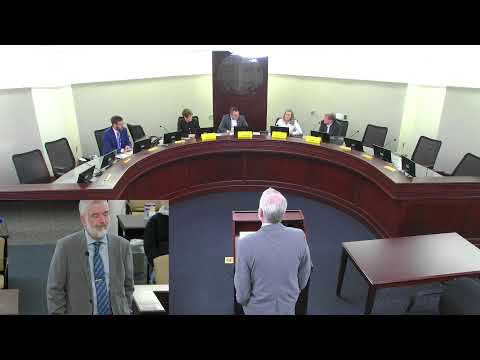
Residents press Northampton County election officials for voter-roll and mail-in ballot transparency
Summary
Residents raised concerns about how often voter rolls are purged, why some voters were told they already voted by mail, access for poll watchers to reconciliation materials and asked that testing scripts for electronic voting machines be made public.
Deborah Biro, a Nazareth resident, told the Northampton County Election Commission on Nov. 18 that she wants detailed public records showing when the rolls were last purged and how many voters were removed, saying that information is not personal and should be available to the public. “I would like to get the data from the voter rolls that when it was last purged, how many voters were purged and how often the voter rolls are purged,” she said.
Biro said several voters reported being told at precincts that they had already voted by mail, then were given provisional ballots when they attempted to vote in person. She asked whether the county can provide a day-by-day breakdown of when mail-in ballots were received and, if possible, the counts by drop box location. “It gets very discouraging when you’re waiting in line sometimes up to 45 minutes only to be told … you already voted by mail,” she said.
The commission also heard from Joe Moyer of Lower Mount Bethel Township, who urged that logic-and-accuracy test scripts for ballot-marking devices be made public so independent reviewers can evaluate whether testing covers both positive and negative cases. “Where are they testing scripts for these machines, public knowledge and can they be reviewed?” he asked, arguing public access could build confidence in electronic voting.
Registrar Christopher Camini told the commission the office follows Department of State guidelines for purging voter rolls and uses information such as obituaries and register-of-wills data to remove deceased voters. He said voters who remain on the permanent mail-in list will continue to receive ballots until they cancel registration and that the system flags whether a voter has a mail-in ballot so poll workers know to offer a provisional ballot if the mail-in ballot was not returned.
Camini also said logic-and-accuracy testing was changed after 2023 to better capture yes/no responses and that test decks and preserved test records can be requested under the county’s election-records policies. On access for poll watchers, Camini said statute limits who may be in the counting room during processing but that machine tapes and posted results are made publicly available at polling locations.
The commission did not adopt new record-sharing rules at the meeting; members asked staff to follow up on Biro’s records requests and the possibility of providing more granular mail-in receipt data if the records exist. The next commission meeting is scheduled for Feb. 17, 2026.