Get Full Government Meeting Transcripts, Videos, & Alerts Forever!
Get email alerts on the Land Use topic
No spam. Unsubscribe anytime.
New Canaan panel approves on‑street parking plan tied to proposed Locust Avenue hotel
Summary
The New Canaan Police Commission approved an on‑street parking layout for a proposed hotel on Locust Avenue, endorsing 5 spaces on Locust, 4 on Cherry and one loading zone after applicants presented a plan and staff answered questions about compliance and pedestrian safety.
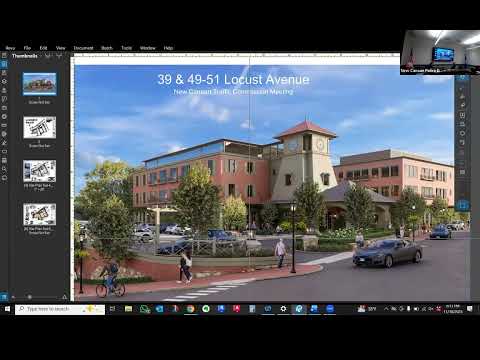
The New Canaan Police Commission on Nov. 18 approved an on‑street parking plan tied to a proposed hotel project on Locust Avenue between Forest and Sherwood. Applicants presented a special‑permit application and a parking layout the commission agreed to adopt for on‑street spaces.
Commission members heard that a field check showed fewer functional on‑street spaces than an earlier survey. The project team told the commission that existing curbside stalls vary in length and that “several existing spaces are less than a required 22 feet,” creating noncompliant conditions. The applicant summarized the net change as: “we're moving from 12 existing to 9 proposed with the loading space,” and said the plan also includes a dedicated loading zone required by engineering staff.
Under the approved design, the commission recorded 5 on‑street spaces on Locust, 4 on Cherry Street and a single loading zone that staff said can be time‑restricted later so the space can function as parking outside loading hours. The project team also said the site will include seven on‑site parking spaces. During the presentation the applicant described reuse of two existing building shells, additions such as Juliet balconies and a dining patio, and estimated room counts — 41 rooms in the larger building and eight extended‑stay two‑bedroom units in the other structure.
Commissioners asked procedural and safety questions about the loading zone and curb extensions; staff said curb extensions and the loading designation improve pedestrian safety and that timing or enforcement of the loading zone could be set by the town after approval. A motion to approve the on‑street parking design as presented was seconded and approved by voice vote.
Next steps on the project include continued engineering review, phasing details to be submitted with the building permit application, and any separate licensing or street‑use approvals that town departments require.