
Area Plan Commission forwards amendments to Economic Development Area No. 3 to county leaders
Get AI-powered insights, summaries, and transcripts
Subscribe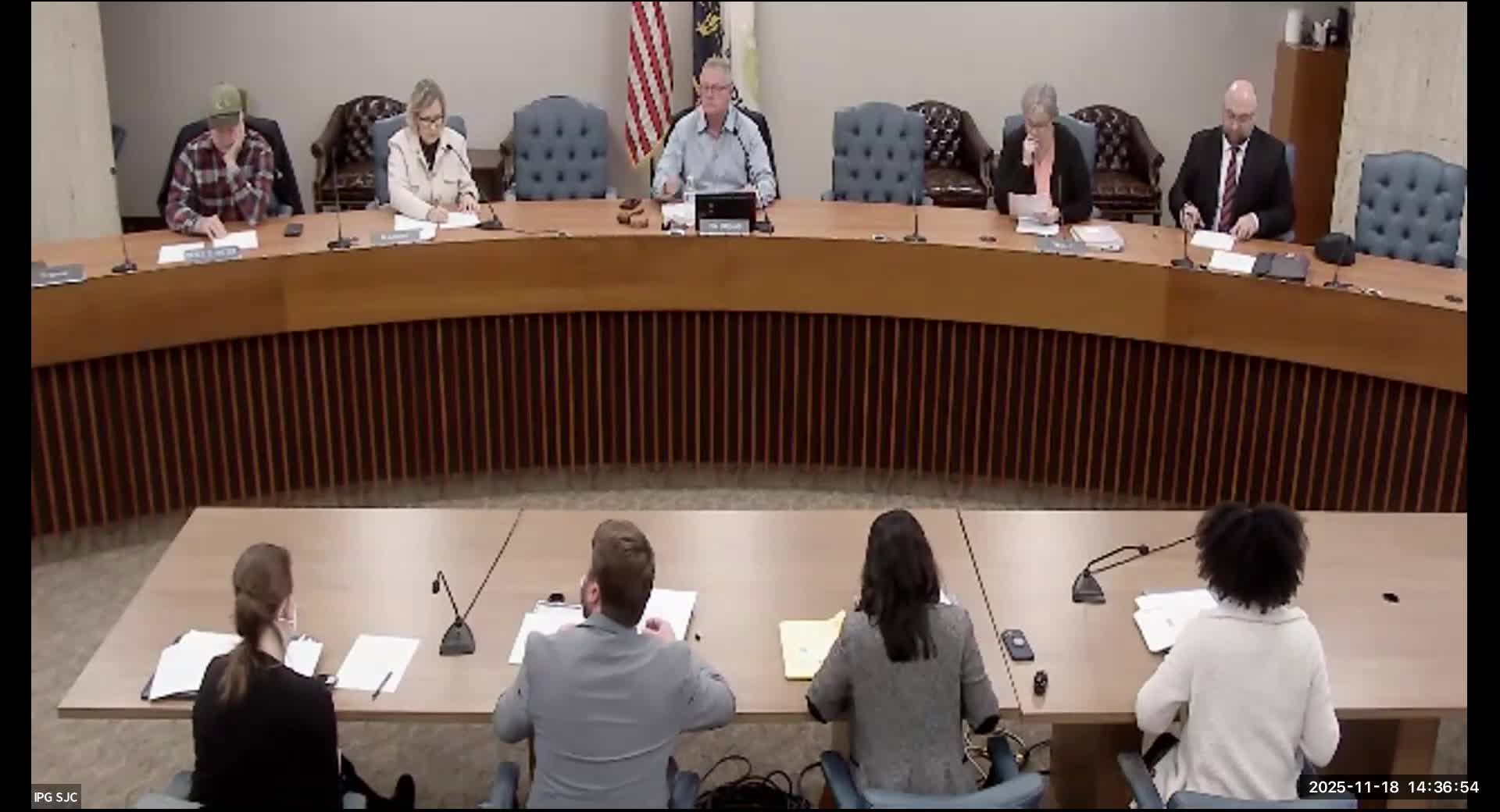
Summary
The Saint Joe County Area Plan Commission voted to recommend APC R‑270‑25, which reduces and renames Economic Development Area No. 3 as the Capitol Avenue Economic Development Area, creates five allocation areas, adds about 72 parcels to the acquisition list and establishes a work plan to fund water, sewer and trail projects tied to planned Microsoft development.
The Saint Joe County Area Plan Commission voted Nov. 18 to forward APC R‑270‑25 with a favorable recommendation, approving amendments to the Redevelopment Commission’s declaratory resolution and economic development plan for Economic Development Area No. 3.
The resolution, presented by Bill Shalio, the county’s economic development director, reduces the original AM General Economic Development Area to a smaller revenue-producing footprint (allocation area No. 1), renames the district the Capitol Avenue Economic Development Area, splits the remainder into four additional allocation areas (five total), and adds roughly 72 parcels to the acquisition list, including parcels near the Grainger water plant.
Shalio told commissioners the changes are intended to generate revenue to fund a set of prioritized infrastructure projects: water improvements, sewer improvements, targeted public‑works projects (including the Douglas Road rail overpass), and trails and open‑space projects to better connect existing trail networks. "We've done 40 years worth of work in about 40 days," Shalio said, describing recent progress toward a settlement and memorandum of understanding among the city, county and the regional water‑sewer district.
Shalio estimated the total water‑and‑sewer build‑out to Grainger and the eastern side of the county would likely cost about $70,000,000, and said Microsoft would construct an initial "tub out" and is likely investing roughly $40,000,000 into the network.
Staff outlined the remaining approvals before the plan can be implemented: the board of commissioners, a county council committee hearing, a public hearing before the redevelopment commission, and a final county council public hearing. After questions from commissioners about packet materials and trail connectivity, DJ Tavernier moved to forward the resolution with a favorable recommendation; Dr. Lauck seconded and a roll call vote was unanimous among those present.
The commission’s action is a recommendation; final authority for adoption of the amended declaratory resolution and the development plan rests with the county council following the remaining public‑hearing steps.
Next steps: county staff will present the amended resolution, maps and the development plan to the board of commissioners and then to the county council committee process for additional public hearings and final action.