
Board begins budget-priorities workshop, flags compensation, instructional support and technology funding
Summary
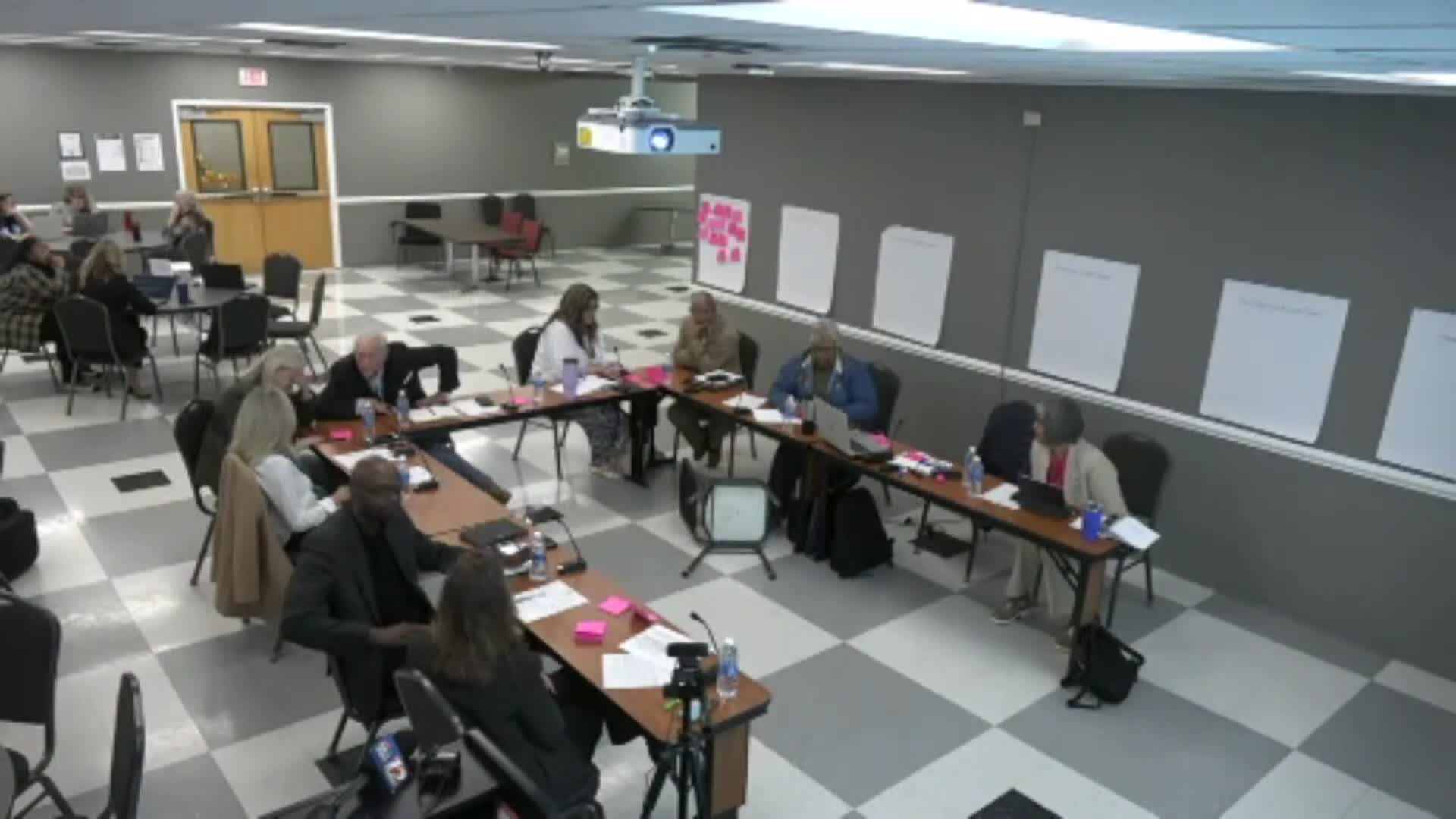
At a facilitated workshop, the board and staff gathered sticky-note priorities across instructional support, exceptional-children services, family engagement and operational efficiency, with compensation noted as a cross-cutting concern and a shortage of recurring funds for device refreshes.
Board members and staff conducted a priorities workshop to guide the district—s strategic plan and upcoming budget.
An unidentified presenter opened the session by asking participants to post sticky notes and reminding the group that "compensation is an important part" of every bucket even though it was not a separate column on the activity board. The facilitator urged alignment among the strategic plan, legislative priorities and budget priorities.
Discussion prompts focused on instructional and academic supports (instructional coaches, multi-classroom leaders, literacy and math coaches), school-based allotment formulas, and the risks of having many different reading or instructional programs across schools. The facilitator said some districts have used state grants for multi-classroom leader positions but noted those grants are not universally funded: "it is not funded across the entire state," and continued funding would require local dollars if state grants end.
The session also covered exceptional-children services (roles such as ECFs, process specialists and psychologists), family engagement and bilingual support (including a note that up to "30% of our bilingual assistants were not bilingual" in some buildings), volunteer coordination and training, and operational-efficiency topics including technology refresh needs and the lack of recurring device replacement dollars after ESSER funds were used.
Staff described next steps: collecting raw data from stakeholder sessions (principals, teachers, classified staff and others), combining feedback into larger buckets, and returning to the board with refined priorities (an update expected around March). The facilitator repeatedly urged participants to capture detailed feedback during concurrent stakeholder sessions so it can be synthesized into budget and legislative planning.

Create a free account
Unlock AI insights & topic search