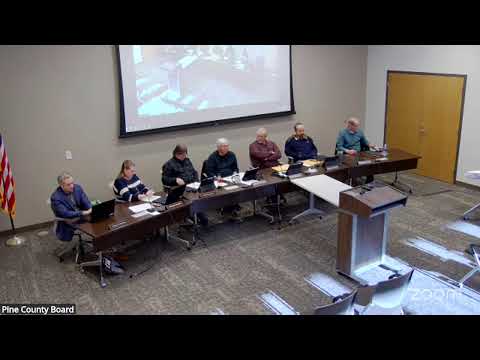
Essentia Health briefs Pine County on EMS coverage, new ECMO pilot and staffing
Loading...
Summary
Essentia Health presented its FY25 I‑35 ambulance operations report to Pine County commissioners, describing coverage across four local bases, staffing and training levels, pilot programs including a field-activated ECMO partnership and prehospital antibiotics, and increased call volumes concentrated in Pine County.
Essentia Health staff briefed the Pine County Board on ambulance operations, staffing and new clinical pilots in the I‑35 corridor.
AJ, Essentia Health’s regional manager for I‑35 ambulance operations, said the service covers roughly 1,900–1,900 square miles in the region with four permanent bases in Moose Lake, Sandstone, Hinckley and Pine City. Locally, the service responded to just under 6,000 incidents in the last year—about a 3% increase over the prior year—with 79% of call volume occurring in Pine County.
AJ described staffing and training investments: 21 paramedics, 30 EMTs, field training officers, new cardiac monitors and video laryngoscopes, and a hybrid model for continuing education. He also described a new field-activated extracorporeal membrane oxygenation (ECMO) program in partnership with LifeLink and the University of Minnesota intended for select shockable cardiac-arrest patients; Essentia piloted the program and reported two patients who met criteria in the trail and survived. “We did a pilot project of this this last year. We have 4 patients that we trialed…2 of them did meet our criteria, and the crews were able to meet that otherwise wouldn't have survived,” AJ said.
Other initiatives include piloting prehospital antibiotics for sepsis and trauma beginning early 2026, an AI-assisted patient charting pilot to improve documentation, and a new pickup-style ambulance design trial. Commissioners asked about response-time data and minimum coverage; AJ said he would supply exact response-time metrics to the board and explained mutual aid is used during high-volume periods.
Why it matters: the presentation detailed investments intended to boost survival in time-sensitive cases across Pine County’s largely rural geography and described operational stresses tied to rising call volumes and staffing demands.