
Parents, students and residents urge Anne Arundel board to remove BR3 split articulation for Nantucket and Crofton
Get AI-powered insights, summaries, and transcripts
Subscribe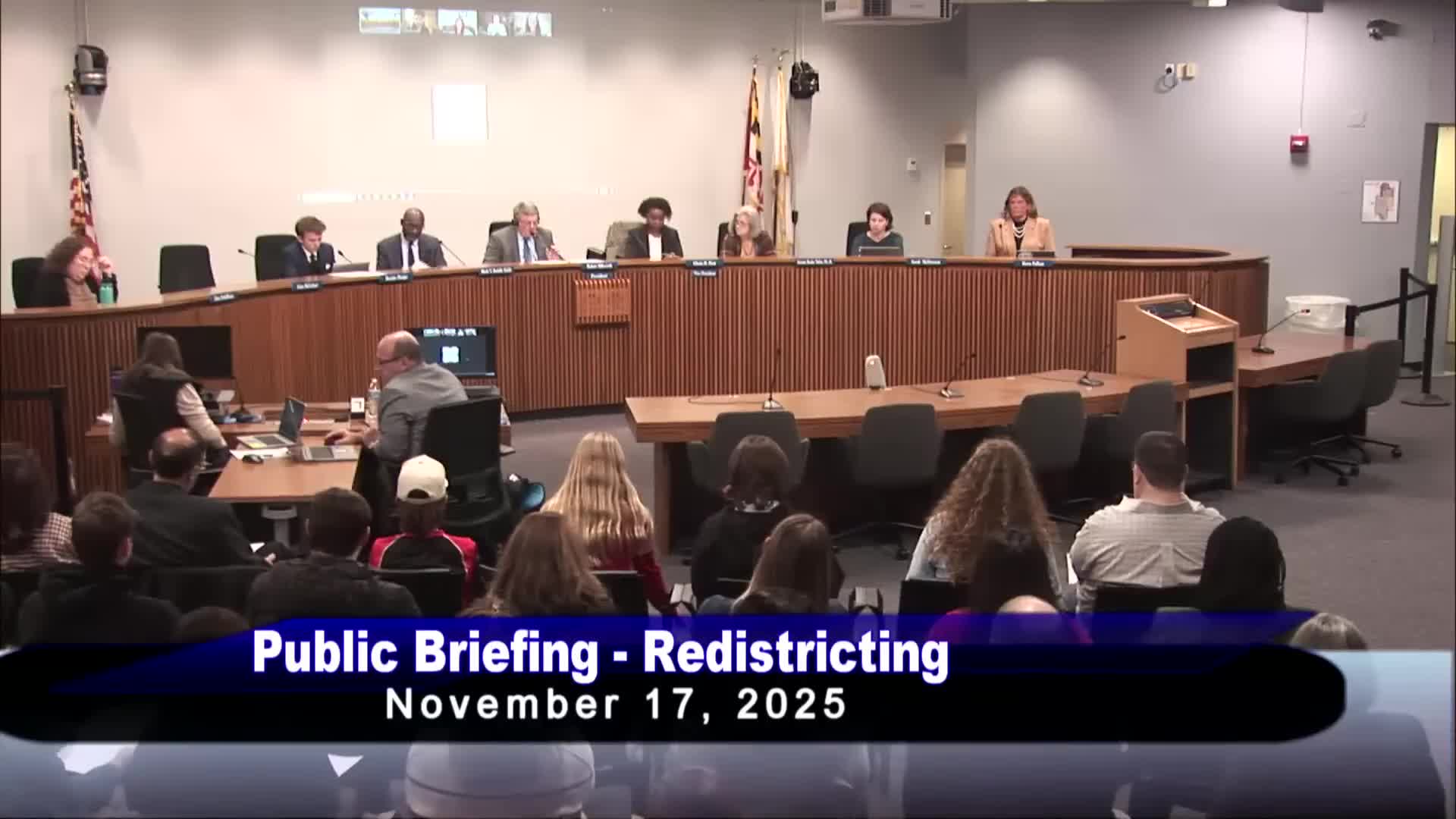
Summary
Dozens of parents, students and community members told the Anne Arundel County Board of Education that revised Board Recommendation 3 (phase 2 redistricting) would needlessly split the Nantucket/Crofton feeder pattern, endanger students on Route 3, and rely on a disputed interpretation of IAC funding criteria. Speakers urged delay or removal of the split articulation.
Dozens of parents, students and community members urged the Anne Arundel County Board of Education on Monday to remove a proposed split articulation in Board Recommendation 3 (phase 2 redistricting), saying the move would fracture small communities and put students at greater risk on Route 3.
"If keeping these 27 students at DES has no negative impact on instruction, operations, capacity planning, or funding, then what problem is solved by separating them from their school community?" said Laura Lisonbee, representing Glen Isle and Hamilton neighborhoods, summarizing a recurring line of testimony that cited 27 affected students as a focal point for the opposition.
Parents and students repeatedly argued that the district’s stated funding rationale is incorrect. Several speakers said they had consulted the IAC and been told in writing that underutilization in adjacent schools — not overutilization — is the criterion that can reduce eligibility for state capital funding. "Underutilization in adjacent schools reduces funding. Overutilization in adjacent schools does not," said Chris Caby, who said the IAC had confirmed that in writing.
Speakers described emotional harms and logistical disruptions. Student Molly, a fifth grader at Nantucket Elementary, said she had been "super stressed" and pleaded with the board not to split her community; multiple parents and students warned that the plan would force younger children to cross or ride on Route 3, which they described as congested and unsafe.
Several speakers asked the board to delay a vote scheduled for Nov. 19 until staff rechecked enrollment projections, the IAC funding interpretation, and traffic-safety analyses. "Please vote no or delay the vote on BR3 — not to stop redistricting, but to allow the necessary time to validate the IAC criteria and ensure decisions are based on accurate guidance," Michelle Reed said.
Speakers proposed alternatives that would avoid moving students. Tiffany Burrell suggested reassigning administrative offices to free classroom space and consolidate student services as a way to address underutilization "without requiring a single child to move."
The hearing included cross-cutting claims that the district and its external consultant WXY targeted small pockets of communities to meet an internal goal of getting schools under 100% utilization, and that doing so would not meaningfully change IAC funding outcomes. Several testifiers asked the board to offer legacy options for older students and to ensure transparent, verifiable projections before approving boundary changes.
The public comment period closed after roughly five hours of in-person and virtual testimony. The board did not take a vote at the hearing; the superintendent and board staff said materials and clarifications would be available ahead of the scheduled Nov. 19 decision.
The hearing record shows wide and organized opposition from the Nantucket/Crofton area and several smaller communities; the board now faces explicit requests to remove split articulation from BR3, delay the adoption vote, or provide more transparent documentation of funding and projection assumptions.