
Caltrans briefed Tulare County on statewide encampment policy, emergency removals and shelter leasing options
Get AI-powered insights, summaries, and transcripts
Sign Up Free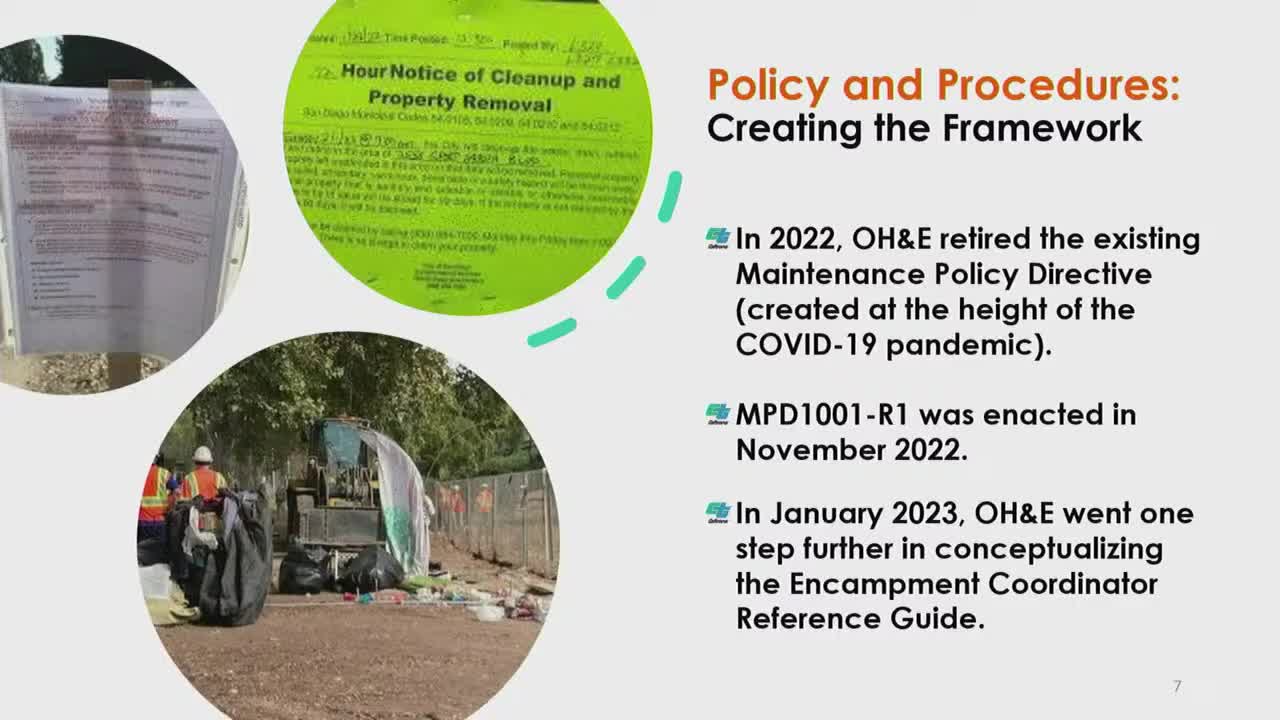
Summary
Warren Alford, Caltrans' statewide encampment coordinator, described a two‑level priority system for encampments (Level 1 emergencies, Level 2 non‑emergencies with 48‑hour notices), partnership requirements with outreach providers and CHP, and the agency's shelter lease program that makes some state properties available for $1 per month.
Warren Alford, Caltrans’ statewide encampment coordinator, told the task force Caltrans has built a statewide encampment program with district coordinators and two priority levels: Level 1 for immediate life‑safety emergencies (no 48‑hour notice) and Level 2 for non‑emergency encampments that receive 48‑hour notices to relocate and access outreach services. He said examples of Level 1 include confined spaces, bridge cells and sites at risk of collapse or fire.
Alford described mitigation steps the agency uses to reduce re‑occupation after removals—fencing, hardscaping, boulders and vegetation management—and emphasized coordination with CHP and local outreach partners to link people to shelter and services. He said Caltrans can inventory excess property and make suitable parcels available for local governments to lease at $1 a year to host navigation centers or temporary shelters.
Alford highlighted successful projects built on state right‑of‑way, including a multi‑story, relocatable navigation center in Stockton that St. Mary’s Community Services operates, and described the Encampment Resolution Fund’s role in supporting local proposals. He encouraged counties and cities to work with district encampment coordinators on ERF applications so Caltrans can provide support letters required by the state grant process.
Local officials thanked Caltrans for ERF support to Visalia’s navigation center and requested a compiled list of innovative projects for local reference. Caltrans staff offered to provide site lists and follow up after the meeting.