Get Full Government Meeting Transcripts, Videos, & Alerts Forever!
Get email alerts on the Accessory Dwelling Units topic
No spam. Unsubscribe anytime.
Planning commission recommends ADU ordinance updates to City Council amid new state rules
Summary
The Rolling Hills Estates Planning Commission voted to recommend an ordinance updating local ADU rules to conform with recent state legislation that changes size definitions, application timelines and the ability to combine ADU types; the recommendation moves the item to City Council for final action.
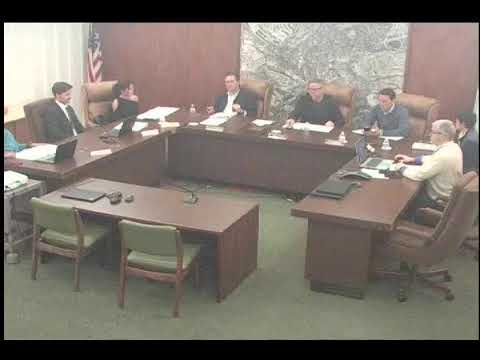
The Rolling Hills Estates Planning Commission on Nov. 18 voted to recommend that City Council adopt an updated ordinance amending chapter 7.28 on accessory dwelling units (ADUs) and junior ADUs to align the city code with recent state law changes.
Planning staff told the commission the updates are urgent because recent state legislation includes a provision the presenter called a "poison pill" that would nullify local ADU rules on Jan. 1 unless the city's code is revised to reflect the new statutes. The presenter said staff is advancing the item now so Rolling Hills Estates retains "what's left of our local authority" over architectural standards, setbacks and historic-protection measures.
The ordinance reflects several state changes summarized by staff: a narrow emergency exception allowing an ADU to receive a certificate of occupancy when a governor-declared emergency has destroyed the primary dwelling; clarification that square-footage limits refer to interior livable area (staff cited an 800-square-foot minimum for detached ADUs and a 500-square-foot cap for junior ADUs); a state prohibition on using JADUs for short-term rentals (which the presenter said the city already prohibits); and procedural changes requiring cities to notify applicants of incomplete ADU applications within 15 business days and to provide a checklist of missing items.
Staff also explained that one change (described in the record as SB 543) clarifies that different ADU categories may be combined. "If you're a single-family lot, you're a homeowner, that means you can now build a detached ADU, a converted ADU and a JADU on your lot — effectively turning a single family home into a fourplex," the presenter said. Staff added that while the combination is allowed under building-permit-only rules, other safety- and fire-related limitations could still apply, and the city distinguishes Class 1 (building-permit-only) and Class 2 (subject to local setbacks and design protections) ADU categories.
Commissioners asked several technical questions. Staff confirmed that a detached ADU is limited to 800 square feet of interior livable space; converted ADUs are measured as the interior area converted (and thus have no separate exterior-footprint cap under the building-permit-only rules); and a junior ADU need not include a bathroom — if it lacks a private bathroom, the homeowner is required to live on the property. On application processing, staff said applicants may file a written hearing with the planning commission to dispute a staff finding that an application is incomplete; that review would be ministerial and limited to completeness, not to discretionary design standards.
Two members of the public spoke. Deborah Richie Bridal, a landscape architect, asked whether adding an ADU would force septic-system upgrades; a Department of Public Health representative and staff explained that for on-site wastewater systems a percolation test completed within five years is required and the health department reviews capacity and may withhold permits for older or undersized systems. Judith Hainel asked about garage conversions and parking enforcement; staff said garage-to-ADU conversions are allowed in certain circumstances, the city requires one off-street parking space per ADU, and the city does not permit overnight street parking.
After discussion the commission moved to approve a recommendation to City Council (resolution 2025-11). The commission recorded approvals for Commissioner Cardenas, Commissioner Hsu, Commissioner Douglas, Vice Chair Kirkpatrick and the Chair; the motion passed. The ordinance will next appear before City Council for final consideration.
The commission also noted that staff will prepare code language addressing the new ministerial hearing process and other implementing changes before Jan. 1.