Teachers and SLPs Urge More Special‑Education Support as District Proposes New Coaching Model
Loading...
Summary
Teachers, aides and speech‑language pathologists told the East Whittier City School District board that understaffing and rising student behavior problems are harming special‑education services; the district presented a plan to fund 10 intervention specialists and expand instructional coaches using ELOP funding, and the board approved separate administrative agenda items.
Teachers, instructional aides and speech‑language pathologists gave the East Whittier City School District Board of Education an urgent message during public comment: they are short‑staffed, facing increasing student behavioral incidents and need concrete, funded support.
“I come before you as a parent, a very concerned parent,” said Christine Rosales, who urged the board to be “fiscally responsible” and questioned district spending priorities and administrator pay while schools lack materials and staff. Multiple classroom teachers detailed physical aggression and daily incidents that leave staff emotionally and physically exhausted. “In the ESN classrooms, negative student behavior are at an all time high while conversely, staff morale is at an all time low,” said Brooke Peach, a special education teacher, describing bites, scratches and other aggressive behaviors that she said occur routinely.
Speech‑language pathologists pressed the board to reinstate a $500 annual stipend for maintaining the Certificate of Clinical Competence (the “C’s”), which the district removed this year. “Please consider our request to reinstate the seized stipend,” said Beth Miller, a district SLP of 25 years, arguing the stipend offsets certification renewal costs and supports retention. Colleagues said SLP services also generate district revenue (one speaker said speech services produced about $243,000 in medical billing last year) and that removing the stipend could harm recruitment and continuity of care.
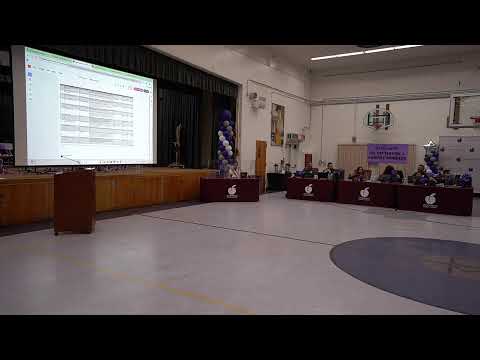
In response to the concerns raised at the lectern, Dr. Trina Gonzalez, assistant superintendent of educational support services, presented a district proposal to restructure instructional supports for the 2026–27 school year. The plan would separate two roles: site‑based instructional coaches focused on teacher growth and tier‑1 instruction, and intervention specialists who provide direct student intervention. Under the proposal, the district seeks to place seven instructional coaches (one at each Title I elementary site), one coach for non‑Title I elementary sites, two middle‑school coaches, one special‑education coach and ten intervention specialists (one per elementary site). The presentation also proposes hiring ten instructional aides to support those specialists and using Expanded Learning Opportunity Program (ELOP) funding to shift part of the intervention schedule into extended‑day hours so those positions can be funded outside the general fund.
Administrators said the IS headcount would remain roughly the same but coaching capacity would expand from three coaches to the new cohort, and incumbents would need to reapply for revised job descriptions. Dr. Gonzalez described a spring training and an implementation plan that includes five‑day intensive training focused on coaching cycles and teacher‑led priorities. Board members pressed for measurable student learning and program outcomes and for principal and teacher input on coaching priorities.
District and community voices emphasized that even if new funding sources preserve positions, the model’s sustainability depends on grant continuity: ELOP funding is tied to current state priorities and administrators acknowledged uncertainty beyond a three‑year horizon. Several teachers asked the board to delay structural changes until the special‑education department and classroom staff could be more fully engaged in design.
Votes at a glance: the board separately approved an incentive program to better forecast staffing needs and a change order to install portable restrooms at two sites after staff explained unforeseen soil removal costs; both motions passed on roll call.
The board did not take formal action on reinstating the SLP stipend during this meeting; SLPs and special‑education staff asked the board to return the $500 payment or to allocate funds so clinicians are reimbursed for certification and continuing education costs. The district said stipend issues are subject to bargaining and ongoing fiscal review.
Next steps: administrators said they will move forward with the advertised coaching and intervention‑specialist recruitment under the proposed model, with reapplication for incumbents and planned coach training in spring. Teachers and SLPs asked for continued engagement, clearer program outcomes and timelines, and a resolution on the C’s stipend in negotiations or by future board action.