Get email alerts on the Legal Education And Licensure topic
No spam. Unsubscribe anytime.
Bar governors and law-school deans discuss licensure pathways, law-clerk growth and student supports
Summary
Washington State Bar Association governors met with deans from Seattle U, UW and Gonzaga and the law clerk board to discuss alternative pathways to licensure, law-clerk program reciprocity and expansion, bar-passage supports (including an AccessLex partnership) and pipeline outreach to underserved communities.
Washington State Bar Association governors convened law-school deans and law-clerk board leaders on the subject of legal education and the transition from student to practicing lawyer, focusing on alternative licensure pathways, law-clerk reciprocity and student affordability.
"It's an opportunity for us to foster a smooth transition from legal student to legal professionals," the presiding governor said, opening the session and urging collaboration between the Bar and the state's law schools. Deans from Seattle University, the University of Washington and Gonzaga described programs and proposals intended to boost access and bar success while addressing lawyer shortages in underserved "legal desert" communities.
Seattle University School of Law Dean Tony Verona said the schools are actively engaged with the Bar on alternative pathways and bar passage supports, and raised a specific question about whether SJD graduates should be eligible to sit for the bar now that some LLM graduates can. "We take our success rates very, very seriously," Verona said, describing curricular changes and partnerships aimed at improving first-time pass rates.
University of Washington Dean Tamara Lawson recommended partnering with national groups focused on academic support and bar passage; she named the Association of Academic Support Educators and highlighted Professor Nachman Gutowski (UNLV) as a potential partner for CLEs and workshops. Lawson also urged increased scholarship and philanthropic support to mitigate federal financial-aid caps that she said could affect a large share of an incoming class.
Gonzaga Dean Jacob Rooksby and other law-school leaders described steps taken at their schools to identify at-risk students early and provide academic-support programs that begin in the first year. Gonzaga said it has expanded dedicated academic-support staffing and now intervenes earlier when students show indicators that correlate with bar performance.
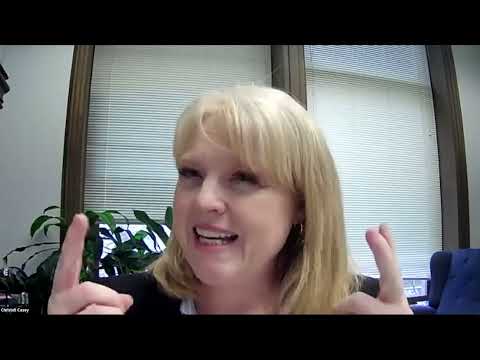
Crystal Casey, the law clerk board chair, and law-clerk program representatives described the non-ABA law-clerk program as an affordable, apprenticeship-style route that roots trainees in local communities. The program has grown: "in 2015 there were 70 enrolled law clerks. And now at present, we have 138," Casey said, and speakers asked the Bar to help increase visibility, volunteer mentors and staff support so the board can scale responsibly.
Deans and governors discussed pipeline strategies ranging from high-school outreach to service-for-tuition models similar to Teach For America, with deans urging that recruitment begin earlier than college and recommending hands-on, in-person mentoring as a complement to online programming.
On bar-preparation supports, the deans described concrete measures: curricular sequencing to introduce timed, closed-book exam experience early; simulated exams for COVID cohorts; and stipends or subsidized access to bar-review resources. Dean Verona said a new, grant-supported partnership with AccessLex will provide students access to the Helix Bar Review, intended to reduce out-of-pocket costs for graduates.
Officials also discussed broader constraints: volatility in national ranking formulas (US News), federal loan and lifetime-borrowing limit proposals and state budget pressures that all affect scholarship strategies and institutional budgets. Leaders highlighted fellowship and externship funding as a priority to improve placement and experiential preparedness.
The meeting closed this segment by announcing outreach events and initiatives: the Bar's "lawyers in the classroom" volunteer program and an Apex celebration scheduled for Spokane in September. Governors paused for a 10-minute break and said the next agenda item would address admissions and licensing recommendations.
The deans and Bar governors agreed on continued collaboration: schools will provide data and program details on questions such as SJD eligibility and reciprocity, and the Bar will explore ways to increase mentorship, scholarship support and visibility for the law-clerk pathway.
AI generated
The text on this page is AI generated. Summaries, highlights, analysis, and video transcripts are all produced from the original source material.
AI can make mistakes, so if you spot one, and we will fix it for everyone.
Note: the source content is unaltered by us. Any content source we link to, be it a video, an audio recording, or a document, is presented exactly as its publisher released it. That publisher is usually a government body, sometimes an individual official or another organisation.