
Educators tell Twin Rivers board bargaining stalled, cite low pay and large class caps
Get AI-powered insights, summaries, and transcripts
Sign Up Free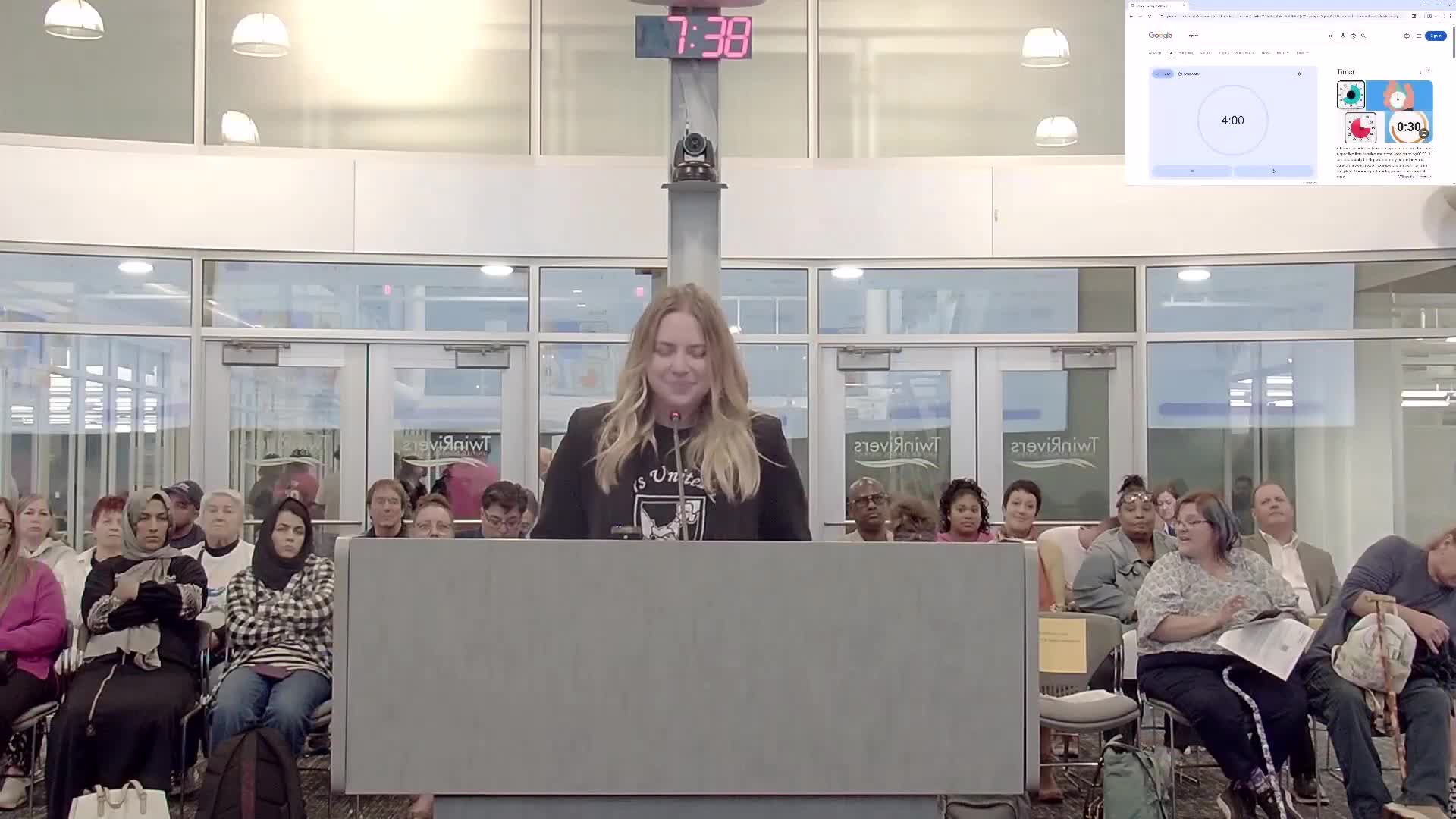
Summary
Union representatives and educators told the board that bargaining has stalled and impasse was declared on Oct. 27; public commenters cited lower average pay in Twin Rivers, high out‑of‑pocket healthcare costs for teachers and overcrowded classrooms as reasons the district must negotiate in good faith.
Speakers representing Twin Rivers United Educators told the board the union declared impasse after 12 bargaining sessions and accused the district negotiation team of failing to meaningfully engage or substantiate some of its data. The union demanded mediation with concrete proposals aimed at retaining and recruiting educators.
In a prepared statement read during oral communications, the union speaker said negotiators found no tentatively agreed articles and accused a district presentation of using a Sac City number that the union characterized as "made up." The union called for smaller class sizes, fully paid benefits, salary increases, and more reasonable caseloads for student supports.
Public commenters reinforced those themes. Anthony LaRue described a Twin Rivers teacher family whose combined salaries and health‑insurance costs strain household finances. The transcript includes comparative figures given by speakers: a claimed average teacher salary of $109,000 in Sacramento City versus $98,000 in Twin Rivers, and an asserted average out‑of‑pocket health cost of $4,602 for Twin Rivers educators. Commenters also cited claimed classroom caps — K‑3 caps of 24 in Sacramento City compared with 34 in Twin Rivers — and contended the district had shifted substantial sums into Fund 40 (a speaker referenced $236,000,000) instead of classroom staffing.
Union and teacher speakers asked the board to send negotiators to mediation in good faith and to prioritize staffing, compensation and benefits that would reduce turnover and address long‑standing vacancies they said are harming student services. Board members and staff reiterated that negotiations and any mediation are governed by the established bargaining procedures and that the district would participate in mediation under statutory requirements.
The board did not take any direct bargaining action at the meeting; speakers requested the district bring concrete proposals to mediation and emphasized the consequences of prolonged impasse for classroom staffing and students’ access to services.