Get Full Government Meeting Transcripts, Videos, & Alerts Forever!
Get email alerts on the Local History Hauntings topic
No spam. Unsubscribe anytime.
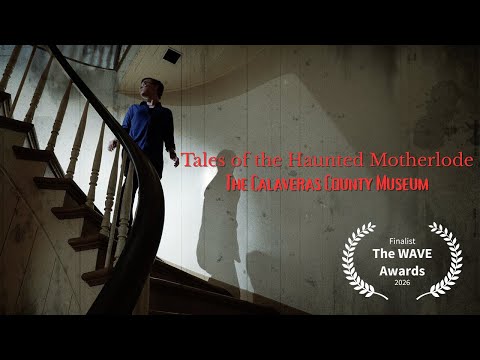
Calaveras County museum staff describe repeated unexplained activity tied to courthouse, jail and artifacts
Summary
Staff at the Calaveras County Historical Society described recurring staff and visitor reports of moving objects, a slammed door, security-camera 'orb' footage and physical symptoms tied to the old courthouse, jail and several artifacts, while outlining the buildings' 19th-century history.
Emma Hampton, director of the Calaveras County Historical Society and Museums, told listeners the society, founded in 1952, manages a three-building downtown complex that includes Oddfellows Hall (built 1854), the courthouse and attached jail (1867) and the Hall of Records (1893). The museum serves as an archive and a resource for school tours and local history programs, Hampton said.
The museum staff described repeated reports of unexplained phenomena tied to specific locations and artifacts. "The jail is the most active," Hampton said, citing incidents such as iron doors slamming without visible cause. Z Harmon, an office and research assistant, said the area known as the Women's Jail is closed to visitors because female staff reported immediate headaches, chest tightness and difficulty breathing upon entering, while some male coworkers did not experience those symptoms.
Staff linked those experiences to the site's history. Hampton and Harmon described the jail yard as the scene of violent incidents across the late 19th and early 20th centuries, including the 1903 murder of Deputy James Casey, which the museum team uncovered in local newspaper clippings and trial records while revamping school-tour material. They also said public hangings were held in the Hall of Records courtyard; staff identified George Cox as the last person hanged in Calaveras County in 1888 and said the museum displays artifacts connected to those episodes.
Personal objects in the collection drew particular attention. Harmon said highly personal items such as Minerva Reed's embroidered silk wedding dress and Victorian hairwork appear to attract repeated attention: "She is, very, very chill...she's not a fan of dogs" and patrons have reported seeing the dress sleeve move. Hampton said a recently donated painting that hid a Ouija board coincided with movement in a donated doll, and staff recounted an incident in which a picture on display shattered; after replacing the image the staff said the problem stopped.
The team also recounted instances of objects being displaced overnight. Harmon said she would sometimes return in the morning to find a chair knocked over near Judge Gottschalk's desk, and Racier, a staff member who began in 2021, described surveillance footage showing an orb-like blur moving near the front door while no person was visible on the camera's angle.
The staff emphasized they do not advertise the museum as haunted but respond when visitors ask; they also use many of the stories to support school tours and preservation work. The accounts combined first-person staff experience, local archival research and artifact-based interpretation rather than formal scientific investigation.
The museum did not announce any formal investigation or external testing of the phenomena during the session. Hampton said the museum continues to catalog artifacts, refine exhibits and incorporate the local history—both the recorded crimes and the family stories—into educational programming. The transcript did not specify the date of the event or any planned follow-up study.