
TVUSD reports gains on CAASPP and says district adopted science‑of‑reading training
Get AI-powered insights, summaries, and transcripts
Subscribe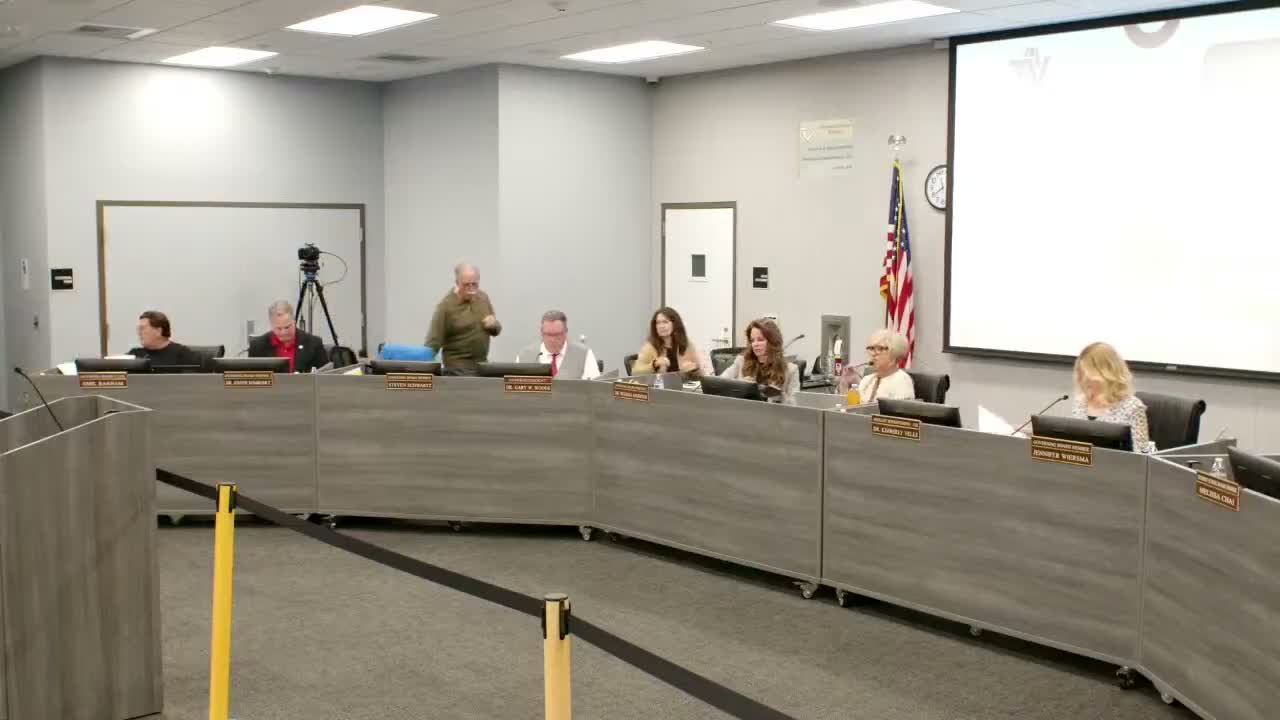
Summary
District education leaders told the board that average student performance rose on the state dashboard and CAASPP measures, with notable ELA gains and steady science outcomes. Administrators said the district began implementing Orton‑Gillingham training two to three years ago and selected the Multitudes screening tool for early literacy identification under new state guidance.
District education leaders presented results from the California Assessment of Student Performance and Progress (CAASPP) and the new Local Control and Accountability Dashboard during the Nov. 18 meeting.
Lisa Brown, Director of Assessment and Accountability, told trustees the district’s average student improved across several measures. "Our average student grew by just over 5 points last year," Brown said, noting TVUSD outpaced county and state averages in English language arts. She reported that 11 of 14 student groups increased their distance from standard in ELA and that no student groups were in the red on the latest dashboard.
Brown and Assistant Superintendent Dr. Velez outlined areas that still need work: math growth lagged relative to ELA and a foster‑youth student group remained below standard. For math, Brown said the district’s average student grew 3.6 points but that some student groups continued to exhibit significant gaps.
On early literacy and classroom practice, the district described a multi‑year rollout of the "science of reading" approach. Dr. Velez said the district anticipated the new state law and began training K–2 classroom teachers, special‑education teachers and literacy specialists about two to three years ago. "We utilized data and really started looking at other districts across the country that saw gains in literacy using the science of reading," she said. The district said it has trained teachers in Orton‑Gillingham methods and selected the Multitudes screening tool to identify early literacy gaps.
Teachers who spoke during public comment urged the board to restore a first‑grade literacy specialist position and to prioritize early intervention. "Having a literacy specialist would allow these students to double dip to receive an additional layer of targeted expert instruction right when it matters the most," one teacher said.
District leaders said they will continue to align professional development, instructional leadership teams and targeted interventions to narrow remaining gaps and will report back to the board on next steps.