
Park City School District expands preschool program, cites 40% enrollment growth and targeted tuition support
Get AI-powered insights, summaries, and transcripts
Sign Up Free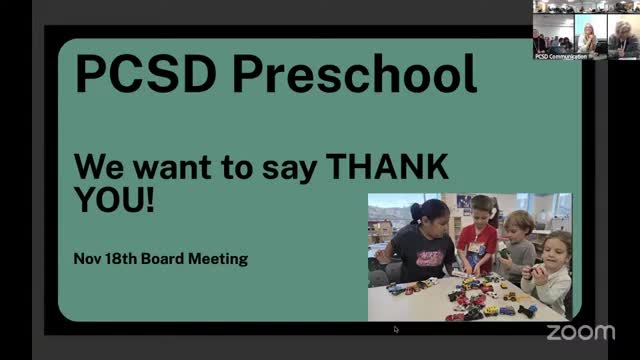
Summary
District preschool coordinator outlined full‑day expansion for 3‑year‑olds, specialist rotations for 4‑year‑olds and a curriculum alignment across sites; enrollment rose from 153 to 215 and about 31% of preschoolers receive tuition assistance through multiple programs.
Park City School District announced an expansion of its preschool program, moving 3‑year‑olds to full‑day, five‑day instruction with daily aftercare and adding specialist rotations for 4‑year‑olds in library, PE, music and coding.
Missy Shawburn, the district preschool coordinator, told the board the program grew from 153 students last year to 215 this year — roughly a 40 percent increase — and that 65 of the 214 preschoolers receive some form of tuition support. "In total, we have 65 of our 214 students receiving some type of tuition support, which is around 31 of our student body in preschool," Shawburn said during the presentation.
Shawburn outlined how families access aid: about 13 students receive tuition support linked to special education, 10 through sibling discounts, five receive reductions because they receive speech services, and 17 benefit from Upward scholarships administered by Summit County or Park City. She said the district’s aftercare runs to 6 p.m., and that additional aftercare fees are available to families who choose extended hours.
The district emphasized curriculum alignment across preschool classrooms, adopting monthly shared standards so children at different sites focus on the same learning objectives each month. Shawburn said that consistent standards and a push‑in special‑education model are intended to make transitions into kindergarten smoother and reduce future needs for remediation.
Board members asked about impacts on private childcare providers. Shawburn said some private providers report enrollment declines in the three‑to‑four‑year‑old range and are accepting more out‑of‑boundary children to remain financially viable, but cautioned her sample of private providers was small. "They're starting to get nervous," she said, summarizing feedback from county coordination meetings.
The board agreed to continue studying the broader impact on the local early‑childhood ecosystem before making any boundary or open‑enrollment changes for preschool.
Next steps: administration will continue to monitor enrollment and private‑provider capacity and will bring recommendations about open enrollment for preschool to the board in March.