Get Full Government Meeting Transcripts, Videos, & Alerts Forever!
Get email alerts on the Emergency Funding topic
No spam. Unsubscribe anytime.
Fall River CPC debates emergency-funding rubric, tables adoption to January
Summary
The Fall River Community Preservation Committee reviewed a draft rubric to score emergency-funding applications, heard staff explain the city’s emergency-approval steps, and voted to table the rubric and related courtesy-funding policy for further public comment and revision in January.
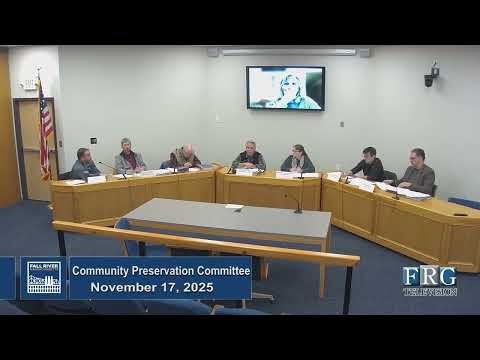
The Fall River City Community Preservation Committee reviewed a draft scoring rubric for emergency funding on Nov. 17 and agreed to postpone adoption until January to allow public comment and further edits.
Alexander Silva, who presented the draft, said the rubric would score seven categories on a 1–5 scale (maximum 35) and that a threshold — currently proposed as 28–35 — would define an application as an “emergency.” He told the committee, “If everyone just wanted to, like, walk through it, it's essentially 4 components,” and described categories including threat to the asset or public safety, CPA eligibility alignment, historic/cultural value, community impact, neighborhood appearance, deferred maintenance cause and risk of escalating costs.
CPC members debated whether a scoring sheet can resolve a fundamental dispute: applicants will almost always view their need as an emergency, and the committee retains discretion over whether to treat a request as such. Several members said they favored a two-step approach — an initial eligibility/triage review followed by a fuller scoring and deliberation — and discussed options such as holding emergency meetings or shifting to more frequent application windows to balance speed and review time.
Sandy Dennis, CPC administrative staff, outlined the city’s approval process for recommended emergency funding: after the committee votes to recommend emergency funding, staff sends an appropriation order to the mayor and city council, and if council approves the emergency the city issues purchase orders and executes contracts before funds are available. Dennis said timing can vary with workload and that the Little Theater emergency request experienced delays in receiving a purchase order.
After discussion, a motion to table the draft rubric and related courtesy-funding policy until January carried on a roll-call vote. Committee members asked staff to post the draft rubric as a “draft” on the CPC web page and on Facebook and invite public feedback ahead of the January meeting.
The committee’s action keeps the draft rubric under active revision; members said they want clearer language about what constitutes an emergency, procedures that allow members time to review materials before voting, and public vetting before the committee finalizes policy.