
Minnesota State approves MSU Moorhead $6M guaranteed energy‑savings project
Get AI-powered insights, summaries, and transcripts
Subscribe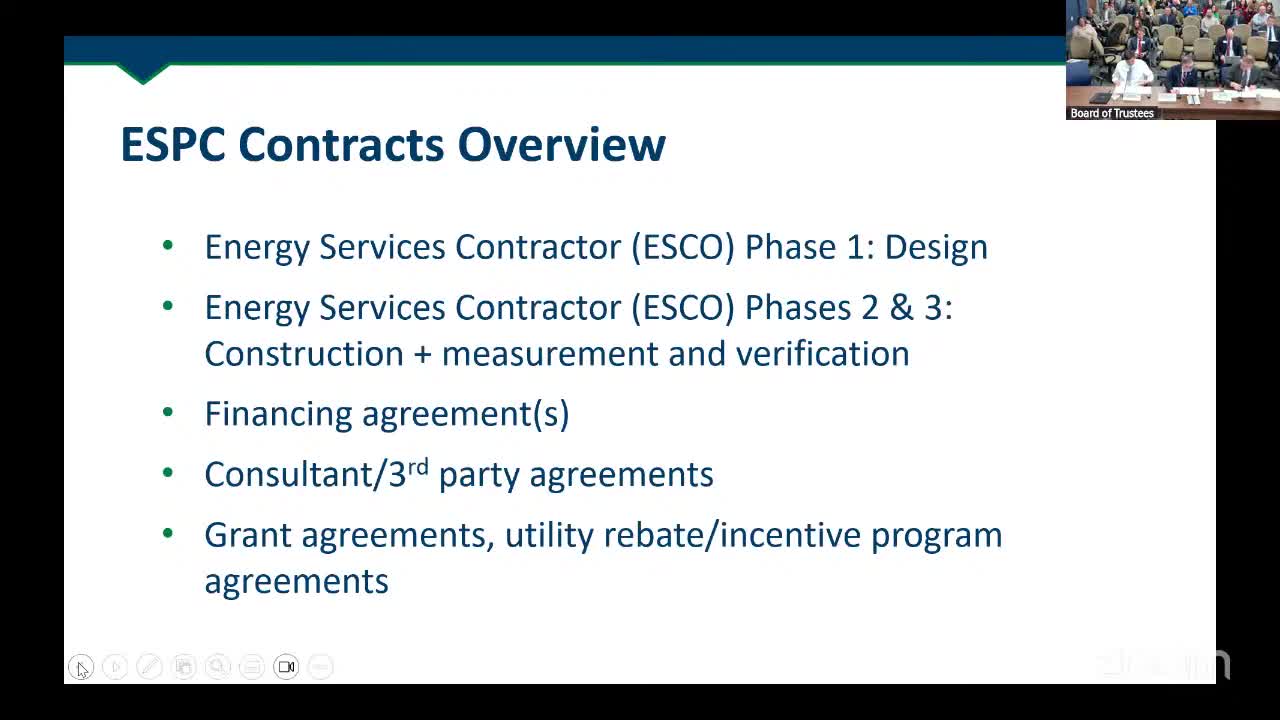
Summary
Trustees approved the system's first guaranteed energy‑savings contract pilot at Minnesota State University Moorhead with Ameresco — an almost $6M, self‑funded project to convert lighting, install submetering and modernize automation, financed up to 20 years and backed by guaranteed savings.
The Finance & Facilities Committee approved the system office’s recommended guaranteed energy savings project (ESPC) at Minnesota State University Moorhead, marking the first campus project under a new alternative capital financing program that uses guaranteed savings to repay long‑term financing.
System staff and campus leaders told trustees the project, approximately $6,000,000 in scale, focuses on LED lighting conversion (about 17,000 fixtures), building automation upgrades, submetering and demand‑response technologies. George Tippens, MSU Moorhead’s vice president for administration and finance, described the project as "self‑funded" because annual guaranteed energy and operational savings are projected to service the amortization of project financing over a term of up to 20 years. "If those savings don't materialize, Ameresco's on the hook," Tippens said, describing the guarantee built into the pro forma.
Trustees asked about cybersecurity, the role of AI in ongoing optimization, and exposure to changes in federal or state incentives. Campus and system presenters said cybersecurity remains a consideration (legacy controls and locked legacy equipment were cited as an issue on one campus), and that future analytics and AI overlays are expected once submetering data provide sufficient granularity. Presenters said they did not assume utility rebates in the base pro forma; any rebates would be additive to the campus benefit.
The committee approved the project authorization by roll call. System staff said the ESPC delivery model requires multiple agreements (energy services contracts, financing agreements and measurement & verification phases) and that the program will be offered to other campuses as appropriate.
Trustees and presenters said the project will create opportunities for student internships and experiential learning tied to campus sustainability programs and that the guaranteed‑savings structure makes the project accessible to campuses without up‑front capital.