Get Full Government Meeting Transcripts, Videos, & Alerts Forever!
Get email alerts on the Overdose Response topic
No spam. Unsubscribe anytime.
Board approves $219,700 to add mobile population-health unit for Fire Department
Summary
The Board of Estimates approved a one-year interagency agreement providing $219,700 to buy a sprinter van and equipment to expand the Baltimore City Fire Department’s population-health mobile unit, part of larger B Corps/24/7 outreach opioid-restitution initiatives.
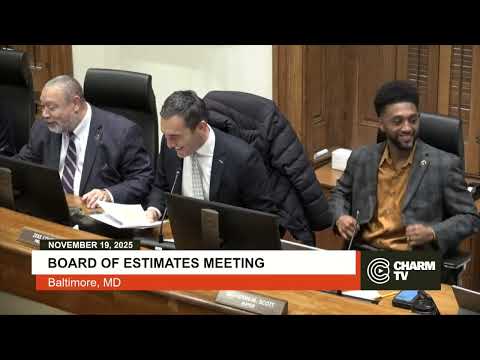
The Board of Estimates on Nov. 19 approved an interagency agreement (SB2514081) to provide $219,700 from the Mayor’s Office of Recovery Programs to the Baltimore City Fire Department to add a mobile population-health unit.
Elizabeth Tatum, chief recovery officer, said the funding covers a sprinter van and materials to add another unit to the fire department’s population health team, which co-responds to overdose calls and conducts proactive harm-reduction outreach. “It's really about purchasing a sprinter van and some other materials for an additional unit of the population health team,” she said.
Augusta Gribetz of the Mayor’s Office of Overdose Response described how the interagency agreement connects to two litigation-settlement initiatives: B Corps (a $10 million project led by the University of Maryland, Baltimore) and a separate $15 million 24/7 Outreach proposal. She said B Corps includes emergency-department protocols, a telehealth medication line and community connection teams; the Fire Department unit will link to that broader network.
The board moved and seconded the item and approved it by recorded 'ayes.' Officials said personnel hiring for the full unit will follow the van acquisition because vehicle lead times delay staffing, and additional agreements are expected to fund operations beyond vehicle procurement.
Board members asked for details about target populations and implementation timelines; staff said more programmatic details will be shared as planning moves from design to procurement and hiring.