Get Full Government Meeting Transcripts, Videos, & Alerts Forever!
Get email alerts on the Audit Arpa topic
No spam. Unsubscribe anytime.
City audit finds duplicate ARPA payments, calls for stronger Workday controls
Summary
A Baltimore City auditor reported four duplicate ARPA payments and gaps in Workday documentation that slowed recovery and transparency; city administrators said no federal funds were lost and pledged process and system fixes by mid-2026.
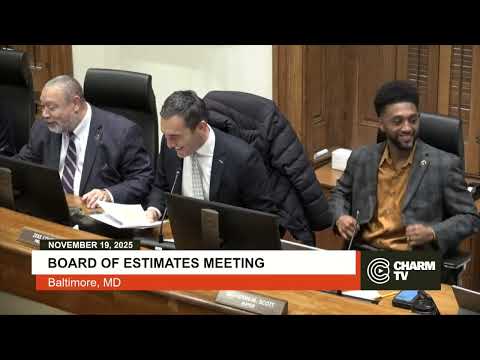
City auditors on Nov. 19 presented a biannual performance audit of the Mayor’s Office of Recovery Programs that identified duplicate payments, inconsistent accounting of recovered amounts, and difficulty tracing contract attachments in Workday.
Josh Pash, the city auditor, told the Board of Estimates the audit extended through 2025 to capture the bulk of ARPA spending and that the team verified “all $641,000,000 of funds was obligated before 12/31/2024,” the Treasury obligation deadline. He said auditors found four duplicate payments in fiscal 2024 and a tested sample from 2023 that together accounted for roughly $336,000 and described how invoice-number differences and data-entry practices prevented Workday’s duplicate-invoice checks from flagging them.
The audit also found recovered duplicate payments were sometimes recorded as revenue (‘‘cash sale’’ or ‘‘customer payment’’) rather than used to reduce expenditures in Workday, producing an overstatement of roughly $282,000 in FY2023 schedules and complicating reconciliation. The report recommended citywide preventive and detective controls in Workday, clearer job aids for staff, and technical changes so attachments tie to subaward line items rather than only to an overarching award.
Deputy City Administrator Shamaya Kearney, who led the Mayor’s Office of Recovery Programs when much of the work was done, told the board: “You do not hear issues of waste, fraud, or abuse.” She said the recovery office and agencies have largely addressed the duplicate payments, reported a slightly different figure of $339,969.06 for the four payments, and agreed with recommendations to strengthen controls and training. The recovery office and Grants Management Office have already taken steps — including limiting cash-sale postings for grants — and expect to complete corrective actions or implement feasible system changes by June 30, 2026.
Board members pressed auditors and agency staff on the possibility that more issues remain undetected. Pash said auditors tested a large set of invoices for fiscal 2024 and could not responsibly extrapolate a citywide error rate without further targeted work. Finance and Grants Management officials said they will standardize documentation and training, explore Workday configuration options with VSIT, and produce job aids to ensure consistent recording of recoveries.
The board noted the audit and directed departments to move forward with the recommended actions; staff said the measures will prioritize preventing duplicates at data entry, generating monthly detection reports, and ensuring recovered funds reduce expenditures rather than being posted to revenue.
The board took no adverse findings of fraud or misuse but emphasized that improved controls are essential to preserve transparency and to reduce staff time spent reconciling legacy errors. The item was noted by the board for the record.