Get Full Government Meeting Transcripts, Videos, & Alerts Forever!
Get email alerts on the Older Adult Housing topic
No spam. Unsubscribe anytime.
Wausau planners hear 2025 older-adult housing report highlighting affordability and workforce gaps
Summary
A North Central Wisconsin Regional Planning Commission draft forecasts rising near-term demand for older-adult housing in Marathon County and warns affordability and care-worker shortages will shape what types of housing the city needs; the report will go to Economic Development Dec. 2 and then to city council.
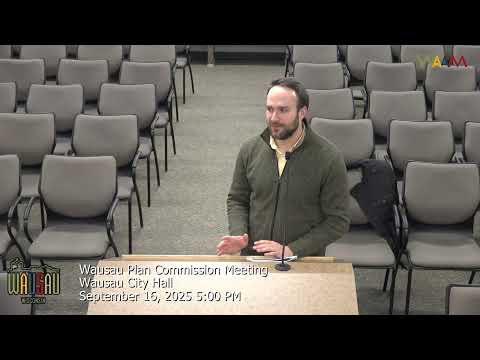
WAUSAU, Wis. — The Wausau Plan Commission on Nov. 18 received a presentation on a draft 2025 report assessing housing needs for residents aged 55 and older, which concludes that affordability and workforce shortfalls will most constrain local capacity to serve that population.
Sam Wessel of the North Central Wisconsin Regional Planning Commission told commissioners the study segments older adults into three age bands (55–64, 65–74 and 75-plus) and projects how those cohorts are likely to occupy different housing types over the next two decades. Wessel said the analysis holds current income, owner-occupancy and care-need rates constant and applied a 20% buffer to the projections to avoid overstatement.
Wessel summarized the central findings: owner-occupied single-family demand is expected to peak around 2030, while renter-occupied demand and most long-term care categories are expected to rise through the 2030–2040 period. He warned that affordability will be the primary constraint because many older households live on fixed incomes: "Affordability is gonna be number one when it comes to housing that these age groups will occupy," he said.
The presentation also flagged a statewide workforce concern. Citing reporting from Wisconsin Public Radio, Wessel said policymakers should anticipate a shortfall of care workers — including certified nursing assistants, registered nurses and home health aides — noting "there's going to be a shortage of 36,700 workers who are CNAs, RNs and home health aides by 2040." He urged local collaboration with training programs and schools to expand the pipeline of caregivers.
Recommendations in the draft include recruiting builders who specialize in older-adult housing, designing projects that can be repurposed as market-rate housing if demand later declines, preserving and modifying existing housing to support aging in place, and advertising vacant sites to developers. Wessel noted that the report contains an appendix listing existing facilities in Marathon County and examples from other communities.
Members asked about circulation and next steps. Carrie (staff), who introduced the presentation, said the draft is in the commission packet and "it'll be going to Economic Development Dec. 2 and then it'll go to council." She invited commissioners to submit feedback before the document is finalized and posted to the city website.
During questions, a commissioner asked whether there are examples of assisted-living projects intentionally designed to be convertible back to conventional market housing. Wessel said some design strategies exist elsewhere and pointed to examples in the report, but he did not identify a local project that has implemented full conversion; he suggested the city could pursue schematic designs or blueprints to make flexibility more feasible.
The commission heard the presentation as part of planning work that will inform an update to the city's comprehensive plan next year. The report’s draft and the commission’s feedback will be available to Economic Development on Dec. 2 and subsequently to the full City Council.