
Board reviews balanced scorecard and sees mixed KPI progress; scheduling tweaks increased QBE funding
Get AI-powered insights, summaries, and transcripts
Subscribe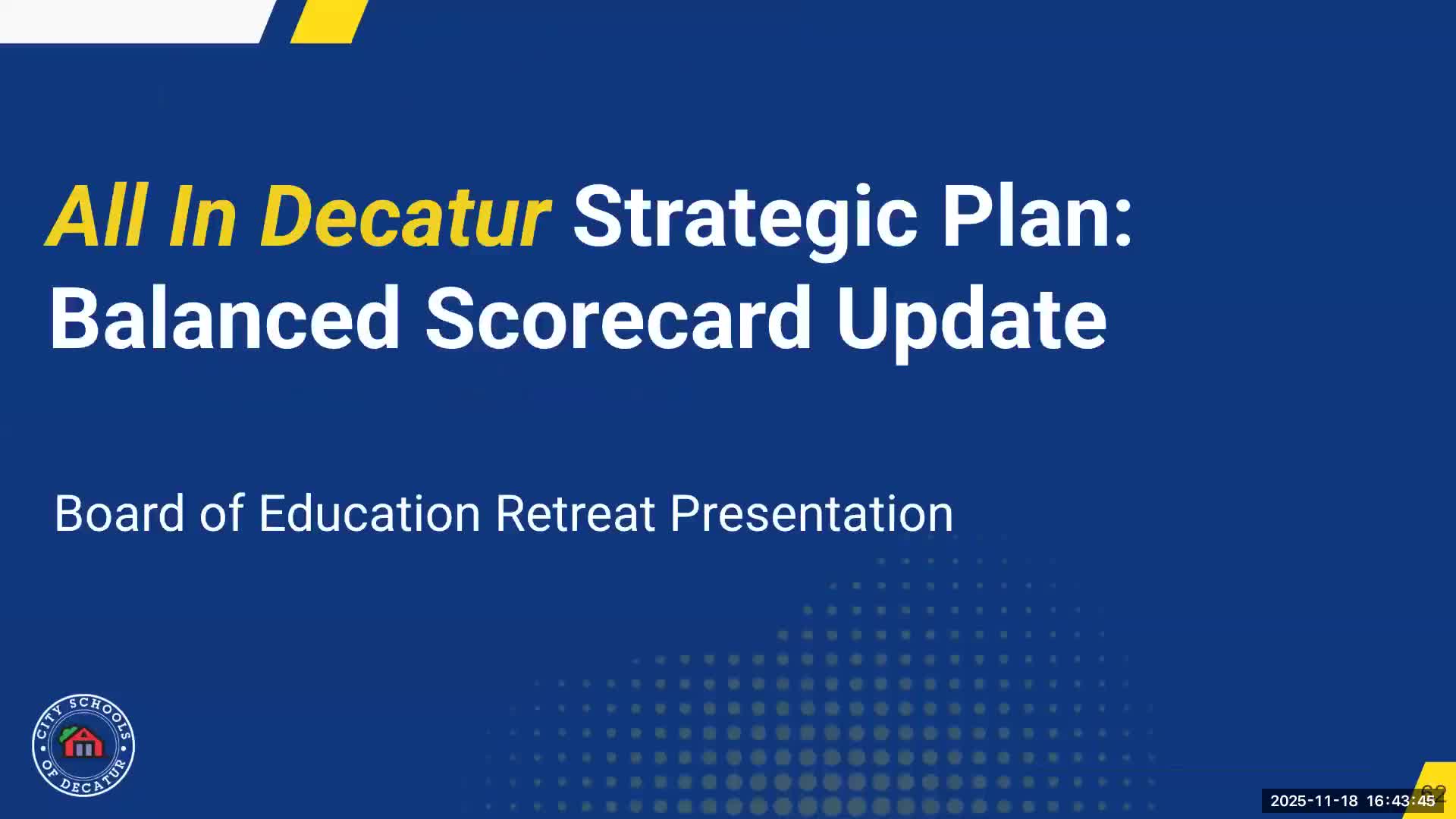
Summary
Staff showed the public balanced‑scorecard tracking 16 strategic objectives and 43 KPIs; 23 indicators met or exceeded targets while others lag. Finance staff said changes to high‑school master scheduling improved state QBE funding per student at secondary levels.
District staff updated the board on the balanced scorecard that tracks the board’s all‑indicator strategic plan. The public dashboard shows 16 strategic objectives under four accelerators and 43 associated KPIs. Staff reported that 23 of 43 indicators meet or exceed the district’s targets, four indicators are improving but below target, eight show no change or decline, and several are pending state data.
Presenters demonstrated the public view of the dashboard and explained color coding: green indicates met or exceeded, yellow indicates improvement that did not meet the target, and red indicates decline or no change. Staff noted the status of student achievement KPIs is sensitive to lagging state data (CCRPI, GMAS) and recommended continuing monitoring.
Finance staff also presented an example of how changes to master scheduling at the high school and middle school improved the district’s QBE (state funding) earnings per student without material enrollment changes. At the high school staff showed QBE dollars per student rose meaningfully after schedule and count‑coding adjustments; board members asked whether those changes increased teacher workload or reduced planning time and asked staff to return with context on instructional time, teacher duties and the potential tradeoffs of schedule adjustments.
Board members asked for periodic KPI context and for any corrective plans where indicators lag. Staff said pending items (state climate metrics, audited financial variance) will be updated on the dashboard as state and audit data become available.