
Council hears staff plan to codify state planning changes; final plat and review-timeframes move toward administrative processing
Get AI-powered insights, summaries, and transcripts
Subscribe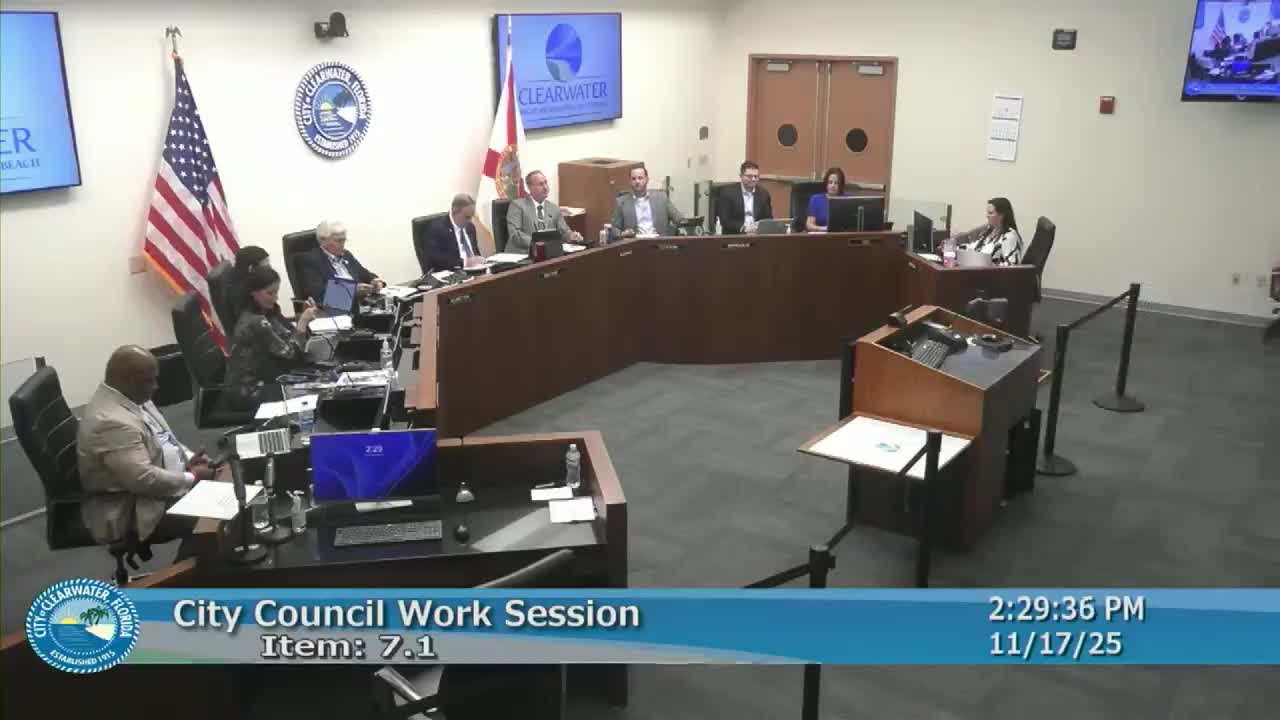
Summary
Planning staff presented two ordinances to align the city's community development code with recent state laws: moving final-plat approvals to an administrative process with a 7-business-day completeness acknowledgment (SB 784) and updating development-review timeframes including modest extensions to certain internal deadlines (SB 1080). Staff said changes largely codify current practice and aim to reduce noncompliance risk.
Planning and development staff presented two ordinance packages Nov. 17 to bring the Clearwater Community Development Code into compliance with statutory changes from this year's legislative session.
Lauren Maskey (Planning & Development) summarized the first ordinance as implementing statutory requirements—referred to in the staff presentation as linked to the recent senate bill—that move final-plat processing to an administrative workflow. Staff said the code will require a written acknowledgment of receipt for final-plat applications within seven business days that identifies missing information and a time frame for review; preliminary plats remain subject to Development Review Committee and Community Development Board processes where applicable.
The second ordinance is a broader code update to development review processes and time frames to reflect statutory maximums and to codify internal practices. Maskey explained staff recommended small adjustments to several time windows: for example, the time frame for the Development Review Committee to make a legal-sufficiency determination would increase from 18 to 25 days and the Community Development Board notice window would move from 33 to 38 days to align clocks with current staff practices and calendar variations. Staff emphasized these changes primarily codify work the department already carries out, while adding a modest buffer to reduce the risk of procedural noncompliance.
Staff also proposed housekeeping edits—clarifying when applicants can resubmit incomplete applications and spelling out the separate review purviews of the building official (Florida Building Code) and the community development coordinator (Community Development Code). Maskey said the measures help applicants by clarifying timelines and denial-citation requirements for administrative clarity.
Council and trustees asked questions about notice windows and public participation; staff recommended use of pre-application Development Review Committee meetings for applicants and said the proposed ordinances will be presented to the Community Development Board for recommendation before returning to council. Staff intends to present final recommendations and the CDB's input at the council hearing the following week.
Next steps: both ordinances were scheduled for Community Development Board review and to return to council with recommendations; staff said the changes are intended to reduce procedural risk and increase predictability for applicants.