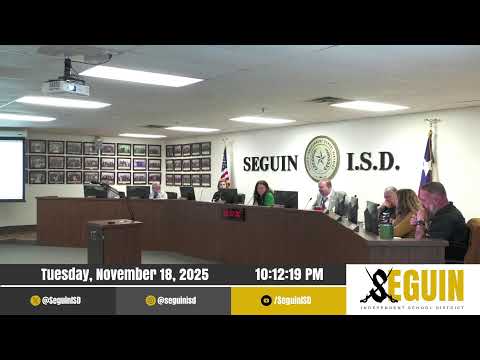
Seguin ISD public commenters press trustees to remove sexually explicit material, cite SB 13
Loading...
Summary
Dozens of residents urged Seguin ISD trustees to remove or restrict library and classroom books they described as sexually explicit or obscene and to follow Senate Bill 13 review requirements; others defended librarians and opposed bans during an extended public‑comment period.
Dozens of residents used the board’s audience participation period to demand that Seguin ISD act on book challenges and comply with state law on explicit material.
Several speakers, including Michelle Sangerhausen and Lynette Lennox, said the district’s libraries contain material they consider obscene for minors and urged trustees to remove titles immediately. "I think we should clean up our libraries," Sangerhausen said, and Lynch asserted the district was "out of compliance with the Texas law" on review and removal processes under what speakers referred to as SB 13. Multiple commenters read explicit passages into the record as evidence of their concerns.
Other speakers framed the issue as one of parental choice and community values. Patricia Buckley, a retired district educator, told the board, "We elected you. We trust you to make good decisions on behalf of the children of Seguin ISD," and Kim Saunders, a veteran English teacher, said librarians are "stewards of literature and information" who deserve the board’s support.
A seventh‑grader, Abigail Crittendon, spoke against blanket bans, urging that parental choices should not forbid other students from accessing books they find valuable. Several commenters urged the board not to be diverted from other district priorities and asked trustees to protect libraries as places for learning and empathy.
The public comments repeatedly referenced state law and recent legislation affecting library processes. Speakers cited Senate Bill 13 as requiring transparent review for material alleged to be "explicit and perversely vulgar" and said they had submitted challenges or legal complaints. Board members did not take formal action during public comment but later reviewed related agenda items, including an action to approve a November book list.
The board moved on after a recess; trustees later heard presentations and votes on related procedural items and a separate targeted improvement agenda.
The board did not take a binding policy vote during the public‑comment period; next steps include staff briefings and any future policy or removal decisions placed on a subsequent agenda.