FWC outlines WMA management priorities: habitat, ranch operations, public use and monitoring
Loading...
Summary
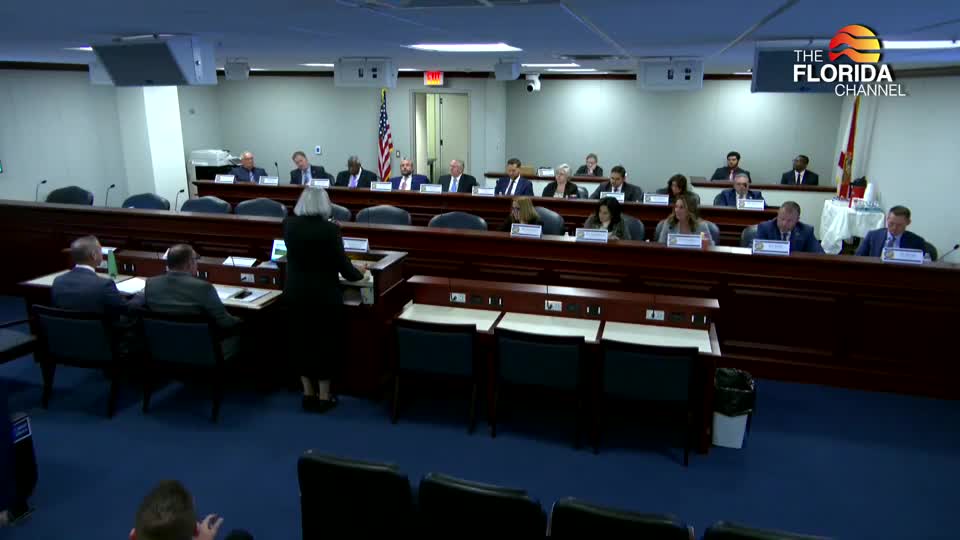
Melissa Tucker of the Florida Fish and Wildlife Conservation Commission testified that FWC leads management on about 1.5 million acres of wildlife management areas and described four management pillars—habitat, wildlife, ranch operations and public access—plus funding sources and partnerships that support those activities.
Melissa Tucker, director for the Division of Habitat and Species Conservation at the Florida Fish and Wildlife Conservation Commission, told the subcommittee that FWC is the lead managing agency on approximately 1.5 million acres of wildlife management areas (WMAs) and assists cooperators on another roughly 4.6 million acres.
Tucker described FWC’s four pillars of land management—direct habitat management, wildlife management and monitoring, ranch management for infrastructure (roads, fences, wells), and supporting public use and enjoyment—and said these activities occur across the WMA system from the Panhandle to the Florida Keys. She said the agency uses prescribed fire, mechanical treatments and invasive‑plant removal as primary tools and emphasized adaptive, objective‑based vegetation monitoring to measure outcomes.
On funding, Tucker said the WMA spending plan includes significant funds for non‑native vegetation removal and heavy equipment to support prescribed fire and other management tasks. She noted hydrologic restorations were a priority (more than $1,000,000 allocated in the current spending plan) and that average annual spending on public‑use infrastructure is about $3,000,000. FWC relies heavily on contracts—averaging about $17,400,000 a year for outsourced contract work—and partners and volunteers (FWC reported about 4,500 volunteer hours valued at more than $200,000 last year).
Tucker also emphasized economic and community benefits: the WMA system receives over 1,400,000 visits during a fiscal year and those visits support an estimated $144,000,000 in annual economic activity in adjacent communities, with particular value for rural gateway towns.
Committee members questioned how WMAs differ from parks and forests; Tucker said WMAs are wildlife‑centric (including hunting) and often managed in cooperation with other agencies and federal lands to support wildlife corridors and landscape‑scale conservation.