
DEP describes $19 million plan for park land management, prescribed fire and cultural restorations
Get AI-powered insights, summaries, and transcripts
Subscribe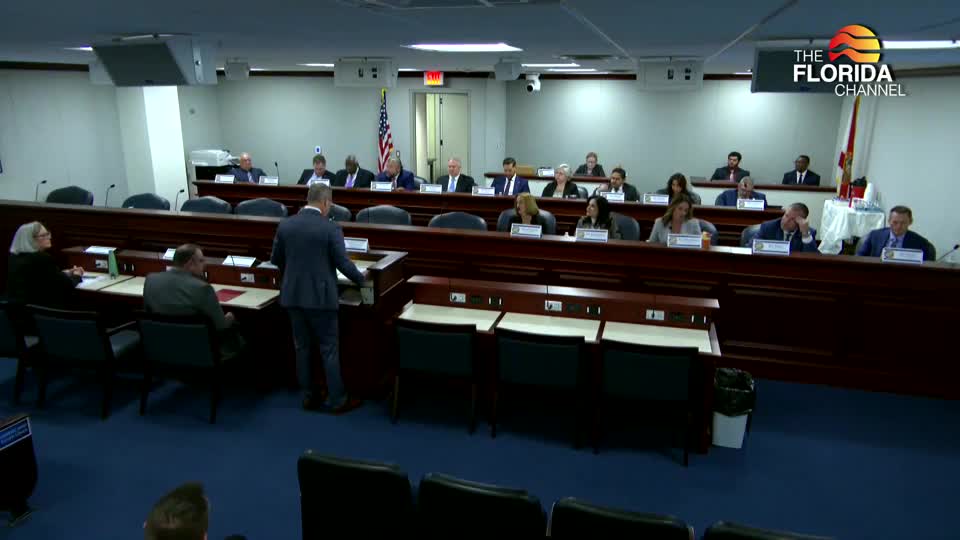
Summary
Deputy Secretary Brian Bradner told the subcommittee the Florida Park Service received $19,000,000 for land‑management activities for FY25/26, with allocations for fire management, invasive species removal, natural community restoration and cultural resource rehabilitation including the Ormond House project.
Deputy Secretary Brian Bradner told the Agriculture and Natural Resources Budget Subcommittee the Florida Park Service received $19,000,000 for land‑management activities for FY25/26 and outlined how the funding would be allocated across fire management, invasive species removal, hydrologic restoration and cultural resource protection.
Bradner described the scale of the park system—about 175 parks, trails and historic sites spanning roughly 800,000 acres with more than 3,000 miles of trails and 101 miles of beaches—and said the system hosted approximately 28,000,000 visitors last fiscal year. He reported the park service generated over $75,000,000 in revenue and estimated a $3.6 billion economic impact to local communities.
On land management, Bradner said prescribed fire remains a core tool—"Last fiscal year, 66,398 acres were treated by prescribed fire"—and noted that the Park Service treated 44,752 gross acres to remove exotic invasive plants during the last fiscal year. For FY25/26 the department allocated over $1,200,000 for fire management, over $4,800,000 for invasive species management, about one‑third of the $19,000,000 to natural communities management, roughly $1,200,000 for land‑management equipment, and about $500,000 for hydrologic restoration projects.
Bradner highlighted completed cultural resource rehabilitation at Ormond House Historic Park State Park—work included roof replacement, wood‑rot repairs, porch and ADA upgrades, drainage fixes, window restoration and interior repairs.
He emphasized the practical benefits of active resource management for wildfire risk reduction, habitat health and recreation infrastructure, and said the Park Service looks to continue balancing visitor access with protection of natural and cultural resources. Bradner closed by offering to take questions from committee members about specific projects and budget details in other forums.
The chair held a joint question period for all three witness agencies after the presentation.