
Statewide ICMC rollout shows early enrollment gains; agencies flag provider and eligibility bottlenecks
Get AI-powered insights, summaries, and transcripts
Sign Up Free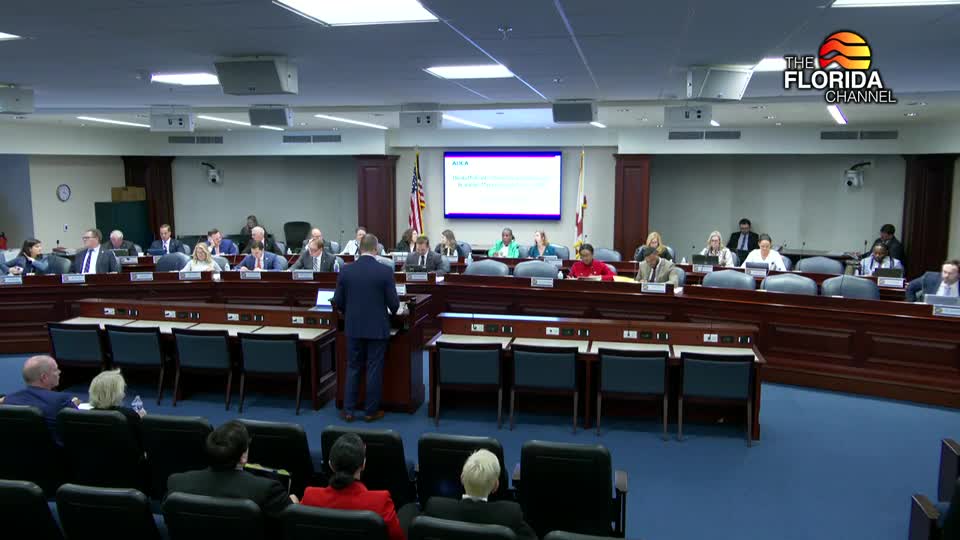
Summary
Agency for Healthcare Administration and Florida Community Care told the House Health and Human Services Committee they nearly doubled ICMC enrollment in the first month of statewide expansion, but cited provider-network growth needs, DCF Medicaid-eligibility backlogs and a dental carve-out as remaining challenges.
The House Health and Human Services Committee heard updates Friday on Florida’s Intellectual and Developmental Disabilities Comprehensive Managed Care (ICMC) program, with officials reporting rapid early enrollment after an October statewide expansion and outlining remaining operational gaps.
Deputy Secretary Brian Meyer of the Agency for Healthcare Administration said the ICMC program — a voluntary managed-care option housing services previously available through the iBudget waiver plus additional SMMC benefits — was authorized initially under Senate Bill 2510 and expanded statewide under House Bill 1103. Meyer told the committee that federal approvals were sought for the program’s 1915(c) waiver and that CMS granted approval tied to the expansion.
Meyer described the interagency enrollment process: APD supplies nightly pre-enrollment files, AHCA tracks members and forwards cases to the Department of Children and Families for Medicaid eligibility when needed, and DCF has a specially staffed unit to expedite complicated applications. He said enrollment has grown from 381 pilot enrollees to 705 after the October expansion, 831 as of Nov. 1, with an additional 26 pending for Dec. 1 (figures reported by AHCA)."We received federal approval from CMS on 09/11/2025," Meyer said, describing the waiver timeline and phased rollout.
Carol Gormley, representing Florida Community Care (a provider service network operated by Independent Living Systems), described operational steps on the ground: hiring care coordinators (the plan reported 56 hired, 10 in the pipeline and 30 added since statewide expansion), training choice counselors with input from Arc Jacksonville, creating a dedicated ICMC phone line, and running town halls and targeted mailings. Gormley said the plan must maintain a 1:18 care-coordinator-to-enrollee ratio and emphasized rapid casework: "in the very first month that this bill was effective for statewide expansion, we nearly doubled the population." She also described two client cases — one placed in a group home and one whose care plan was changed immediately after a cancer diagnosis — to illustrate flexibility in care coordination.
Officials reported outreach and communications efforts that included more than 13,000 postcards mailed beginning Aug. 22, informational letters to pilot regions, a new ICMC website and multiple in-person and virtual stakeholder meetings intended to ensure informed, voluntary choice by families. AHCA said it has 15 full-time employees dedicated to call-center and choice-counseling support and that the Arc of Florida and the DD Council helped develop accessible materials.
Both presenters flagged remaining implementation challenges. Gormley pointed to gaps in specialty provider availability for adults — for example, behavior-analysis providers for adults — and noted that provider contracting and credentialing in some counties remains a work in progress to meet network adequacy standards (two providers per county or a time/distance standard for access). On dental care, Gormley explained that dental services were carved out of the statewide Medicaid managed-care program in prior legislation and are provided through separate dental-plan contracts; she said that coordination strategies exist but that dental care is not yet fully integrated.
Committee members pressed officials on specific operational risks. Representatives asked how AHCA and Florida Community Care are addressing DCF eligibility delays (Meyer said DCF has a special handling unit), how the Florida Healthcare Connection (FX) data work will reduce manual transfers (Meyer said some components, including an enterprise data warehouse and a provider-services module, are online or slated for rollout), and why care-coordinator caseloads differ from APD’s waiver-support coordinators (Gormley said the programs have different benefit scopes, and ICMC care coordinators are employees with obligations to a broader benefit package).
Fiscal and utilization notes presented by Florida Community Care were preliminary, the company said. Gormley reported roughly 3,000 member-months and about $13.6 million in earned revenue in the first 12 months, with some $6.4 million spent on services so far and a contract cap that limits plan earnings to about 6.5 percent; she cautioned that claims-file lags and a small early population limit immediate conclusions about long-term costs.
The committee did not take formal legislative action on the program during the meeting; Representative Kencart Johnson moved to rise and the chair adjourned the session without objection.
What’s next: AHCA said it will submit its annual legislative report on ICMC in December and is procuring a vendor to complete a program evaluation due Oct. 1, 2029. Committee members signaled continuing oversight interest in provider network growth, DCF eligibility throughput, and prospects for fuller integration of dental services.