Lifetime Citizen Portal Access — AI Briefings, Alerts & Unlimited Follows
OMMU tells Florida subcommittee it regulates 925,000 patients and strengthens seed‑to‑sale oversight
Loading...
Summary
The Office of Medical Marijuana Use told the Health Professions and Programs Subcommittee it now tracks just over 925,000 qualified patients, outlined inspections and lab reviews, and said a new seed‑to‑sale system changed how low‑THC dispensations are classified.
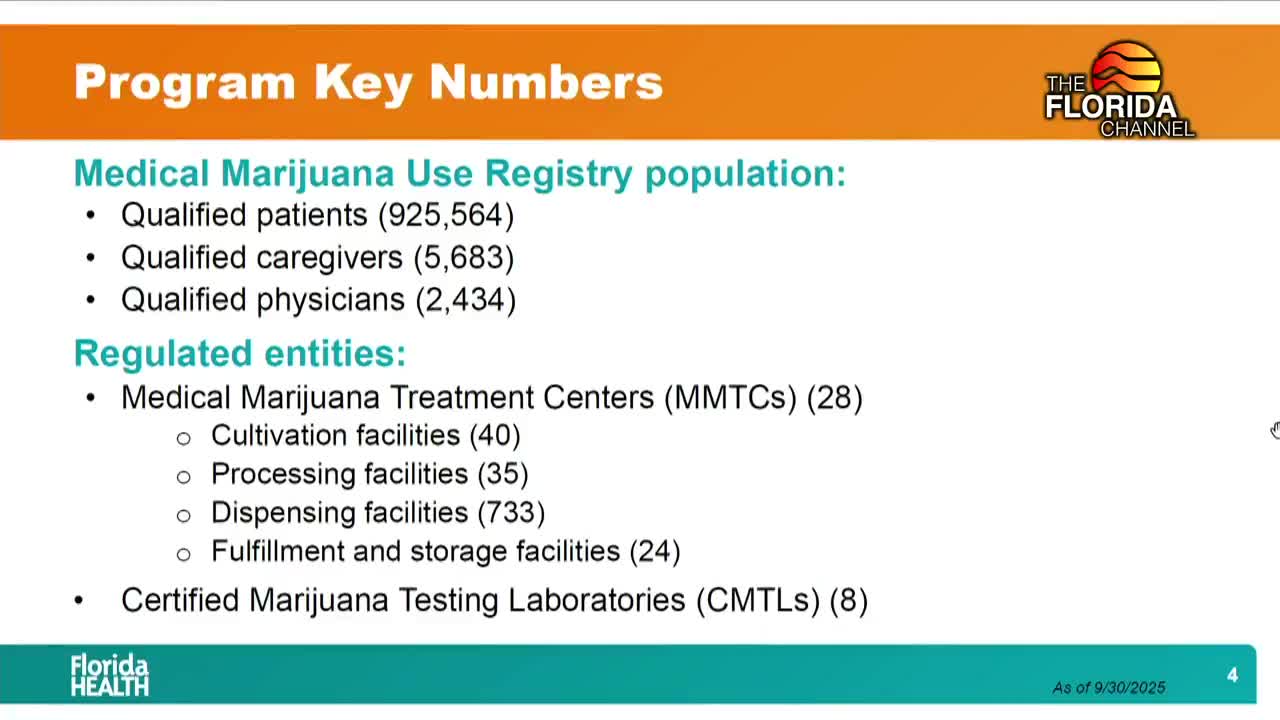
Bobby Smith, director of the Office of Medical Marijuana Use, told the Health Professions and Programs Subcommittee that OMMU now regulates "just over 925,000 qualified patients," about 5,600 qualified caregivers and roughly 2,400 qualified physicians, and oversees 28 medical marijuana treatment centers and hundreds of facilities statewide.
Smith said that before any medical marijuana product is dispensed each batch is tested by a certified laboratory and issued a certificate of analysis showing potency and whether the product is free of contaminants such as mold, pesticides and mycotoxins. The office certifies eight marijuana testing laboratories and conducts inspections on treatment centers and labs to enforce requirements including seed‑to‑sale tracking, product approvals, and plain packaging rules intended to reduce youth appeal.
OMMU reported compliance activity for the 2024–25 fiscal period that includes 11,060 background screening requests (about 7 percent deemed ineligible), 2,874 inspections of treatment centers and testing laboratories, 237 notices of violation (124 of which resulted in fines), and a lab review team that examined over 400 certificates of analysis, 300 data packages and tracked 310 failed batches for retesting, remediation or destruction.
Smith said implementation of OMMU’s seed‑to‑sale system changed how low‑THC dispensations are classified. "Now that we have implemented the seed to sale system, it captures the actual THC to CBD ratio based on what's reported in the certificate of analysis," Smith said, adding the system will only flag a dispensation as 'low THC' if the final certificate of analysis matches the statutory definition (0.8 percent or less THC and greater than 10 percent CBD). Committee members said that change explains the apparent drop in low‑THC dispensations shown on the slides.
Smith also updated the committee on licensing and litigation: a 2023 licensing window for 22 MMTC licenses drew 74 applicants; the department issued 22 notices of intent to approve on Nov. 26, 2024, and multiple applicants filed petitions challenging denials, with litigation pending. Smith summarized Pigford-related licensing activity tied to prior legislation and said one additional Pigford license was issued in April 2025 pursuant to implementing legislation.
Smith outlined rulemaking and statutory deadlines, saying emergency rules under section 381.986 expire Dec. 31 and that OMMU published a notice of rule development Aug. 29 and will hold a public workshop in October to accept comment. She described staffing that supports enforcement — 39 full‑time inspectors and a lab review team of five — and said 25 treatment centers have fully integrated with seed‑to‑sale; three remaining centers are in initial licensure phases.
The committee asked for additional data. Smith provided an age breakdown for active qualified patients and the top qualifying medical conditions and offered to provide further correlations by age on request. The meeting ended with a motion to rise and adjournment by unanimous consent.