Jaunt outlines $21 million budget, asks council to sustain partnership as transit funding and staffing pressures grow
Loading...
Summary
Jaunt told the Charlottesville City Council it provided roughly 20,000 monthly trips and that its $21 million budget includes capital projects and a new scheduling system; the agency urged continued local partnership amid wage pressure and uncertain state and federal funding.
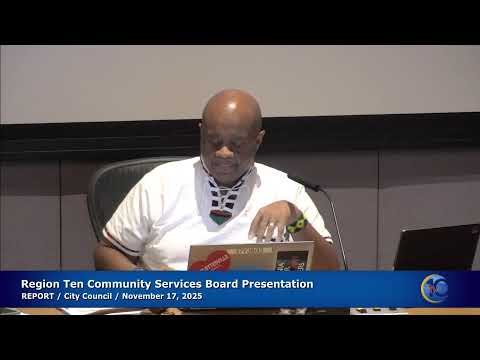
Mike Murphy, introduced on the agenda as the Jaunt presenter, told the Charlottesville City Council on Nov. 17 that Jaunt operates a large, multi-jurisdictional paratransit network and that the agency is closely tied to local transit decisions.
"About 20,000 trips every month are coming through Jaunt," Murphy said, describing a service footprint that includes extensive ADA paratransit performed on behalf of CAT and a region that spans thousands of square miles. He said roughly 97,000 ADA trips are provided annually as part of that work.
Murphy reported a $21,000,000 budget for the year, with the majority dedicated to operations and a significant capital envelope that includes a planned $3,000,000 parking-lot project. He said Jaunt has been updating its contractual relationship with the city and awaiting triennial evaluation results before finalizing changes.
Murphy described investments in technology and scheduling as a priority: he said the agency has obtained state support to pilot more advanced scheduling software and to enable phone, web and mobile booking, but the exact state award amount was not specified in the presentation. He also said the agency is reviewing long-standing internal systems for finance, HR and reservations.
On fares and operations Murphy said Jaunt has not collected fares since the local transit system suspended them during the pandemic. "The only time that Jaunt collects fares is when CAT collects fares because then it's required," he said, noting that reinstating fares would require staffing, cash-handling systems and armored-car services that could outweigh fare revenue.
Councilors pressed Murphy on labor and regional coordination. He said Jaunt's entry-level pay is now comparable to CAT's and that the agency is closer than before on pay scales, but noted constraints tied to classification bands and union contract terms. On regional consolidation, Murphy cautioned that any structural merger or transfer would be complex because Jaunt serves several jurisdictions that are not currently planning to join the regional transit authority (CARTA).
Murphy asked council members to continue the long-standing partnership, to consider how CAT decisions affect Jaunt's workload and to support fare-free service where feasible. He noted that last year Jaunt distributed about $130,000 back to Charlottesville from excess capital and said he expects the FY25 return to exceed that amount once audits are complete.
The presentation closed with questions from council members about federal funding streams (references to 5311/5339 program types), excess capital causes and the operational implications of restoring Sunday service or adjusting route frequencies. The council did not take any formal action on Jaunt funding at the meeting; staff and Jaunt will continue discussions.