Get Full Government Meeting Transcripts, Videos, & Alerts Forever!
Get email alerts on the Elections topic
No spam. Unsubscribe anytime.
Washington County canvasses Nov. 4 special election amid 147-ballot tabulation discrepancy
Summary
At its Nov. 14 meeting, the Washington County commissioner’s court formally canvassed the Nov. 4 constitutional amendment special election and discussed a 147-ballot discrepancy tied to central-count tabulators; the court approved canvassing and directed staff to pursue purchasing DS200 tabulators with grant and local matching funds.
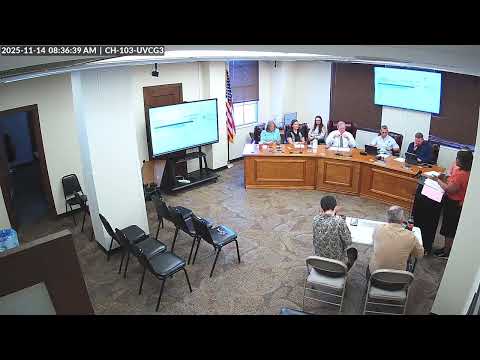
Washington County commissioner’s court met Nov. 14 and officially canvassed results from a Nov. 4 constitutional amendment special election while hearing from election staff about a 147-ballot discrepancy that occurred on election night.
Miss Jackson told the court that election-night tabulation using the county’s DS450 central-count equipment produced about a 147-ballot difference between ballots counted and voters who signed in on election day. She said the discrepancy did not affect the election’s validity and that she had provided a public statement to ensure transparency. "We came up with a $147 difference," she said, adding that the issue did not impact the outcome.
Miss Jackson explained the difference between the DS200 machines used during early voting and the DS450 central-count scanners used to process election-night ballots. She said DS200 units scan and accept ballots at the polling place, reducing the chance that a voter leaves with a ballot that must be adjudicated later, while DS450 is used at the central count where adjudication occurs. She described scanners ejecting ballots into three trays—accepted, needing adjudication, and rejected—and said a single overvoted contest can be excluded while the rest of a ballot still counts.
Committee members asked whether deploying DS200 machines at every polling place on election day would have prevented the problem; Miss Jackson and other participants agreed it likely would have reduced the issue. She said she contacted ES&S on election night after tabulators were "kicking out" multiple ballots and that some stacks required reruns to reach expected totals.
On cost and funding, Miss Jackson said each DS200 costs about $6,000. She reported the county applied for and received grant funding earlier in the year—initially about $42,000 and later approved for a total of $82,000—which could cover much of the purchase but still requires the county to provide matching funds. Participants discussed buying 13–16 machines to have spares at precincts and asked staff to check for quantity discounts from the vendor.
The court voted to canvass the Nov. 4 special election. Speaker 2 moved to canvass the vote; Miss Jackson indicated assent when asked for a second; the court called for and received an "Aye," and the presiding officer declared the motion carried. The commissioners directed staff to proceed with procurement planning, to report back with final costs and required matching funds, and to place any county funding request on a future agenda.
The meeting record shows the court completed the canvass and took the procedural step of directing staff to pursue equipment purchases and funding arrangements; no further formal actions on procurement or specific dollar approvals were taken at this session.