
Board hears budget pressures: special-education outplacements and club funding delays
Get AI-powered insights, summaries, and transcripts
Subscribe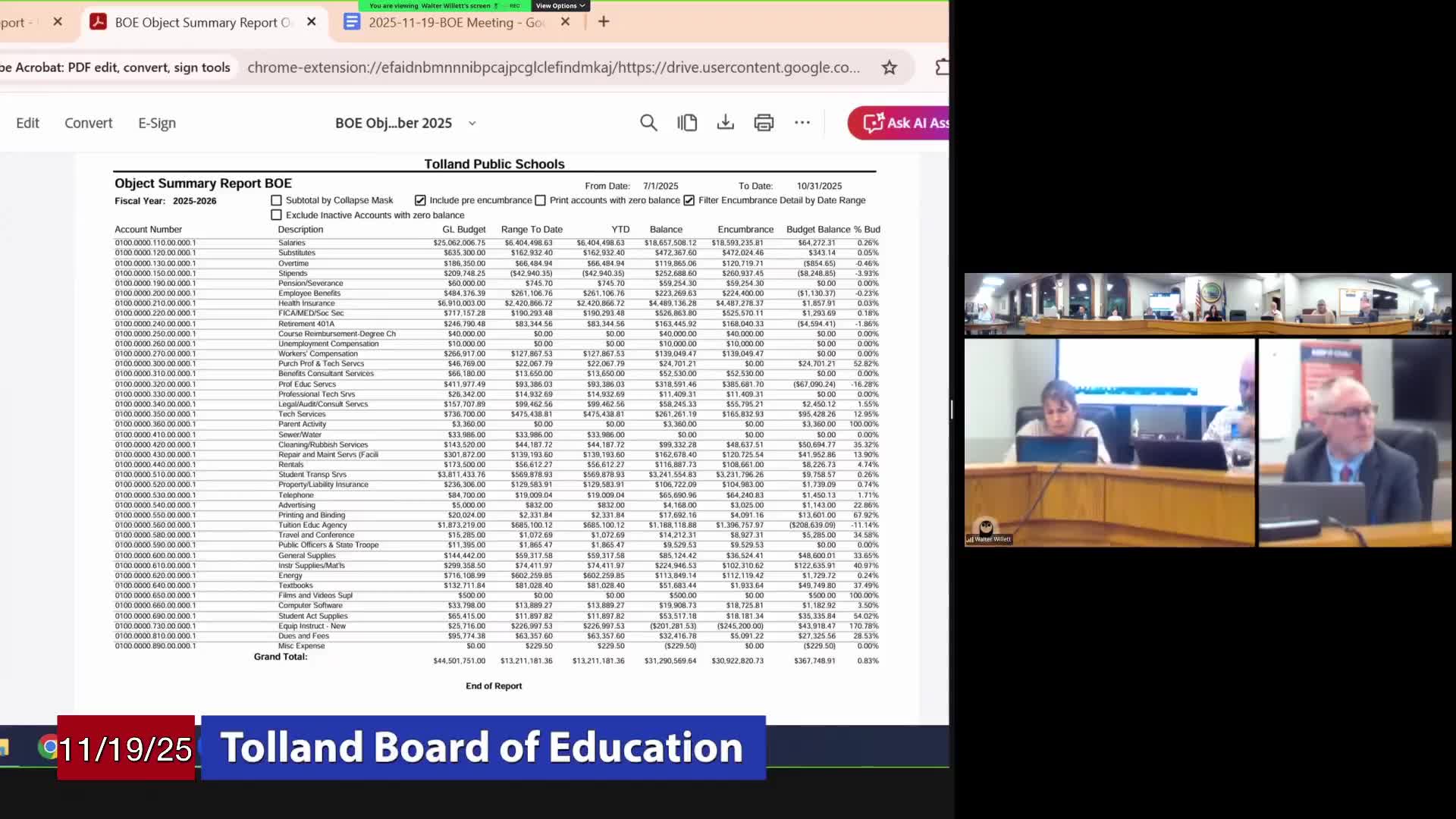
Summary
Superintendent warned of large, unpredictable special-education outplacement costs and noted a $68,000 target in club fee collections; the board discussed centralizing payments, electronic options for parents, and the challenge of paying stipends while ensuring low-enrollment clubs can run.
At the Tolland School District board meeting, Superintendent Doctor Willett outlined budget stressors that the finance committee will examine in coming weeks, singling out special-education outplacement costs and the district’s new centralized club-fee collection process.
Willett said several expensive outplacements hit the budget simultaneously this year, and that one potential placement could cost approximately $400,000. He explained Connecticut’s excess-cost reimbursement schedule — reimbursements arrive in February and May and pay a portion of costs beyond a statutory threshold — but said unpredictability means districts can run short temporarily. "There's a threshold, and then Connecticut sets the thresholds," he said when explaining how excess-cost reimbursement phases in.
Board members pressed staff for detail on the stipend line: the district is recording a roughly $18,248 overage tied to stipend payments while it collects pay-to-participate funds; Willett said the total target for club fee collections is about $68,000. He described operational changes this year: central office collected most club funds to ensure receipts and bookkeeping, which delayed some clubs until funds were verified. He noted free and reduced lunch (FRL) students are exempt from fees and that a minimum enrollment (commonly 15 students) is typically required for a club to run without a donor subsidy.
Parents and trustees proposed operational fixes: add a secure drop box at central office, or enable electronic payments (QR codes, debit/credit) so parents can log receipts instantly. Willett said electronic payments for sports exist and he hopes to expand electronic options for clubs next cycle.
Board members asked the finance and facilities committee for a deeper review of special-education excess-cost projections, the stipend encoding and whether restoring some club funding to the operating budget might be warranted to stabilize programming for students.