Get Full Government Meeting Transcripts, Videos, & Alerts Forever!
Get email alerts on the Infrastructure Projects topic
No spam. Unsubscribe anytime.
Tustin council rejects bids for Armstrong Avenue pedestrian bridge and Neighborhood D South Phase 2
Summary
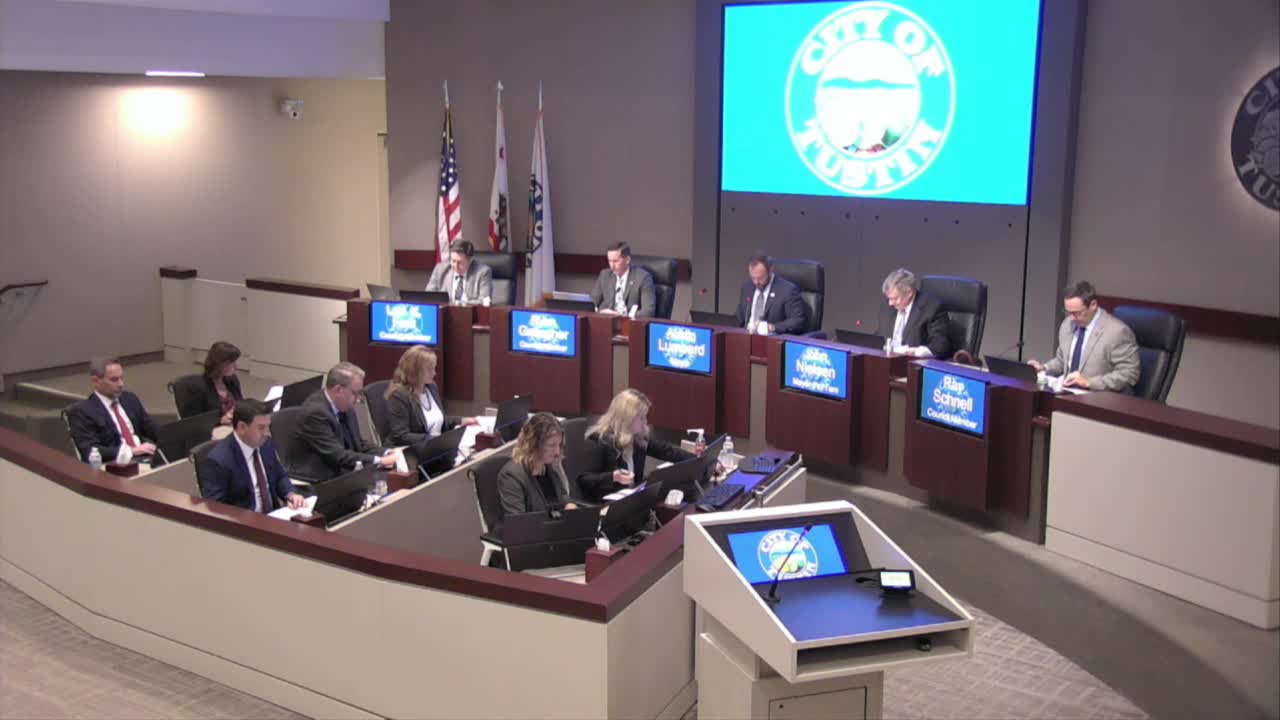
The Tustin City Council voted unanimously to reject all bids for the Armstrong Avenue Pedestrian Bridge and Neighborhood D South Phase 2 projects, directing staff to redesign and rebid with a target of roughly six months to reduce costs and simplify scope.
The Tustin City Council on Nov. 18 voted 5-0 to reject all bids for the Armstrong Avenue Pedestrian Bridge and Neighborhood D South Phase 2 projects and asked staff to return with revised designs intended to reduce cost and speed rebidding.
Council Member Fink, who pulled the item for discussion, said the city has faced unexpected cost increases and that the current designs may have been overengineered. "When I looked at the line item for just the pedestrian bridge, I thought it was $6,000,000 and the bids were at $12 or something," Fink said, arguing the projects should be simplified so they can be built in phases. He moved to approve the staff recommendation to reject the bids and seek redesign.
Mayor Pro Tem Nielsen and Council Member Gallagher supported the move, saying staff had been diligent in reviewing the work and that rejecting the bids now protects taxpayer dollars. "The savings certainly justify this particular situation," Mayor Pro Tem Nielsen said. Gallagher added that the city must balance legacy infrastructure needs with fiscal responsibility.
The council discussion emphasized coordination with Public Works and the need for clearer design/bid alignment. Public Works Director Mike Grisso was referenced during discussion as having reviewed the designs and contributed to the decision to send the projects back to staff.
The motion to reject the bids passed unanimously on roll call. Council instructed staff to revisit designs and pursue a rebid timeline the council hopes to shorten to roughly six months rather than the 6- to 12-month window discussed.
Next steps: staff will work with engineers to simplify design elements, update cost estimates and present a revised schedule and scope to the council before rebidding. No specific contractor or bid amounts beyond the approximate figures discussed at the dais were adopted by the council.