Get Full Government Meeting Transcripts, Videos, & Alerts Forever!
Get email alerts on the Government topic
No spam. Unsubscribe anytime.
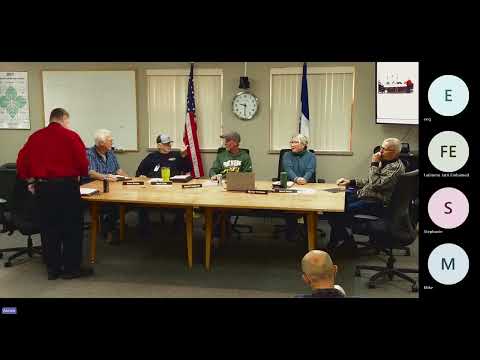
Supervisors hear emergency management/public health proposal, enter closed session and cancel Highway 52 sale hearing
Summary
County emergency management and public health officials outlined potential shared use of a county‑owned building for incident command, storage and training and recommended tabling a planned sale until state legislative alignment is clearer; later in the meeting the board entered closed session on the Highway 52 property, then unanimously cancelled the public hearing and rejected all bids.
County emergency management and public health officials briefed the Winneshiek County Board of Supervisors on a possible shared use of a county‑owned building for emergency response and related services and urged caution before selling the asset.
Sean Snyder (emergency management) described a four‑acre site and a building that could support incident command trainings, resource staging and possibly cold storage for emergency equipment. Snyder and other presenters highlighted uncertainties stemming from a recently released report (referred to in the transcript as the 'Doge report') and ongoing state‑level discussions about alignment or regionalization of dispatch and public health services. Snyder recommended tabling the sale of the building until after the legislative session provides clarity, saying the county could be a regional hub or could face programmatic changes that would affect staffing and space needs.
A public health representative (identified in the transcript as Krista / S2) explained that the state process described in the transcript uses the term 'alignment' rather than 'regionalization' and suggested the earliest any statutory change might take effect would be July 1, 2027, with later timing more likely. The public health speaker said an alignment model usually involves a lead entity acting as a contract holder while local providers continue to deliver services, and that colocating some services could offer operational advantages despite the inconvenience of an out‑of‑town site.
Speakers discussed logistical and cost considerations: current rent for public health space was reported in the transcript as "little under $40,000" per year (S7/S4 reported figures of roughly $37,000), periodic storage of equipment around the county, and estimated costs to make the building habitable and bring fiber (figures discussed in the hundreds of thousands as opinions). The presenters suggested a phased approach: make the building habitable, complete targeted upgrades to reduce monthly costs, then consider robust connectivity or backup dispatch capability.
Later in the meeting, a supervisor moved and seconded to go into closed session to discuss the sale of the Highway 52 property under a cited Iowa authority (spoken in the transcript as "Iowa 4 20 one-five-one J"). The board voted to enter closed session, paused recording and returned to open session. Afterward the board unanimously moved to cancel the public hearing on the sale of the Highway 52 property and to reject all bids received; supervisors directed continued investigation of other land and building options.
No final sale or purchase agreement was authorized in the recorded public portion of the meeting; the action recorded was cancellation of the public hearing and rejection of bids. The discussion left key policy questions open pending state‑level legislative developments and further county deliberations.